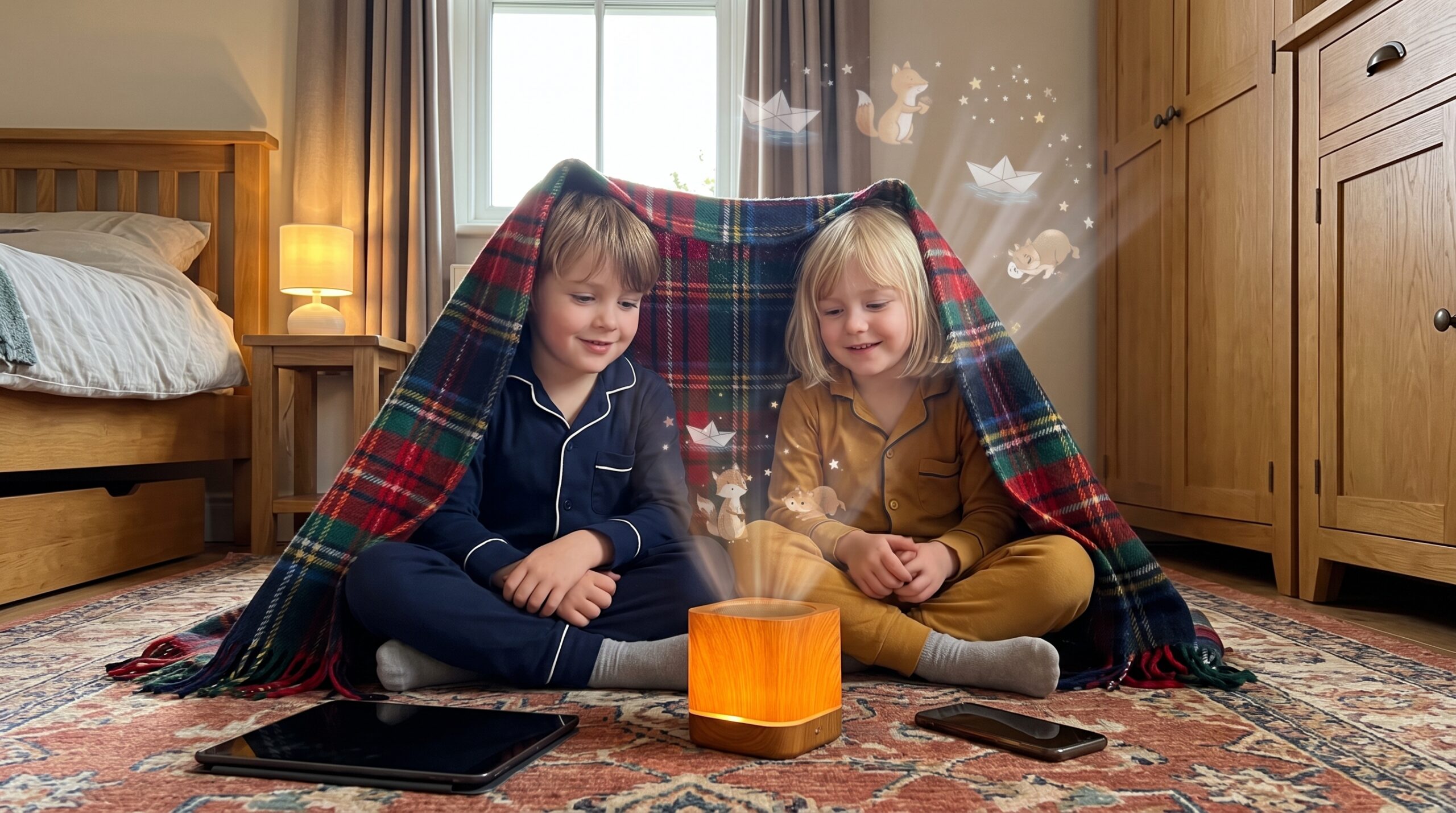
Audio-first routines for kids make bedtime calmer and more imaginative. For parents and teachers, that simple swap can work wonders.
Why audio-first routines for kids matter: cognitive load explained
Audio-first means choosing spoken stories over screens during wind-down time. Cognitive load theory helps explain this choice. Our brains juggle three kinds of load: intrinsic, extraneous, and germane. Screens add extraneous load through bright images and fast motion. As a result, children must divide attention between sound and sight. A 2024 study found that viewers reported significantly higher cognitive load when watching subtitled videos without sound, indicating that audio plays a crucial role in reducing this load. When you remove screens, you free brain space for understanding and imagining.
Listening sparks imagination
Audio asks the listener to build scenes inside the mind. For example, a phrase like silver ribbons in moonlight can make a child picture a river and reach for colors. Research from a 2023 meta-analysis shows that the ‘imagination strategy’ encourages learners to imagine while engaging with material, significantly improving learning performance without increasing cognitive load. Also, audio nudges kids to voice characters or act out parts. That mental play grows vocabulary and creativity, and it feels delightfully cozy.
Sleep, physiology, and low arousal
Short, soft stories help bodies slow down. Often breathing and heart rate drop more than when kids stare at screens. Because screens emit blue light, they can delay melatonin and push sleep later. So swap bright screens for calm audio, dim the lights, and set a sleep timer. Tiny bedtime miracles can follow.
Quick sleep-friendly steps
- Keep it short: five to fifteen minutes.
- Use gentle voices and simple plots.
- Set a sleep timer and keep the device face down.
Language, attention, and development
Regular listening builds vocabulary, syntax, and narrative sense. In addition, audio supports sustained attention and listening comprehension. Research shows that audio serves as an access point to rich language, particularly for children with dyslexia or limited vision. According to a 2024 EEG-based study, there is a strong correlation between audio characteristics and cognitive load, reinforcing the benefits of audio-first approaches. However, individual preferences vary, and simple adjustments help when audio feels confusing.
Safety, content, and sensible trade-offs
Not all audio is equal. Choose calm pacing, low volume, and age-appropriate stories. Also use sleep timers and keep devices away from beds to avoid stray light. A 2026 report by the National Literacy Trust found that 47.3% of children and young people aged 8 to 18 listened to audiobooks or podcasts, highlighting the growing trend of audio consumption among youth. Screens still have value for visual learning earlier in the day. Audio-first is a tool for winding down, not a rule that bans screens forever.
Practical tips for families
- Keep stories short and steady.
- Pick calm voices and clear plots.
- Place the device away from the child to limit light.
- Monitor volume and choose soothing content.
Ready to try a gentle swap tonight? Try the Storypie app for short, calming audio and sleep-friendly stories. Visit Storypie (get the app) and start with a five-minute story.
Final thought: Audio-first routines for kids feel old-fashioned and new at once. They calm bodies, free minds, and invite bright imagination. Start small, notice the change, and enjoy quiet wonder tonight.