Audio-first storytelling benefits shine on chilly evenings. At Storypie we choose audio-first to lower cognitive load and spark imaginative play. Listening asks less of tired eyes and more of young minds. In fact, a 2024 study found that viewers reported significantly higher cognitive load when sound was turned off while watching subtitled videos, highlighting the critical role of audio in reducing cognitive load.
Audio-first storytelling benefits in a simple case
Audio-first means listening comes before visuals. In other words, we let the voice lead the way. Cognitive load theory shows that flashy screens add extra work for young learners. Therefore audio-first reduces that extra work and helps children follow the story. Research from a 2025 study indicates that auditory sensitivity peaks under cognitive load, further reinforcing the need for audio-first approaches.
How listening and the brain fit together
For example, the brain uses different slots for sound and sight. Alan Baddeley calls one slot the phonological loop. The other slot holds visual images. When both slots fill up, kids can lose track of a plot. So audio-first preserves bandwidth for imagination and meaning. Neurophysiology evidence shows that auditory narratives entrain peripheral arousal markers; a 2024 Cell Reports study found strong links between audio narratives and attention, demonstrating how effectively sound can engage listeners’ minds.
How audio fuels imagination and language
Hearing clear narration invites children to paint scenes inside their heads. Dual-coding theory says words can build strong mental pictures. In practice, audio-first helps grow vocabulary and strengthens sentence sense.
Also, stories read aloud support later reading. They scaffold narrative skills in a gentle way. These gains make listening a small superpower for early learners. With audiobook revenue growing 9% in 2023 to $2.0 billion, as reported by the Audio Publishers Association, it’s clear that families are embracing audio formats more than ever.
Social, emotional, and sleep gains
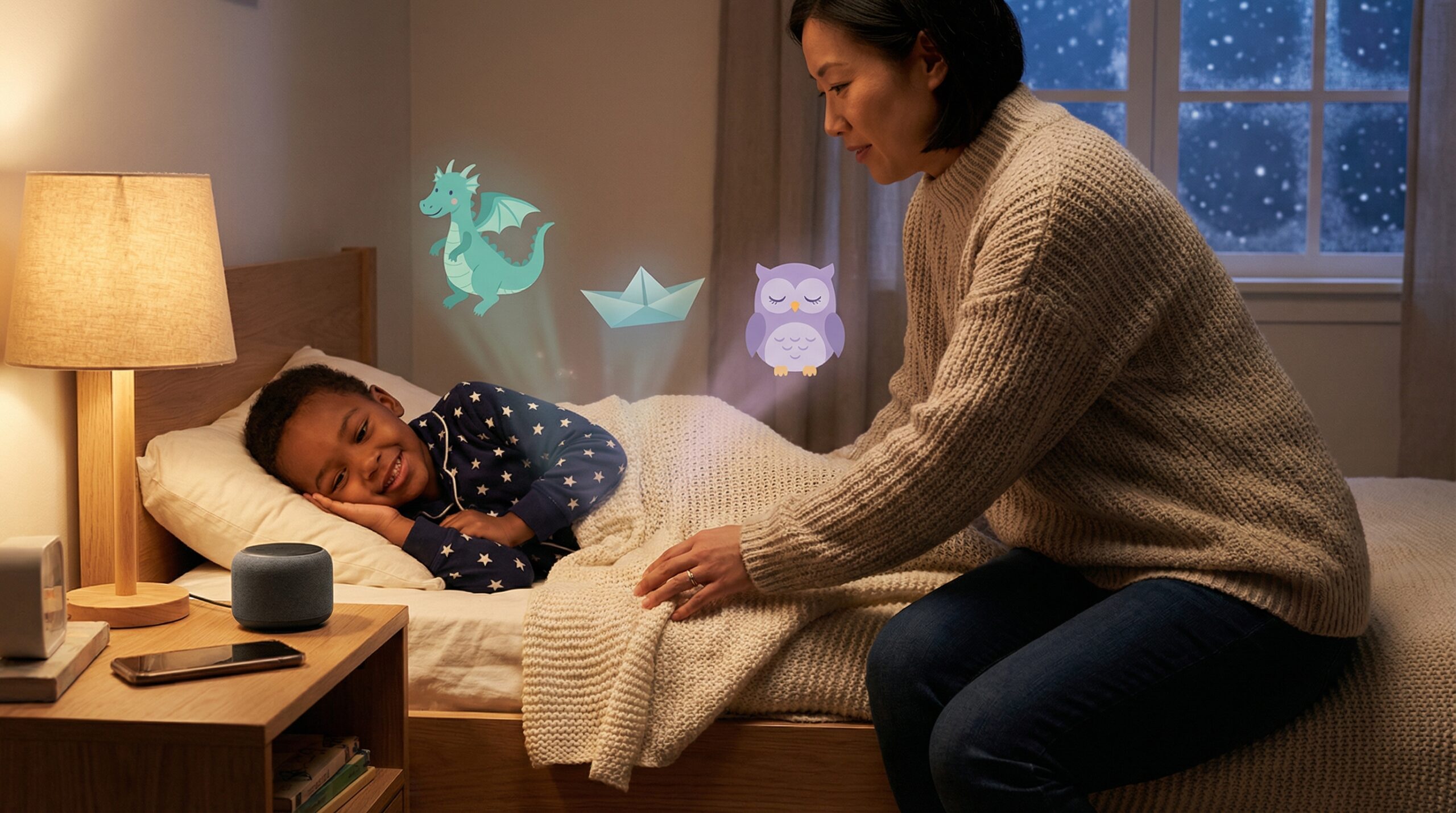
Shared listening creates warm, quiet moments. A parent and child can listen together and laugh or ask one quick question. Moreover, swapping screens for soothing audio avoids blue light and interactive buzz.
Consequently, many families see calmer wind-downs and easier sleep. Listening models attention and builds connection, too.
Accessibility and inclusion
Audio-first opens stories to more children. It removes decoding barriers for pre-readers. It also helps kids with dyslexia and low vision access rich language. Good narration makes stories available to more families, more often.
Caveats and best practice
Audio-first is not a cure-all. Visual tasks like letter writing or map reading still need pictures and touch. Also, poor audio quality or very fast narration can cause overload. So choose age-appropriate, well-produced stories and a quiet spot.
Try this tonight
Tonight, swap 10 minutes of screen time for a Storypie bedtime story. Use a device timer and set a safe volume. Then pause once to ask a quick question about the tale. Those ten minutes often turn into a small magical habit.
Explore Storypie to find short, well-produced stories for bedtime and calm play. Visit Storypie for cozy picks.
Final thought
Why audio first? Because audio-first storytelling benefits include lower clutter, richer mental images, stronger language, and warmer family time. Try audio-first tonight and notice how attention and imagination respond.