
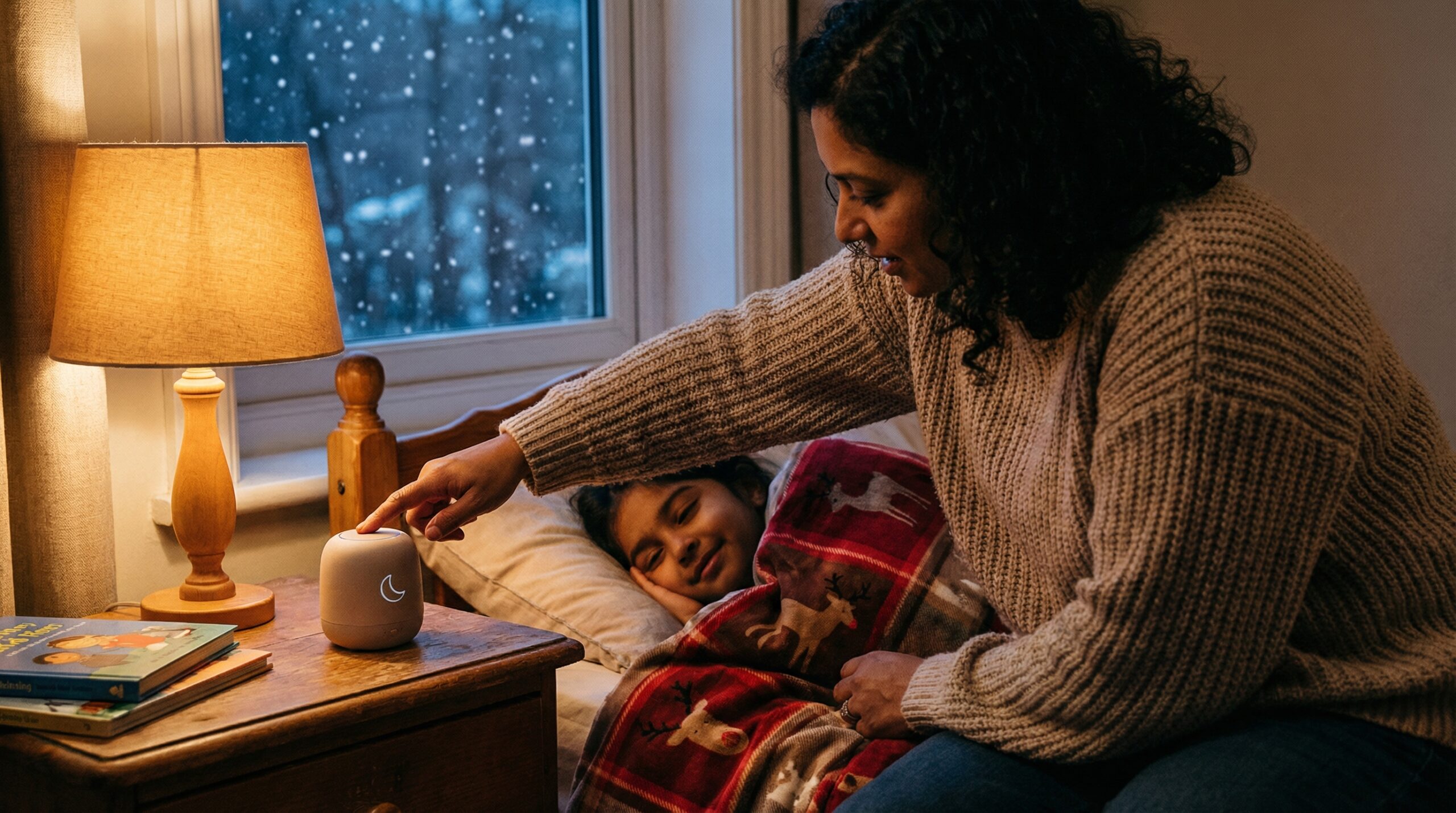
A bedtime mini story ritual gives a short, consistent cue to settle. In five minutes, a calm spoken or recorded mini story marks the shift from busy evening to rest. The ritual is simple, sweet, and easy to keep up.
Why this tiny ritual matters
A brief, calming story does more than entertain. Research shows consistent bedtime routines with soothing activities help children fall asleep earlier and sleep longer. For instance, a 2024 randomized behavioral sleep-intervention analysis found that the intervention group achieved a longer sleep period of approximately 46.3 minutes compared to the control group after 2 months. Additionally, a recent survey indicated that 90% of parents of 1–6-year-olds reported having a bedtime routine for their child, with 67% including reading bedtime stories. This highlights the widespread use of storytelling as a sleep aid among parents, reinforcing its importance in bedtime routines. A mini story lowers physical arousal and supports emotional co-regulation between caregiver and child. Over time, the bedtime mini story ritual becomes a dependable sleep cue through repetition.
How to fit the mini story into your routine
Make the mini story the final step in a 10 to 30 minute routine. In fact, leading pediatric sleep guidance from Nationwide Children’s Hospital recommends a consistent 20–30 minute bedtime routine that includes calm activities such as reading. For example:
- Dim the lights and quiet the room.
- Put on pajamas and brush teeth.
- Enjoy a quick calm activity, such as soft play or a cuddle.
- Play or tell the mini story for three to seven minutes.
- Tuck in and offer a brief goodbye.
Keep screens out of the bedroom. Instead, use audio-only stories or live telling. This avoids bright screens and helps protect evening melatonin. If caregiving is split, a recorded parent voice can keep continuity when one adult is away.
Age tips and gentle content
This ritual suits toddlers through early school age, roughly one to eight years. For toddlers, choose rhythmic language and bring a favorite blanket or toy. For preschoolers, pick gentle plots and comforting endings. Older children may like short choices from a small playlist, while keeping the calm tone intact.
Practical example: a tiny five-minute script
Try this five-minute script. First, lights low and a soft blanket. Then the parent whispers or plays audio. “Tonight, the little owl folded his wings. He felt the night like a warm blanket and floated down to sleep. He breathed slow, one small breath, then another. All was safe. Good night.” Keep your voice soft, steady, and unhurried. It really is that simple and soothing.
What families often notice
Parents commonly report a noticeable shift after a week of practice. There is less arguing at tuck-in and softer breathing within minutes. Also, the household vibe becomes calmer. The key is consistency, not perfection. A short ritual that happens most nights builds strong sleep associations quickly. In fact, a 2025 study reported that consistent bedtime routines, including storytelling started as early as 3 months, were associated with fewer night-time awakenings and longer sleep durations by age 3.
Safety and when to get help
Use low volume and place devices on stable surfaces. Avoid headphones for infants and toddlers. If your child keeps having very long sleep onset, frequent night wakings, daytime sleepiness, or strong resistance despite a steady routine, consult a pediatrician or sleep specialist.
Final thought and a gentle next step
A bedtime mini story ritual is an easy, lovely pause that helps kids settle and families breathe out together. For short, screen-free audio and gentle prompts to get started, explore Storypie and find mini stories made for this moment.