
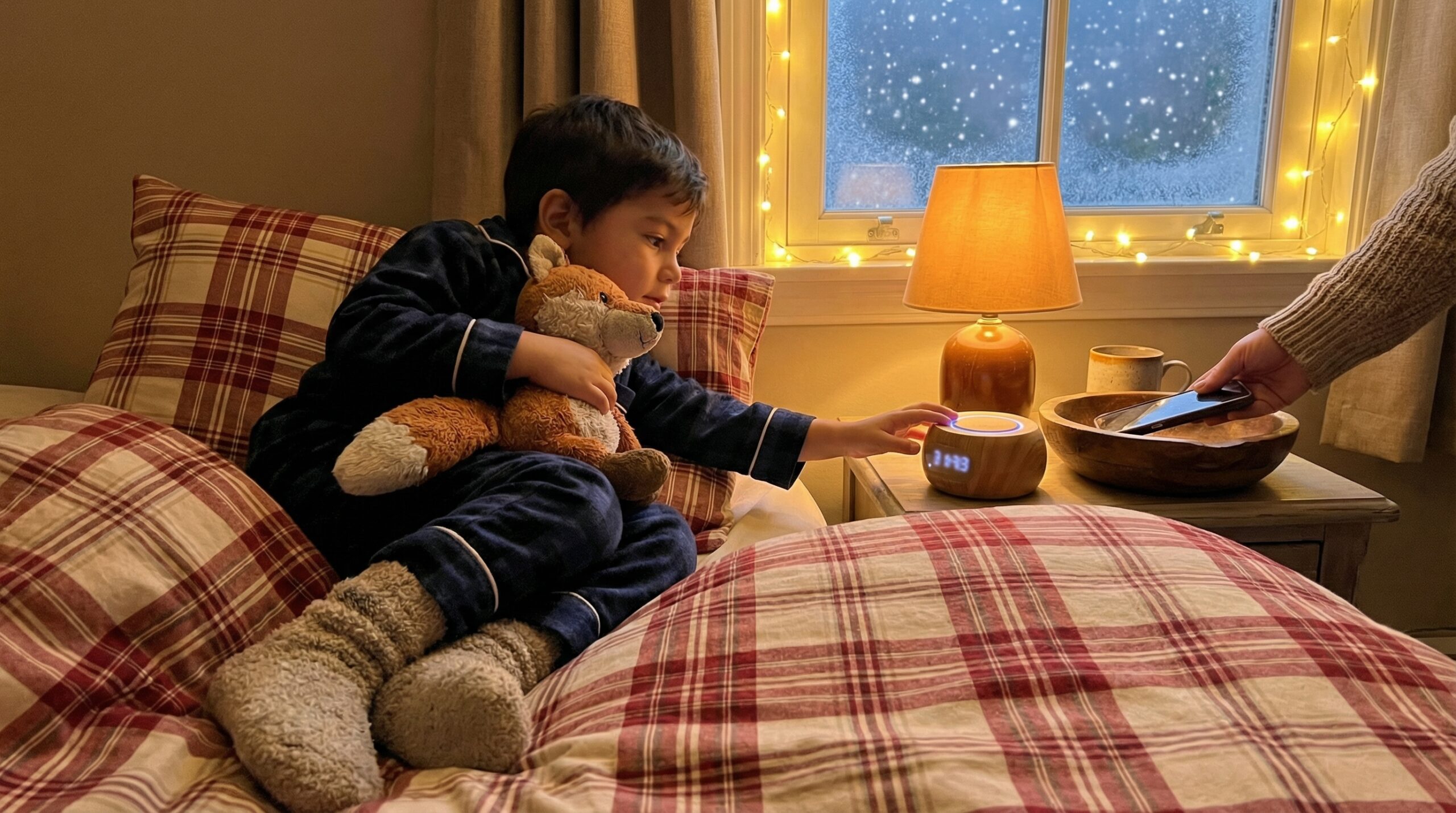
The bedtime mini story ritual is a cozy pause that signals sleep. It is short and predictable. Families often call it a tiny tale treat. For many, five minutes is the sweet spot.
Why the bedtime mini story ritual works
Predictability matters. A short, consistent audio or spoken story becomes a clear cue. First a bath, then pajamas, teeth brushed, lights dimmed, and finally the mini story. Over nights, the brain links the sequence to sleep. Heart rates ease. Worries shrink. Therefore sleep often comes sooner. In fact, a 2025 study reported that consistent bedtime routines, including storytelling started as early as 3 months, were associated with fewer night-time awakenings, reduced sleep problems, and longer sleep durations by age 3.
Evidence-backed benefits of a mini story ritual
Researchers link steady bedtime routines with easier sleep onset and longer sleep. Also, calm short activities improve daytime behavior. Audio-only stories cut screen exposure and blue light. So the body’s natural wind-down works better. Listening also supports vocabulary, imagination, and parent-child bonding. According to a 2025 survey, 71% of parents agreed that storytelling helps their children wind down at bedtime, with 49% naming it their preferred method. Additionally, a randomized trial of 134 infants (ages 8–18 months) found that implementing a standardized nightly bedtime routine produced significant improvements in sleep onset latency and consolidated sleep periods after just two weeks, highlighting the effectiveness of structured bedtime rituals.
What a five-minute bedtime mini story ritual looks like
Keep it brief and consistent. Play a short audio tuck-in or use a soft spoken line. Then end each night with the same closing phrase. Repetition helps the cue stick. The mini story ritual fits busy schedules and short attention spans.
Mini story starters
- The leaf that could not stop giggling found a friend under the pillow.
- A sleepy mouse borrowed starlight for a tiny bedtime cape.
Adaptations by age and needs
Toddlers prefer the shortest versions and steady language. Preschoolers like a small twist at the end. Older children may enjoy a brief guided imagery moment. For neurodivergent kids, keep volume low and the routine the same. Also, tweak tone and timing to match each child.
Formats, accessibility, and safety
Mini stories run on apps, smart speakers, playlists, or caregiver recordings. Audio-only works well for non-readers and busy caregivers. However, keep device light low and cords away from the bed. For infants and toddlers, adults should place devices safely and avoid loose cords near sleeping areas.
Practical reasons to try it tonight
A bedtime mini story ritual reduces arousal and builds sweet nightly moments. It is quick, portable, and kind to busy families. Play the same short tuck-in nightly and the brain learns the cue fast. A 2025 survey indicated that 90% of parents of 1–6-year-olds reported having a bedtime routine, and 67% reported that their child’s bedtime routine includes reading a bedtime story, showcasing the prevalence of bedtime stories in family routines.
Tip: try Storypie minis for five-minute audio tuck-ins. Cozy up and press play for a gentle, consistent cue. Visit Storypie to explore minis and more bedtime content.
Make the mini story your nightly signal. Cozy up tonight, press play, and enjoy one peaceful sleeper tomorrow.