
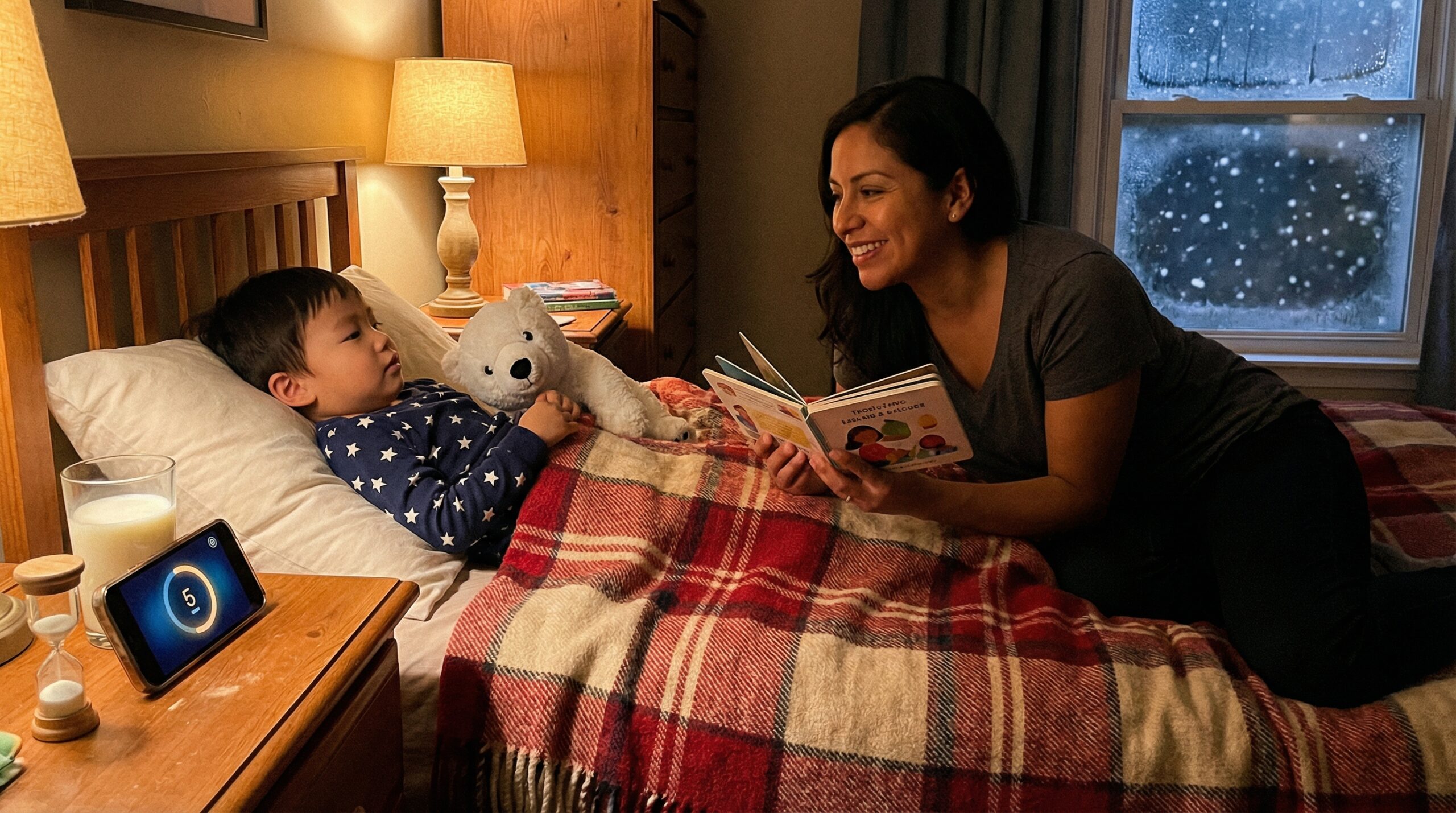
A bedtime mini story ritual is a tiny story, a deep exhale, and a pocket-sized calm. It is a short, steady cue that helps children relax and sleep sooner. Use it as the last step in your nightly routine to make lights-out easier and friendlier. In fact, a 2025 study reported that consistent bedtime routines, including storytelling started as early as 3 months, were associated with fewer night-time awakenings, reduced sleep problems, and longer sleep durations by age 3.
What a bedtime mini story ritual looks like
Keep the ritual short. Most run three to ten minutes, often around five. Predictability is the superpower here. Repetition becomes the bedtime cue, and calm tone makes the ritual soothing. The goal is simple. Lower arousal, anchor the clock, and make bedtime cooperative rather than combative. In fact, a longitudinal study found that the majority of families used a consistent bedtime routine by 24 months, reinforcing the importance of establishing these routines early.
Why short stories work
Short, steady routines match pediatric sleep advice. Predictability helps children settle. In addition, a calm story can lower heart rate and soften breathing. Also, it deepens connection. Parents stay present, even during tiny tales. Benefits include faster sleep onset, improved regulation, and better bedtime cooperation. A 2025 survey indicated that 90% of parents of 1–6-year-olds reported having a bedtime routine, and 67% reported that their child’s bedtime routine includes reading a bedtime story, validating the effectiveness of mini story rituals.
Who a mini story ritual fits
Toddlers through early school-age kids respond well. Adjust length and words for age. For bilingual homes, switch languages to carry culture and calm. For neurodivergent children, choose quiet audio levels and sensory-considered formats. Overall, the ritual bends to your child, not the other way around.
Formats to try for your bedtime mini story ritual
- Live parent-read stories for warmth and eye contact.
- Short recorded narrations for steady pacing.
- App micro-stories for on-demand playback and multilingual options.
- Printed two-sentence pages you close gently at the end.
Practical tips to start tonight
Set the stage first: dim lights, soft textures, no exciting screens. Next, make it predictable by using the same time and the same short story or series. Keep voices soft and pace slow. Also, make the ritual portable so it works in hotels or hospitals. Finally, rotate a small bundle of 12 to 20 micro-stories, face-out like a tiny gallery. Research shows that replacing screen time with book reading can significantly improve sleep health; a study indicated that reducing screen time for children aged 4-6 produced a significant improvement in overall sleep scores, reinforcing the idea of calming bedtime routines.
Quick checklist
- Stage: dim lights, cozy textures.
- Timing: same place, same time each night.
- Calm: slow pace, soft voice.
- Portable: a five-minute plan travels well.
Example micro-story
Try this tiny tale tonight. Say it slowly and breathe with the child.
“The moon tucked Teddy into his pocket. Together they walked very slowly into the sleep meadow, where the stars hummed like lullabies.”
This two-sentence hero lands soft. It invites a long breath and a sleepy face.
Try Storypie micro-stories
If you want ready-made options, explore Storypie mini stories. Also, check themed bundles in Storypie collections for routine-friendly sets. To play micro-stories easily, consider Get the Storypie app for simple playback and multilingual choices.
A bright little ending
Make the ritual delightful and forgiving. A consistent five-minute mini story can reset a chaotic evening. It is small, reliable, and often surprisingly powerful. Given that additional screen time can delay sleep onset, a bedtime mini story ritual tonight can provide the pocket-sized calm your child needs to drift off peacefully.