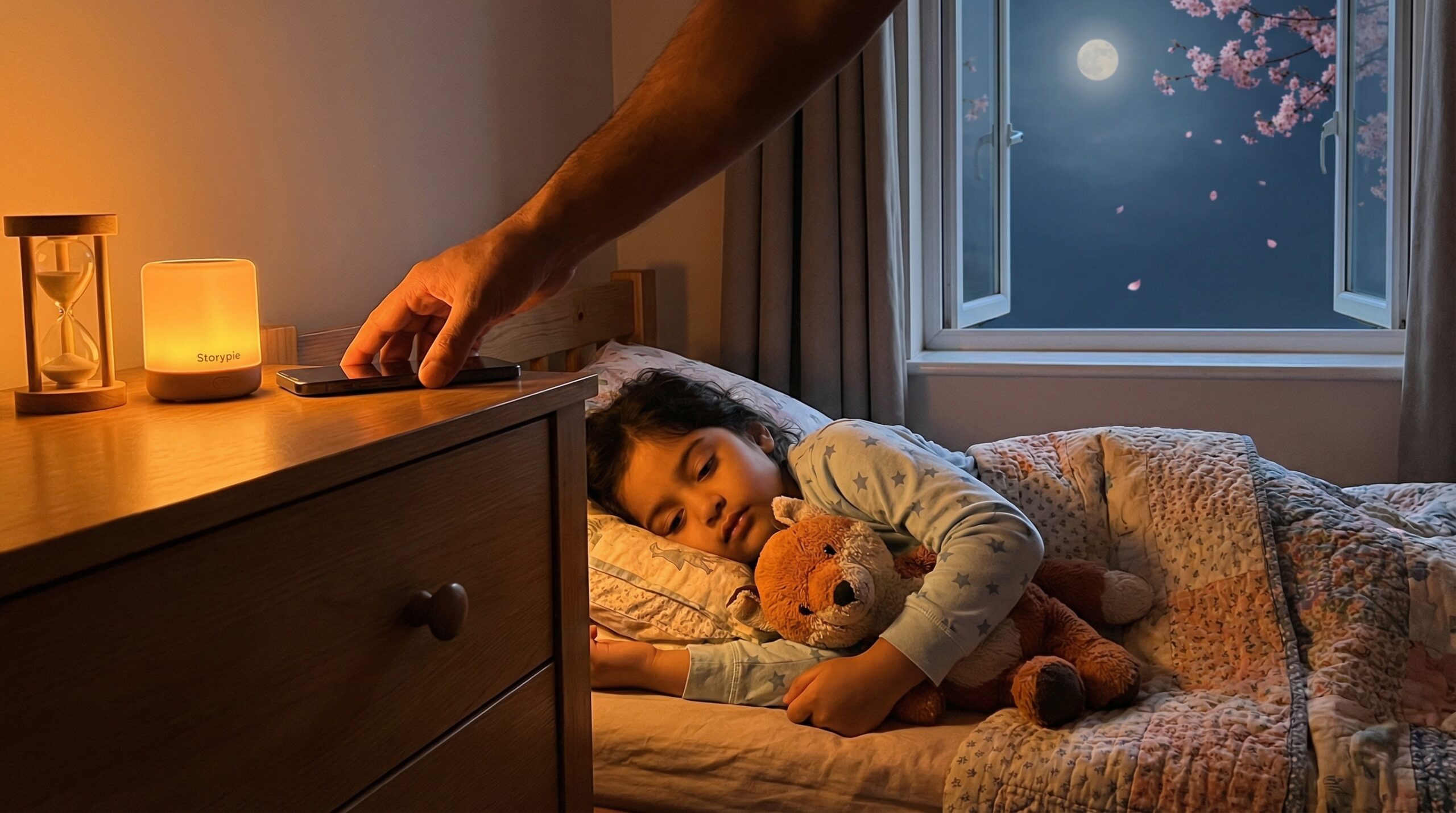
Every night I use a bedtime mini story ritual to signal that the day is over and sleep is next. This short 3-7 minute pause helps kids relax, connect, and settle quickly.
Why I pick a bedtime mini story ritual
I choose mini stories because they do three things fast. First, they cue the body to relax. Second, they build calm and connection. Third, they add regular language exposure. Research shows consistent routines help kids fall asleep faster and wake less at night. A 2024 poll found that 90% of parents with children ages 1–6 reported having a bedtime routine, and 67% said their routine includes reading bedtime stories. In plain terms, small consistency gives big payoff.
How the mini story ritual works in practice
Place the mini story at the end of a predictable routine: bath, pajamas, teeth, mini story, lights-out. Also, keep screens off earlier in the sequence. Many experts recommend turning off active screens 20 to 60 minutes before bed. If you use audio, pick an audio-only file and keep the screen dark. For convenience, I sometimes choose curated audio from Storypie mini stories. You can explore Storypie options on the site.
Quick anecdote
I once had a preschooler who raced the clock each night. Then I started the same five-minute tale each night. The racing stopped in a few days. Tiny ritual, tiny tale, tiny miracle.
Formats and age tips
Live read-alouds work beautifully for infants and toddlers. Close voices and slow cadence calm young children fast. Preschoolers can handle slightly longer plots with gentle pacing. In fact, a 2023 longitudinal study reported that the proportion of toddlers with a consistent bedtime routine rose from 63.2% at 12 months to 85.2% at 24 months, indicating the growing importance of routine storytelling. School-age kids like small moral beats or whimsical endings. Avoid high-action plots and cliffhangers. Pick calm themes, predictable structure, and reassuring endings.
Safety and simple rules
- Keep volume low and steady.
- Avoid bright screens and interactive games in the bedroom.
- Choose content that feels safe and familiar.
- If sleep problems persist, check with your pediatrician.
How to use it tonight
Try these simple steps for a quick start.
- Turn screens off 20 minutes before bed.
- Pick a 3 to 7 minute tale or audio.
- Set a gentle timer and read in a warm, steady voice.
- End with the same line each night to build the cue.
- If you want an app, try the Storypie app for short, calming reads.
Try the bedtime mini story ritual for a week and notice the shift. A 2025 study reported that consistent bedtime routines, including storytelling started as early as 3 months, were associated with fewer night-time awakenings, reduced sleep problems, and longer sleep durations by age 3. It will not fix every sleep issue. However, it will create a calm pocket of connection each night. Give it a go tonight and enjoy the tiny magic.