
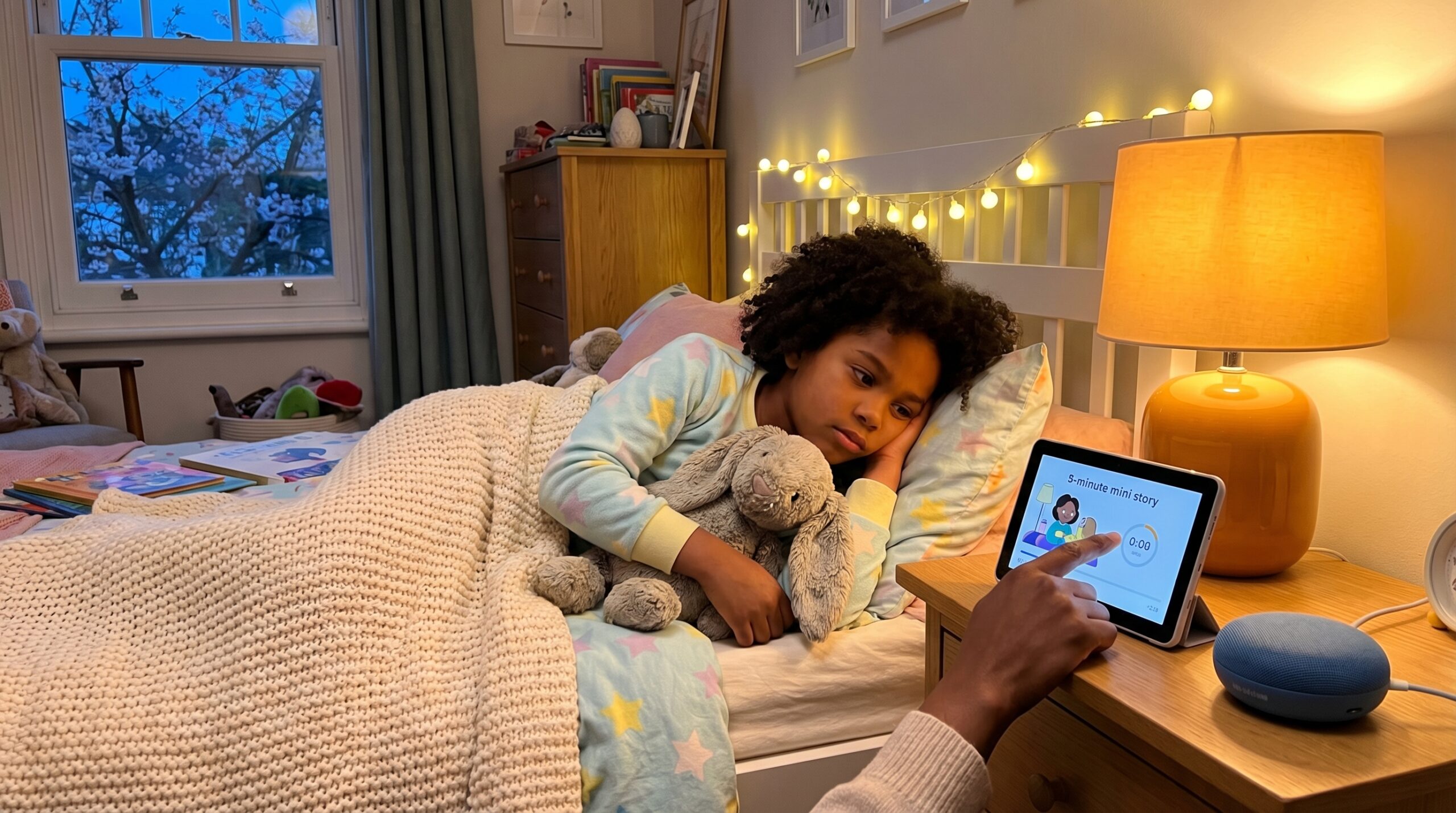
Start a bedtime mini story ritual to signal calm and close the day. Keep it short. Aim for three to ten minutes. Speak softly and dim the lights. Predictability helps the brain switch from play to rest. A 2025 study reported that consistent bedtime routines, including storytelling started as early as 3 months, were associated with fewer night-time awakenings, reduced sleep problems, and longer sleep durations by age 3.
What is a bedtime mini story ritual?
A bedtime mini story ritual is a tiny, repeatable storytelling moment. Place it about ten to twenty minutes before lights-out. Many families like a five minute story, roughly fifteen minutes before bed. According to a June 2025 survey by the American Academy of Sleep Medicine, 85% of parents reported their school-aged children have a regular bedtime routine. Keep the order steady. That small predictability helps more than you might expect.
When to do the ritual
Put the mini story after bath and pajamas. Then do teeth and a last cuddle. Finally, tell the story and use the same closing line.
Age-friendly timing
- Babies and toddlers: two to five minutes. Use simple words or a rhyme.
- Preschoolers: four to seven minutes with soothing scenes.
- Early school-age: five to ten minutes, calm and low on action.
Adjust the length for your child. The cue matters more than the exact minutes.
Core elements of the mini story ritual
Keep things cozy. Use a calm voice and low light. Sit close and use soft textures. Repeat a single hero story or rotate three favorites. End with the same closing line every night. That cue tells the child it is time to sleep.
Benefits you can feel
- Faster sleep onset and fewer protests.
- Lower evening arousal and calmer breathing.
- Stronger parent-child bond and better language exposure.
- Fifteen focused minutes of connection for caregivers.
- Additionally, a 2026 study found that a two-week nightly bedtime reading routine improved empathy and creativity in children aged 6–8, showing significant gains in cognitive empathy and creative fluency.
Quick micro-schedule
Try this simple order:
- Bath
- Pajamas
- Toothbrush
- Five minute mini story at T minus 15 minutes
- Lights-off
Starter prompts and tiny scripts
Use short, repeatable lines. For example:
- “Close your eyes and find the quiet cloud.”
- “Once there was a sleepy bear who counted stars.”
- Ask one gentle question: “Which color star do you see?”
Keep the ending consistent. Try: “Goodnight, my star.” That final line becomes the sleep cue.
Troubleshooting common bumps
Late dinners, screens, or changing caregivers can interrupt the ritual. Move the mini story earlier when needed. Also, use an audio-only recording if a parent runs late. For siblings, try a short shared story first, then a one-on-one tuck for the worried child.
How to tell if the ritual works
Watch for shorter protests and steadier breathing. Note how often a child turns on the light. Track average sleep onset time over a week. If nights get calmer, the ritual is helping.
Digital options and Storypie
You can use short-story audio or the Create Story tools inside Storypie. For example, use the Create Story tab to craft tiny scripts. Then play audio in night mode. The Storypie persistent audio player lets you start and collapse playback while you tuck. However, avoid bright screens near bedtime. A 2025 survey found that 42% of adults said that 10–20 minutes of bedtime reading improved their sleep quality, indicating that integrating a mini story ritual can be beneficial not just for children but for parents as well.
Try one tonight: five quiet minutes, fifteen minutes before lights-out. Small rituals bring big returns. Visit Create Story to start a cozy piece you can repeat.