
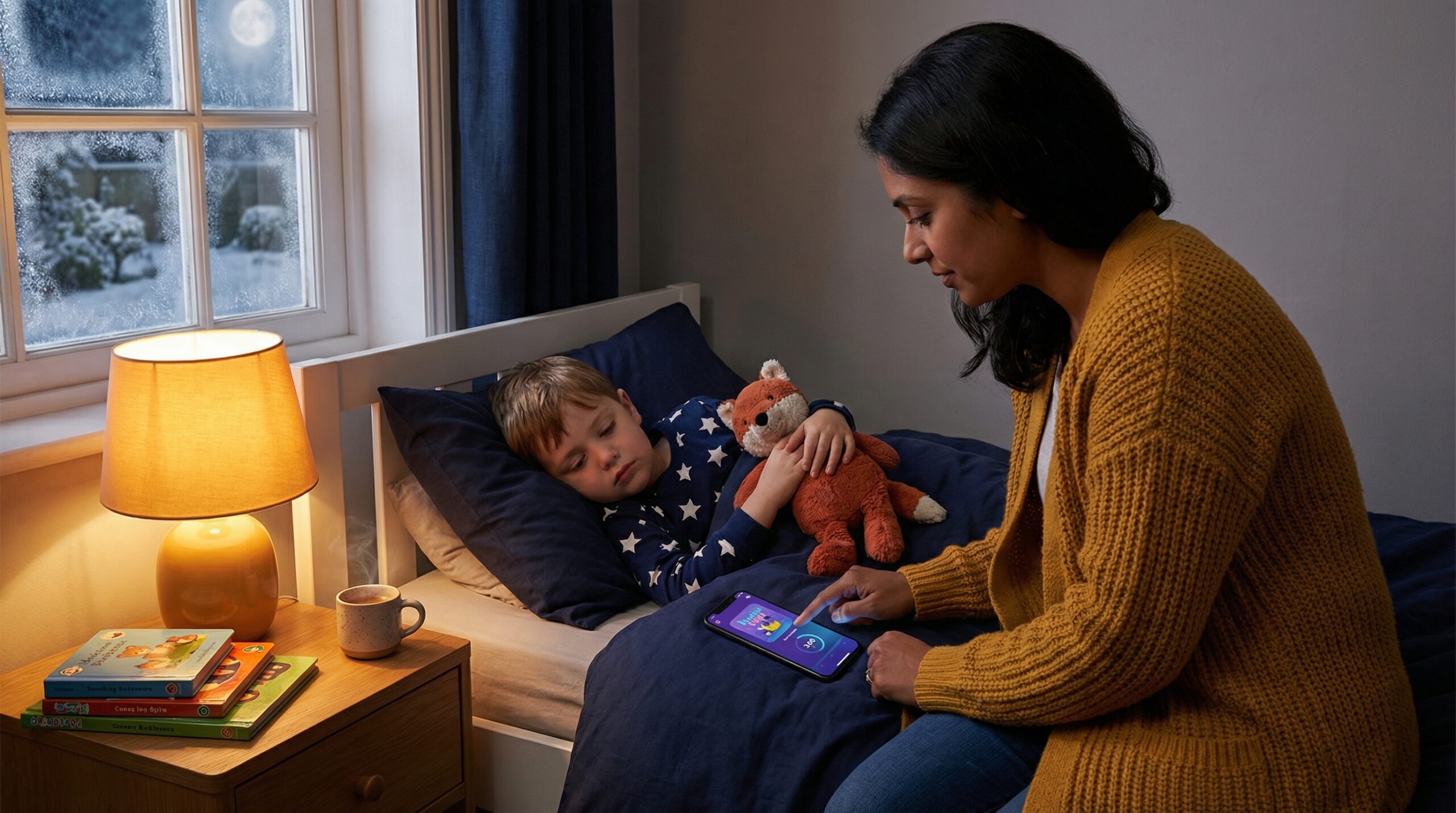
Bedtime wind-down mini story ritual gives kids a clear, cozy cue for sleep. It uses short audio stories to signal rest. Also, it stays screen-free and simple. In fact, a 2025 survey found that 71% of parents agreed that storytelling helps their children wind down at bedtime, with 49% naming it their preferred method.
What is a bedtime wind-down mini story ritual?
This mini story ritual is a short, repeatable audio story. It can be a live whisper, a parent recording, or a Storypie production. Audio-only keeps screens away from the bed. For example, choose a 1 to 5 minute piece. Keep the voice low and the ending clear. Over time the ritual becomes a tiny bell for the brain. It quietly says: slow down.
Why the bedtime wind-down mini story ritual helps
Routines teach the nervous system to settle. Repetition creates a conditioned cue. Pediatric research links steady bed routines to faster sleep onset and fewer wakings. In a nationally representative C.S. Mott Children’s Hospital poll published June 17, 2024, 67% of parents of children aged 1–6 years reported that “reading bedtime stories” is part of their child’s regular bedtime routine. Audio stories are less activating than screens. They reduce bedtime resistance and support calm. Also, recorded mini stories help tired parents keep the routine on hard nights. A randomized/controlled trial reported that establishing routines like a mini story can improve sleep outcomes, with the intervention group increasing sleep period by an average of 46.30 minutes at a 2-month follow-up versus control.
How to set up the mini story ritual
Pick the same moment each night. For example, play the story after pajamas and teeth. Use low volume and dim light. Choose one warm lamp or nightlight. Add a soft blanket or a favorite lovey. Next, if you use a device, set it to do not disturb. Also, avoid autoplay of other content. Keep sounds predictable and consistent. A soft scent on a cotton cloth can help too.
Simple checklist
- Choose one story length: 1 to 5 minutes
- Use a calm voice and a clean ending
- Play at the same point in the routine each night
- Limit lights and extra noise
Live voice or recording
Live voice supports co-regulation and attachment. A recording offers steady consistency and low effort. Rotate between both when you can. Also, recordings keep the ritual going on very tired nights. For professionally produced short pieces, try Storypie mini stories. You can also download the Storypie app for on-the-go access.
Evidence and what to watch for
Try a seven-night experiment and log results. Note lights-out time, how long it takes to sleep, and night wakings. Many families report a softer sigh by night three. If sleep improves, keep the ritual. However, watch for over-dependence on one single device. Teach a fallback cue so the ritual survives a lost phone. For example, use a second short story or a parent whisper.
Cautions and helpful tips
Avoid stimulating plots and loud endings. Also, manage device settings and content carefully. Be mindful: strong associations can form quickly. Therefore, add backup plans. A 2025 study reported that consistent bedtime routines, including storytelling, started as early as 3 months, were associated with fewer night-time awakenings, reduced sleep problems, and longer sleep durations by age 3. Finally, keep the ritual short and kind. Start with three minutes. It asks little and gives calm.
Ready for a gentle start? Try a three-minute bedtime wind-down mini story ritual this week. For more short, soothing options, see Storypie mini stories.