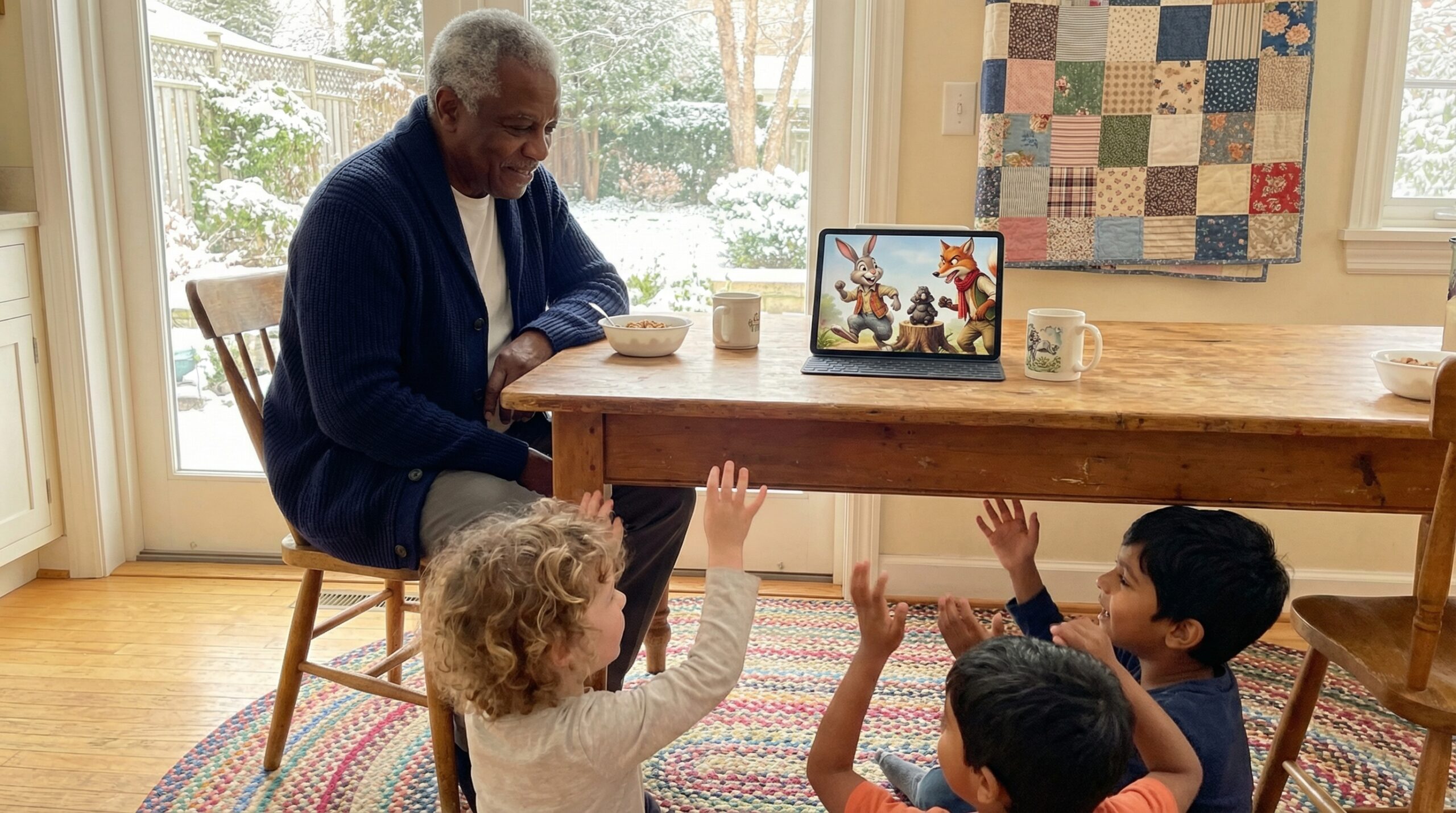
Br’er Rabbit – African American is a playful, clever trickster figure from African American folklore. Parents and teachers often notice how his name makes kids sit up and listen. These short, lively tales reward quick thinking and spark big questions.
Origins and cultural roots of Br’er Rabbit – African American
The Br’er Rabbit stories came from enslaved storytellers who arrived from West and Central Africa. Over time, the tales adapted in the American South. As a result, Br’er Rabbit grew into a trickster who uses wit to survive against larger, stronger characters like Br’er Fox and Br’er Bear. In fact, folklorist Florence E. Baer concluded that 66.3% of the Uncle Remus tales have immediate analogues in African traditional literature, underscoring their cultural significance.
One famous episode is the Tar Baby. In that tale, Br’er Rabbit gets stuck to a sticky figure. Then he talks his way into being thrown into a briar patch. Ironically, that is exactly where he belongs. Cleverness wins the day.
Publication, controversy, and respectful retellings
In the late 1800s, Joel Chandler Harris published “Uncle Remus, His Songs and His Sayings” in 1881, which included 25 Br’er Rabbit stories. Those printed forms used plantation era framing and dialect. Consequently, many readers find them harmful today. Likewise, some later adaptations, such as certain films, drew rightful criticism. Richard Chase’s 1955 anthology, The Complete Tales of Uncle Remus, further collects 185 Uncle Remus/Br’er Rabbit stories, representing a significant body of work in African American folklore.
For respectful listening and reading, seek retellings that credit the oral tradition. Also favor versions by Black authors and storytellers. That approach preserves the magic and removes harmful framing.
Why Br’er Rabbit endures
Br’er Rabbit is lively, often sneaky, and usually hilarious. The stories celebrate resourcefulness and creative thinking. They also raise ethical questions about trickery and consequences. Because the episodes are short, they suit a wide range of ages and attention spans.
Where to hear and read Br’er Rabbit – African American
Read or listen to a story about Br’er Rabbit – African American now: For the story page. For ready listening by age: For 3-5 year olds, For 6-8 year olds, For 8-10 year olds, and For 10-12 year olds.
Also explore Storypie for related folktales and listening options.
Final thoughts
Br’er Rabbit – African American remains one of the most memorable trickster figures in American folklore. He entertains, provokes thought, and carries a deep cultural history. Above all, thoughtful retellings keep his stories alive in respectful, joyful ways. Recently, the Walt Disney Company announced that the Splash Mountain attraction would be completely reimagined to remove its Song of the South/Br’er Rabbit framing. This is part of ongoing discussions about cultural representation and sensitivity. In fact, the reimagined attraction, Tiana’s Bayou Adventure, opened at Walt Disney World on June 28, 2024, reflecting a commitment to honoring heritage while adapting to contemporary values.