Education through storytelling ages 3-12 turns facts into feelings. Stories make learning stick by linking events, senses, and emotions. For parents and teachers, this idea feels both joyful and deeply useful.
Why stories stick
Stories present information as a cause and effect chain. Because of that, children remember events better. Neuroscience shows narrative lights up language, sensory, and emotional brain areas. Also, listening to a vivid tale releases dopamine. As a result, learning feels rewarding. Finally, oxytocin strengthens social bonding during shared story time. In fact, neurobiological evidence indicates that interactive parent–child storytelling engages brain networks linked to later reading skills, underlining its importance in cognitive development.
How education through storytelling ages 3-12 helps the brain
Short tales grab attention. Then they boost recall and language. For example, a lively story will help a child store new words. Similarly, repeated lines reinforce vocabulary and rhythm. Across ages, stories support sequencing, focus, and planning. A 2025 meta-analysis found that interactive reading produces a medium aggregate effect on young children’s narrative ability, with the strongest effects observed in children aged 4–5 years, highlighting the effectiveness of storytelling in enhancing narrative skills crucial for literacy development.
Age-linked effects: from preschool to tweens
Children change fast. Thus different story features work best at each stage.
- Ages 3 to 5: Short picture stories grow oral language. Preschoolers love repetition and clear cause and effect.
- Ages 5 to 8: Kids follow longer plots and practice making inferences. Their vocabulary expands quickly. A longitudinal study published in May 2024 found that storytelling connectedness in children ages 5–8 predicted phonological awareness and reading comprehension measured 3–4 months later, demonstrating the long-term benefits of storytelling on literacy skills.
- Ages 8 to 12: Older children build moral reasoning and perspective taking. They can track multiple plot threads.
Across all ages
Regular storytelling also improves attention and executive skills. For that reason, routines matter. Short, frequent stories win over long, rare lessons.
Social and emotional gains
Stories encourage empathy and theory of mind. Research shows that storytelling contributes 68.2% to the improvement of early childhood empathy skills, especially at the age of 5–6 years, making it a valuable practice for social development. When children imagine a character’s choice, they practice perspective taking. Also narrative frames let kids rehearse moral questions in a safe way. Diverse, culturally relevant tales support identity and belonging. As a result, confidence and engagement rise.
Practical tips parents and teachers can try
Use short, playful steps this week. For busy mornings, a 10-minute Storypie story can spark memory for the day. Also try one prediction question before the last page to boost reasoning.
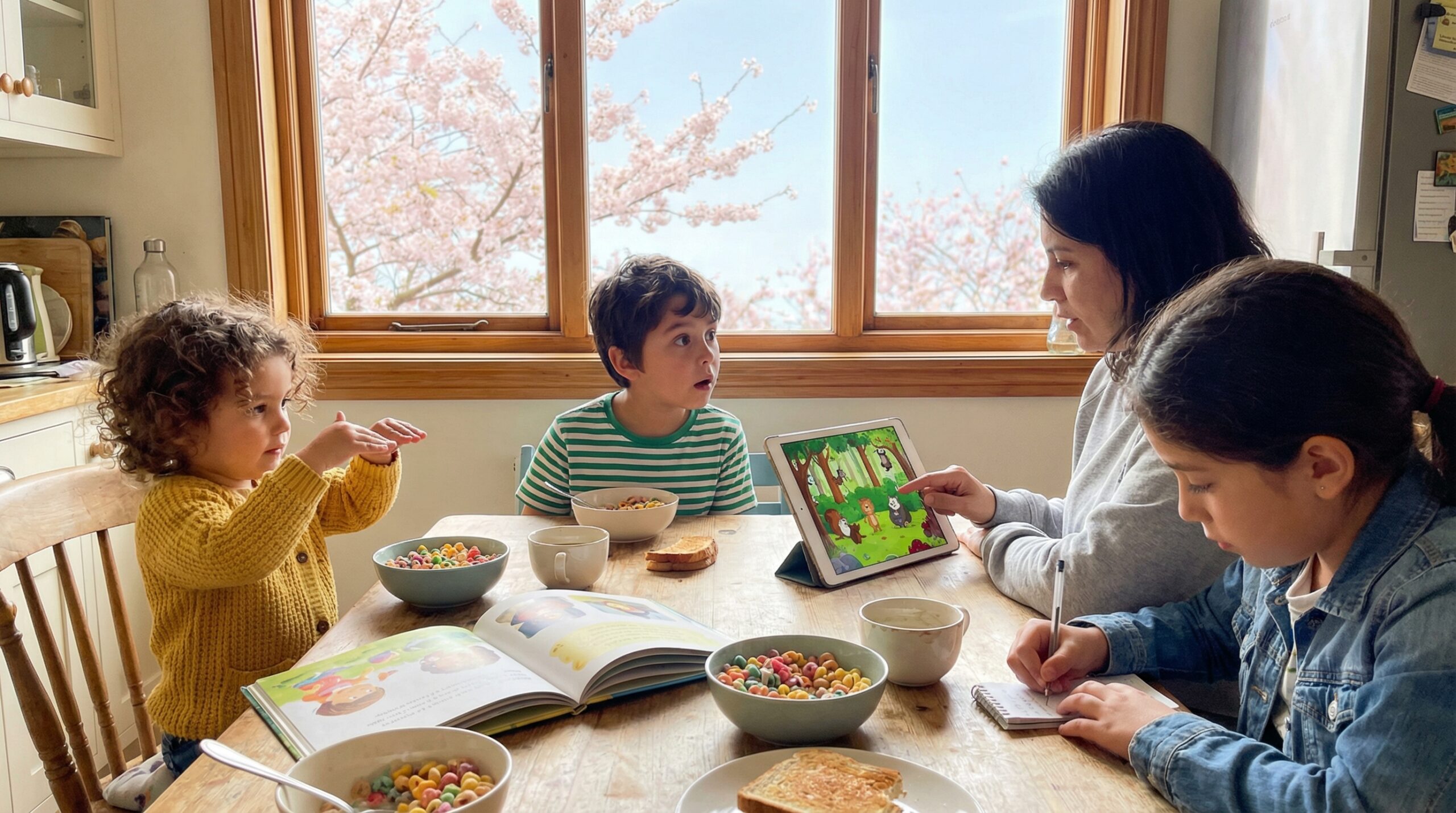
- Play a 10-minute Storypie story at breakfast to kick off memory.
- Ask one prediction question before the last page to build reasoning.
- Turn a nature walk into a two-sentence group story.
- Reuse a favorite line each morning to support vocabulary.
- Invite kids to draw a scene and explain a character’s brave action.
Spring mornings are perfect for tiny lessons. For playful routines, use short stories at breakfast, in the car, or as a calm-down ritual.
Format matters
Short, regular stories match attention spans. Multimodal delivery, such as audio plus caregiver talk, increases impact. Digital audio widens access, and caregiver conversation remains a top predictor of language gains. In a 2024 randomized controlled trial, a 12-week parent–child dialogic reading intervention produced a very large improvement in receptive vocabulary, showing the effectiveness of storytelling techniques in improving vocabulary, which is essential for language development.
A tiny classroom story
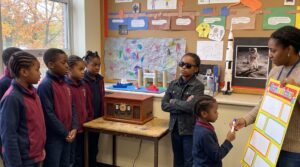
One class began every day with this line: “We found a footprint no one could explain.” Kids erupted with sound effects and wild guesses. Ten minutes later, new vocabulary and shared laughter had cemented a tiny lesson. Joy does that.
Final thought and next step
Education through storytelling ages 3-12 is simple and powerful. Stories line up with brain biology, child development, and long cultural practice. For joyful, research-backed audio and ready-made stories, visit the Storypie home. Also, you can get the app to add short stories to your daily routine.