Education through storytelling ages 3-12 matters. Stories help children remember lessons and feelings more than lone facts. At Storypie, we design short tales that tap memory, emotion, and curiosity.
Why narrative fits the human mind
Stories put events in order. Therefore the brain finds patterns and files information more easily. Neuroscience shows narratives light up memory and emotional centers. Jerome Bruner and other researchers found that people often think in stories as well as logic. As a result, learning through narrative feels natural and playful. A 2025 meta-analysis of 25 studies found that interactive storytelling significantly enhances young children’s narrative abilities, showcasing the educational value of storytelling.
Developmental fit for ages 3-12
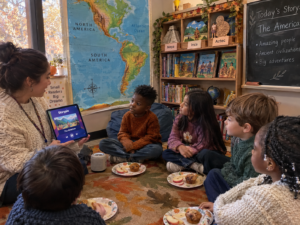
Education through storytelling ages 3-12 scales with children’s growth. From age three, youngsters follow simple plots and remember episodes. Between five and eight, attention and memory expand. Consequently, slightly longer tales and repeated vocabulary work well. A longitudinal study published in May 2024 found that storytelling connectedness in children ages 5–8 predicted future phonological awareness and reading comprehension, demonstrating the long-term benefits of storytelling on literacy skills. From nine to twelve, children handle multiple viewpoints and subtler themes. Thus narratives can introduce complex cause and effect and moral nuance.
Language growth and empathy
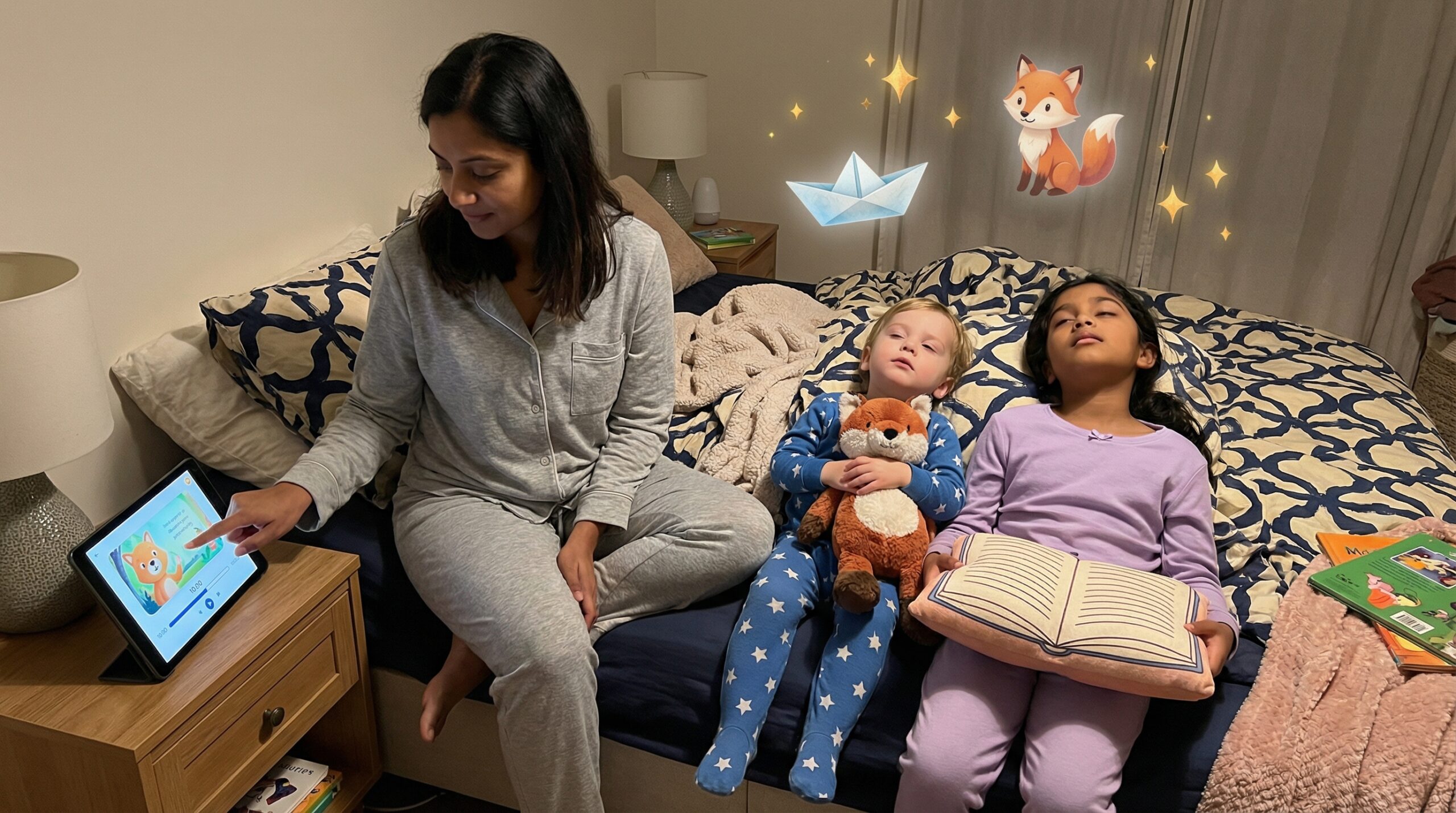
Stories bring vocabulary and grammar in context. Also they let children imagine what characters think and feel. This practice builds empathy and social understanding. Research shows that storytelling contributes 68.2% to the improvement of early childhood empathy skills, especially at the age of 5–6 years. Multiple studies show coherent stories boost recall compared to isolated facts. Bedtime tales, read-alouds, and short digital narratives all make use of repetition and emotion to strengthen memory. Furthermore, a 2025 study indicated that narrative structure significantly enhances memory accuracy, linking storytelling techniques to improved retention in children.
Characteristics of enduring educational stories
Good educational stories share certain traits. They use clear sequence and relatable characters. They repeat key vocabulary in natural ways. They connect facts to feelings. Together these features help retention and understanding. A 2025 meta-analysis of home-implemented literacy interventions reported effective outcomes, supporting the integration of storytelling in educational practices.
Storypie: short, age-tailored narrative design
Storypie turns evidence into kid-friendly content. Our stories match ages three to twelve with carefully chosen length and language. We favor character-driven plots and soundtrack-supported audio. In addition, our 10-minute format repeats key scenes and words to aid memory.
Alignment and reach
Storypie aligns with early years and primary literacy guidance in England. Therefore teachers and parents find our content relevant to classroom goals. Digital delivery widens access, making narrative learning practical for many families and schools.
Final thought
Storytelling blends ancient wisdom with modern evidence. For ages three to twelve, narrative acts as a core engine of learning, memory, and empathy. If you seek joyful, research-aligned stories that stick, explore Storypie for short, memorable tales.