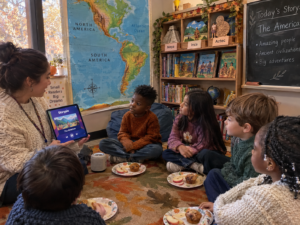

Education through storytelling ages 3 to 12 turns facts into living scenes that children remember. Stories give kids a map, emotion, and social practice. They make learning human and joyfully simple. In fact, a 2023 study found that children who learned through storytelling retained 70% of the information compared to just 10% when taught through traditional methods.
Why narratives stick
First, stories create order. When events follow a clear sequence, children link cause and effect more easily. Also, emotion anchors memory. A problem with stakes grabs attention and helps facts stick. Finally, stories build social understanding. Kids practice perspective taking by stepping into a character’s shoes.
How stories help by age
Ages 3 to 5: Language and routine
Young children soak up words, rhythm, and repetition. Simple, repeated phrases boost vocabulary and memory. For example, a short picture story that repeats animal sounds invites imitation and play. These sessions also form comforting routines that help learning land. Research indicates that storytelling connectedness in children ages 5–8 predicts phonological awareness and reading comprehension measured 3–4 months later, demonstrating the long-term benefits of storytelling on literacy skills.
Ages 6 to 8: Comprehension and causal thinking
School-age children move from listening to decoding text. Stories with clear causes invite predictions and why questions. Ask a simple question like, What might happen next and why? This practice builds reasoning and reading confidence.
Ages 9 to 12: Nuance and perspective
Older kids handle multiple viewpoints and moral gray areas. A story that asks, Was the hero really wrong? sparks debate and deep thinking. Short discussions after a tale improve critical thinking and empathy.
Practical wins for parents and teachers
Shared reading exposes children to richer vocabulary than everyday talk. Narrative contexts help facts stay memorable because they live in scenes. According to a 2025 systematic review, there is a strong relationship between home-based shared book reading and various developmental outcomes, including language and vocabulary skills. Short sessions of about ten minutes fit attention spans and build routine. Also, regular reading strengthens word recognition and listening skills.
Formats that work
Oral telling, picture books, and narrated apps all keep the magic of storytelling. Audiobooks and story apps preserve intonation and pacing. These features matter for engagement and memory. Try different formats to match your child’s mood and schedule.
Representation and culture
Diverse stories matter a great deal. When children see characters who resemble them, belonging and engagement rise. Also, diverse tales help others learn about different lives and values. Across cultures, short repeatable stories pass on social rules and practical tips because they are easy to remember.
Try this tonight
Play a ten minute tale and ask one prediction question. Notice new words, a remembered sequence, or a small burst of empathy the next morning. It is a tiny habit with mighty returns.
Learn more
Explore Storypie for character selection, audio narration, and short story creation tools that fit busy families. Visit our About Storypie page to learn about our approach. When you are ready, get the Storypie app and play a short story tonight.
Stories are ancient and surprisingly powerful. Invite them in, savor the moments, and watch small ideas stick and grow.