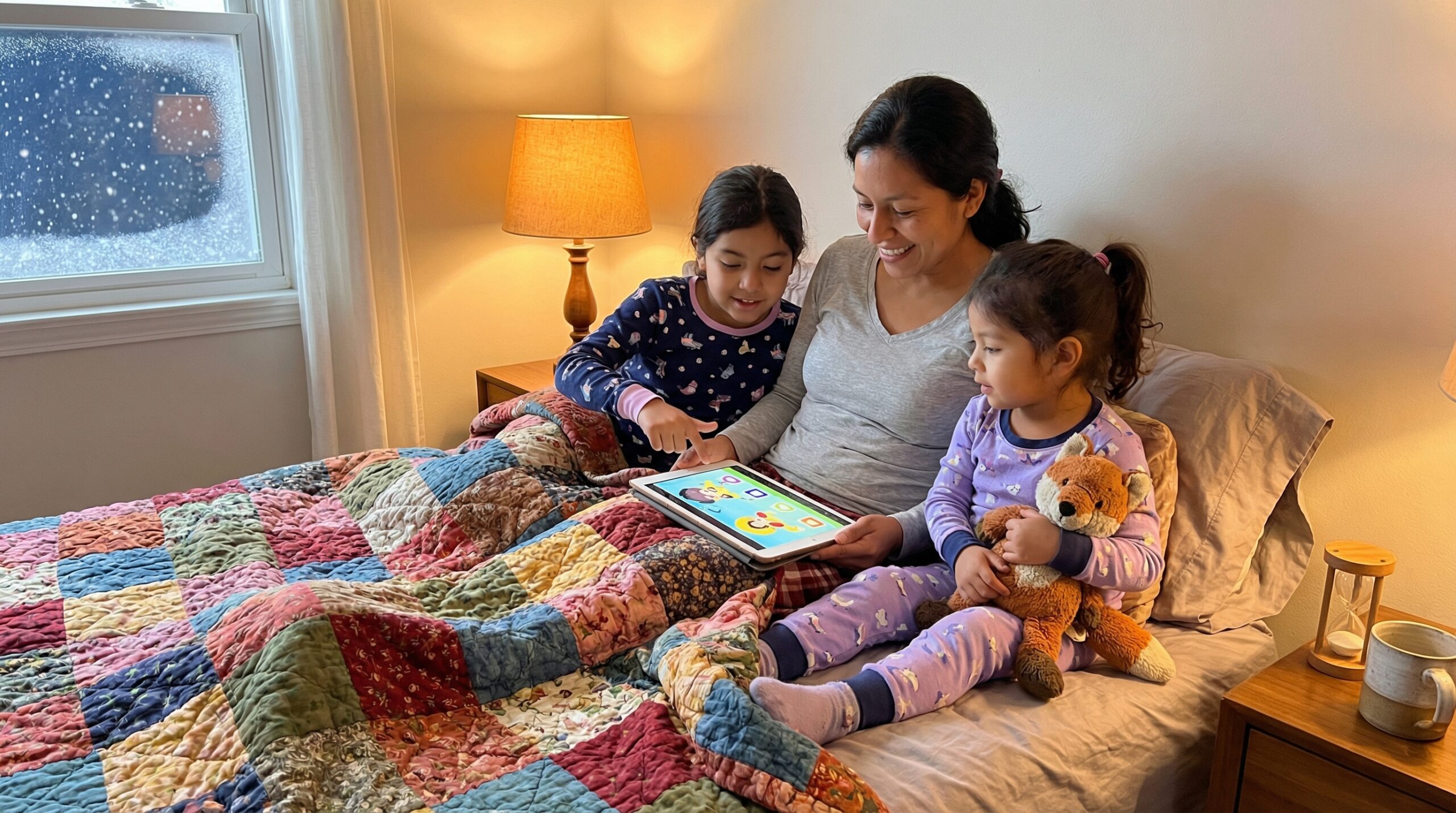
Education through storytelling for ages 3-12 works like a secret rocket for learning. On winter evenings, a ten minute bedtime story calms children and teaches new words. Try a tiny ritual: dim lights, a warm blanket, one vivid image and one new word. Also, shared reading builds habits that last. In fact, Reach Out and Read served 4.4 million young children in FY23, distributing 7.1 million books, illustrating the widespread use of shared-reading and storytelling interventions in early childhood care.
Why narrative sticks for ages 3-12
Stories give memory a clear scaffold. A beginning, middle, and end create strong hooks so kids remember who did what and why. Emotion makes details stick. A worried hero, a triumphant rescue, or a silly mishap light up attention and feeling. In addition, listening to stories activates language networks and social brain areas. Therefore, stories are wonderfully sticky and quietly powerful. Research indicates that storytelling increases information retention by 65% compared to traditional verbal instruction methods, highlighting its effectiveness in helping children remember information.
Developmental fit and growing literacy
Between ages 3 and 12, children change fast. Young listeners learn words from context and repeated lines. Older kids deal with complex motives and themes. Shared reading predicts vocabulary gains, better sentence skills, and later reading success. For bilingual children and learners with differences, stories offer repeated, contextualized language in many modes. A longitudinal study published in May 2024 found that storytelling connectedness in children ages 5–8 predicted phonological awareness and reading comprehension measured 3–4 months later. So, storytelling fits development at every step.
Learning beyond words
Stories do more than teach vocabulary. They boost attention and motivation. Characters invite empathy and practice in perspective taking. Fables show consequences and moral thinking. Also, illustrated books, audiobooks and animated tales add cues that strengthen comprehension. For example, a story frame helps children place science facts, history events, or math ideas inside meaning. Thus, recall becomes easier and more joyful. In a controlled study of Swedish-speaking children aged 6 and 8, overall story comprehension accuracy was greater than 90% across tasks and age groups, demonstrating the effectiveness of storytelling in engaging children and enhancing their understanding of narratives.
Simple, practical routines parents and teachers love
Keep it short and sweet. Ten minutes works wonders on cold evenings. Use repetition so younger children connect phrases and goals. Invite prediction by pausing and asking, What happens next? Mix modes by reading, listening, and showing small images for extra reinforcement. Small shared routines stack into big gains over time. A 2025 meta-analysis of interactive reading experiments reported a medium aggregate effect on children’s narrative ability (Hedges’ g = 0.425), with the largest gains for 4–5 year-olds (g = 0.635), emphasizing how interactive storytelling enhances narrative skills in young children.
Choose quality and caregiver-led experiences
Not all storytime is equal. Choose age-appropriate tales and diverse voices. Also, favor caregiver-led reading over passive playback. For playful prompts and supportive narration, try the Storypie app. Explore the Storypie mission to learn how our characters, audio narration, and gentle prompts support shared reading.
Education through storytelling for ages 3-12 is low cost and high impact. Start a tiny nightly ritual and watch language, memory, and empathy grow. For a joyful way to begin, visit the Storypie app and learn more about our mission.