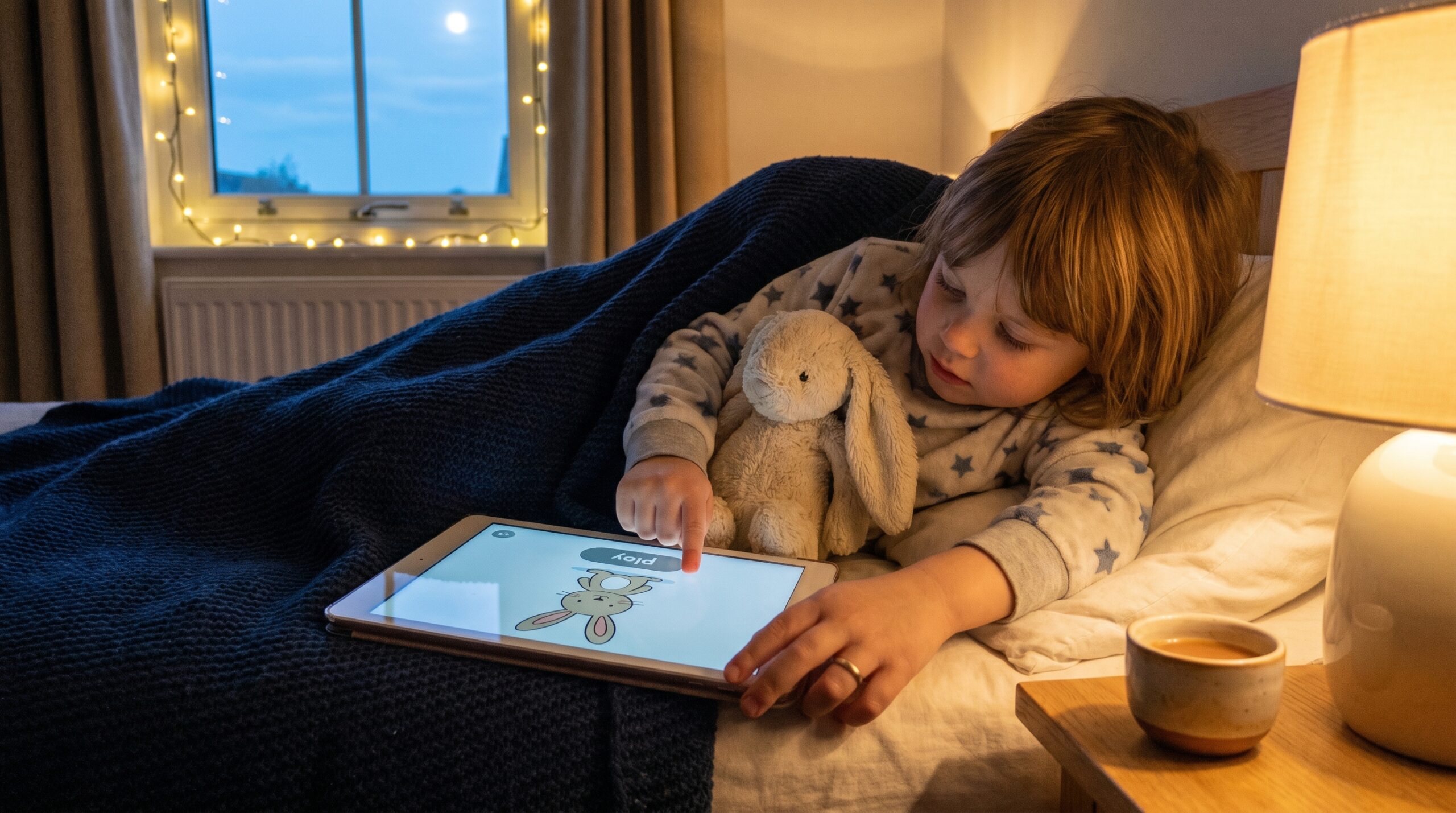
The bedtime wind-down mini story ritual is a short, predictable close to the day. It cues calm with a 3 to 7 minute story. Parents use it to reduce resistance and build a gentle connection. In fact, a 2025 survey indicated that 90% of parents of 1–6-year-olds reported having a bedtime routine for their child, with 67% including reading bedtime stories.
What is the bedtime wind-down mini story ritual?
This mini story ritual is tiny but mighty. You dim lights. You lower sound. Then you tell or play a short calming story. The ritual ends with the same closing cue every night. That predictability is the real magic.
Why it works
Short stories give the brain a clear signal: the day is ending. Predictability reduces worry. A familiar closing cue signals sleep time. Together, these parts help kids relax faster and resist less. A 2025 survey found that 71% of parents agreed that storytelling helps their children wind down at bedtime, with 49% naming it their preferred method. This emphasizes the effectiveness of storytelling as a calming technique for bedtime, supporting the mini story ritual’s purpose.
How to do the Bedtime wind-down: mini story ritual in five minutes
Follow these simple steps. They fit real life and tired parents.
- Dim lights and keep sound soft.
- Sit or lie beside your child.
- Tell or play a 3 to 5 minute calming story.
- Use the same closing cue every night.
A short first-person example
I start every night this way. Dim lights. Two soft breaths together. Then the tiny story. I use the same closing phrase. My child knows what comes next and relaxes faster. That blissful bedtime sigh? I call it victory.
Five-minute sample script
Here is a tiny script you can try tonight:
- “Once, there was a small cloud who got lost after a long day.”
- “The cloud looked for a quiet hill to rest.”
- “A kind fox showed the cloud a safe place.”
- “They shared a gentle breeze and watched the stars.”
- “The cloud learned to breathe slow and soft.”
- “The cloud curled up and decided to sleep.”
- Closing cue: “Night-hush now. Sleep like the cloud.”
Practical checklist for tonight
- After pajamas and teeth, place the mini story at the end of the routine.
- Keep the moment audio-only or very low brightness. No screens.
- Repeat the same closing cue each night for predictability.
- Timebox the ritual to 3 to 7 minutes. Short wins are powerful.
Live voice or Storypie audio
I love live voice for closeness. Yet apps bring consistency on busy nights. Try a Storypie audio in audio-only mode and a night-friendly volume when you need it. Visit Storypie app or our Storypie home page for gentle audio options.
Troubleshooting and next steps
If your child is too wired, slow your voice and make sentences shorter. Try a tactile cue like a soft blanket or a gentle hand squeeze at the closing phrase. For neurodivergent children, keep steady pacing and the same sensory cue each night.
Track time-to-sleep, night wakings, and morning mood for 2 to 4 weeks. Small shifts are progress. If struggles persist despite steady practice, consult your pediatrician or a pediatric sleep specialist to rule out underlying issues. A 2024 randomized clinical trial showed that removing screen time in the hour before bed resulted in small-to-medium improvements in sleep efficiency and reductions in night awakenings, supporting the idea of a calming bedtime routine, which can include storytelling, to improve sleep quality.
Bedtime stories are ancient. The bedtime wind-down mini story ritual is a modern, efficient twist. Short, predictable, and soothing. Research shows that a 2026 study found a two-week nightly bedtime reading routine improved empathy and creativity in children aged 6–8, showing significant gains in cognitive empathy and creative fluency. Try it tonight and notice the small, sweet changes. For audio-ready bedtime stories, check Storypie for gentle, repeatable options.