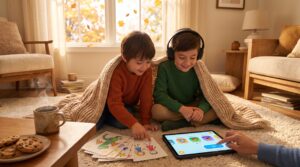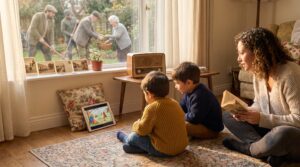
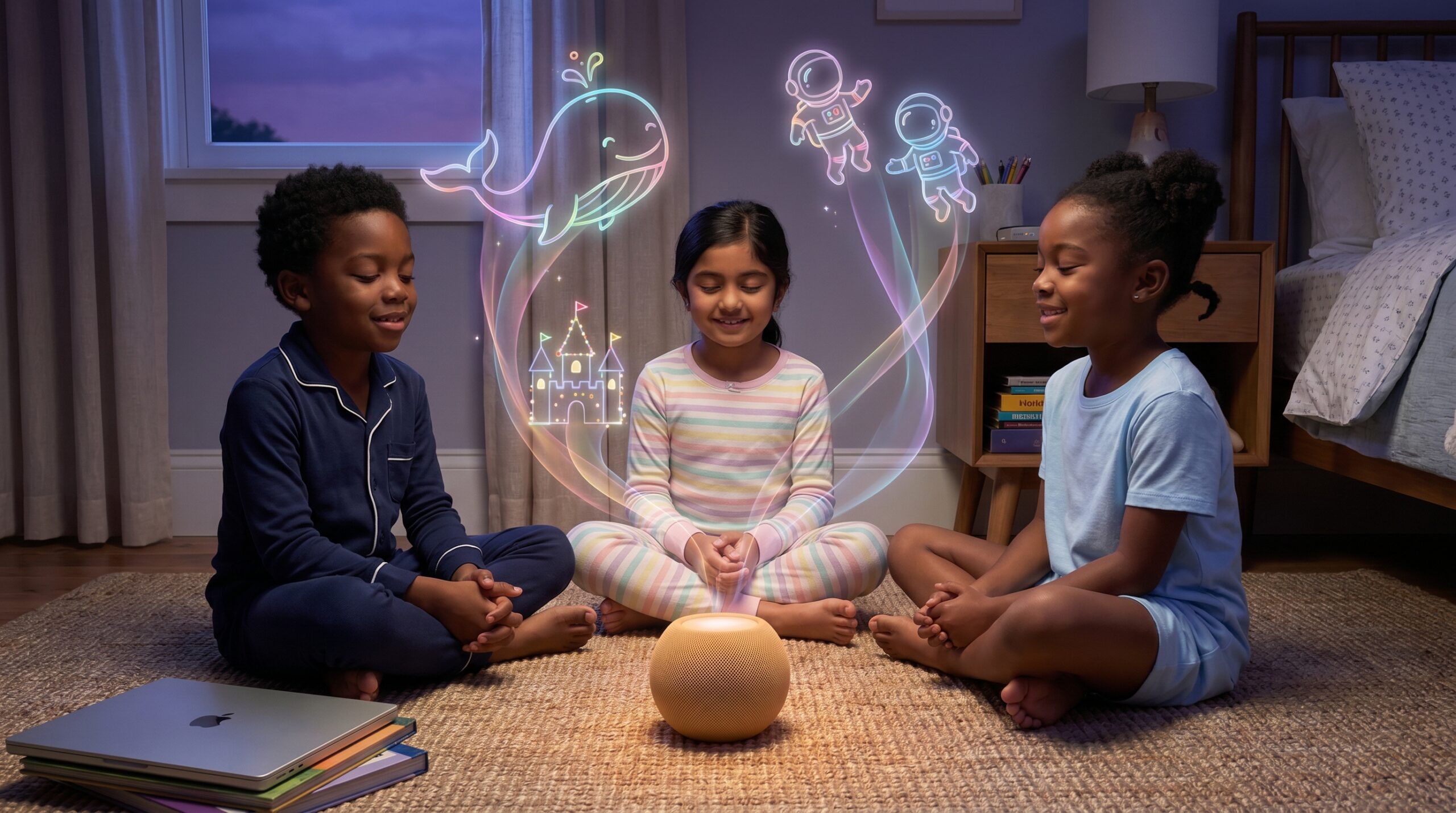
Audio first cognitive load matters at bedtime. Choosing spoken stories over glowing screens makes a big difference.
Why audio first cognitive load matters
Cognitive load theory says working memory has limits. Screens add visual input and extra clutter. Therefore the brain spends more energy on visuals. As a result, it has less energy left to build a mental picture of the story. A 2024 study found that viewers reported significantly higher cognitive load when watching subtitled videos without sound, with mean Effort scores of 4.84 (sound OFF) compared to 3.07 (sound ON) on a 1–7 scale (p < .001), highlighting the cognitive load differences between audio and visual content.
Also, dual-coding ideas show words plus images can help learning. However, imposed pictures can replace a child’s inner pictures. Audio alone nudges kids to paint their own images inside their heads. Research indicates that listening to narratives engages a wide, bilateral set of cortical regions, providing evidence that audio narratives support active meaning construction. Neuroscience supports this. Listening lights up language, memory, and imagination networks. Prosody and tone also carry emotional cues that help social-emotional growth.
Clear, practical benefits families notice
- Lowered cognitive load. Fewer visuals means deeper mental focus.
- Bigger imagination. Kids form strong inner pictures that stick.
- Better language. Hearing words and rhythm supports reading later.
- Calmer routines. Audio avoids blue light and eases toward sleep.
- More inclusive. Audio works well for emergent readers and some visual impairments.
Simple ways families try audio first cognitive load tonight
Start small. Swap ten minutes of screen time for one short audio story. Sit together for the first listen. Then pause and ask one playful question: What did you picture? Finally, save a short recording of your child retelling the ending. It becomes a tiny family treasure.
This little experiment is not a big project. Instead, it is a story-powered calm that builds night after night.
Ages and cautions
Infants need live voice and back-and-forth talk more than produced audio. Preschoolers get a vocabulary boost and richer pretend play. School-age children follow longer arcs and can listen alone.
One caution: passive background media reduces benefits. The magic happens when audio invites focused attention. Also, each child’s stage shapes how they experience audio.
Evidence and next steps
Research and pediatric guidance recommend limiting screens for young children. Audio fits that guidance and avoids blue light that can delay sleep hormones. Additionally, a meta-review reports the multimedia ‘modality effect’ has a large meta-analytic magnitude — Hedges’ g ≈ 0.70 — indicating substantially better learning from audio narration + graphics versus on‑screen text + graphics. If you want a practical way to start, try a Storypie audio bedtime story tonight. For example, download the Storypie app or visit the Storypie site to explore ideas.
Try it tonight. The payoff is calm, stronger language, and bigger inner worlds. It is wonderfully practical and joyfully simple.