
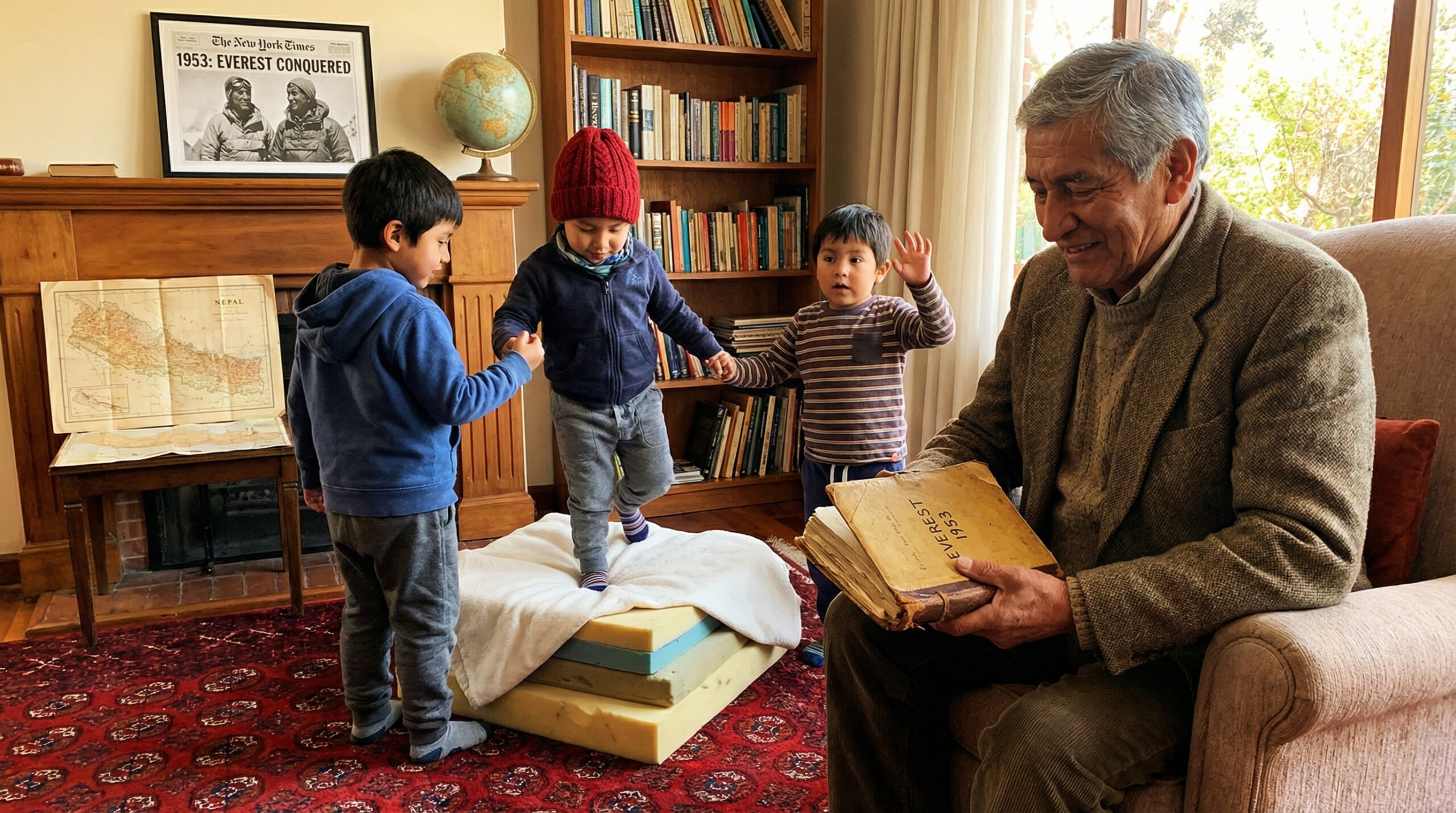
First Ascent of Mount Everest 1953 is a close, human story of steadiness and teamwork. Edmund Hillary’s first-person memory guides the tale. He recalls tiny steps, shared oxygen, and a bright summit morning on 29 May. On May 29, 1953, at 11:30 a.m. local time, Hillary and Tenzing Norgay reached the summit of Mount Everest, marking the first confirmed ascent of the world’s highest peak, according to Guinness World Records.
How the climb unfolded
The 1953 British expedition followed the South Col route through Nepal. First, the team threaded the Khumbu Icefall. Then they crossed the wide, ice-filled Western Cwm. Next they climbed the steep Lhotse Face to the South Col. Finally they followed the southeast ridge to the summit near 8,848 metres. The expedition comprised over 400 individuals, including 362 porters and 20 Sherpa guides, to support the climbers’ journey to the summit, highlighting the scale and teamwork involved, as detailed by Britannica.
Climbers moved camp by camp. They acclimatized and rotated upward. They fixed ropes and weighed each choice. In short, the mountain asked for patience and careful work.
Who made the moment possible
Edmund Hillary and Tenzing Norgay stood together at the top on 29 May. They used bottled oxygen in the final push, having established a high camp at 27,900 feet (8,500 meters) on May 28, 1953, before reaching the summit the following day, according to Britannica. Equipment then was heavy and primitive by modern standards. The expedition utilized two types of oxygen apparatus: closed-circuit and open-circuit systems, with Hillary and Norgay opting for the open-circuit type during their successful summit bid. Yet Sherpas, porters, climbers, and support staff kept tents safe and supplies moving.
Moreover, Sherpas were central. Their skill and courage were essential to success. Earlier in the expedition Tom Bourdillon and Charles Evans made a near summit attempt. They turned back when conditions demanded caution. That decision showed good judgment.
Route, challenges, and legacy
The route had known hazards, including the near-vertical rock below the summit later called the Hillary Step. Technology then was bulky and clothing was basic. Therefore the achievement felt even more splendid.
After the climb the world took notice. News of the successful ascent reached London in time to be announced on June 2, 1953, coinciding with the coronation of Queen Elizabeth II, as reported by The Guardian. The ascent became a symbol of exploration and shared success. Edmund Hillary received a knighthood and then helped Himalayan communities through the Himalayan Trust. Tenzing became a public figure who supported Sherpa welfare and mountain services. Their recognition became a way to give back.
Reading and listening options
Read or listen to a story about The First Ascent of Mount Everest (1953) now: Read or listen to a story about The First Ascent of Mount Everest (1953) now: For 3-5 year olds, For 6-8 year olds, For 8-10 year olds, and For 10-12 year olds.
For a gentle listen or a read-aloud, visit Storypie. The app keeps stories short and friendly.
Share the story
Keep the telling simple when you read to children. Use a small map to show Nepal, Base Camp, South Col, and the summit. Ask about teamwork and why climbers rest. Talk about thin air and why oxygen helped on the final push. Mention earlier attempts by Mallory and Irvine as a reminder that discovery can take many tries.
Above all, celebrate small steady steps. Bravery often looks quiet. It is practical and steady, not loud. Read together, wonder together, and enjoy the remarkable tale of the First Ascent of Mount Everest 1953.