
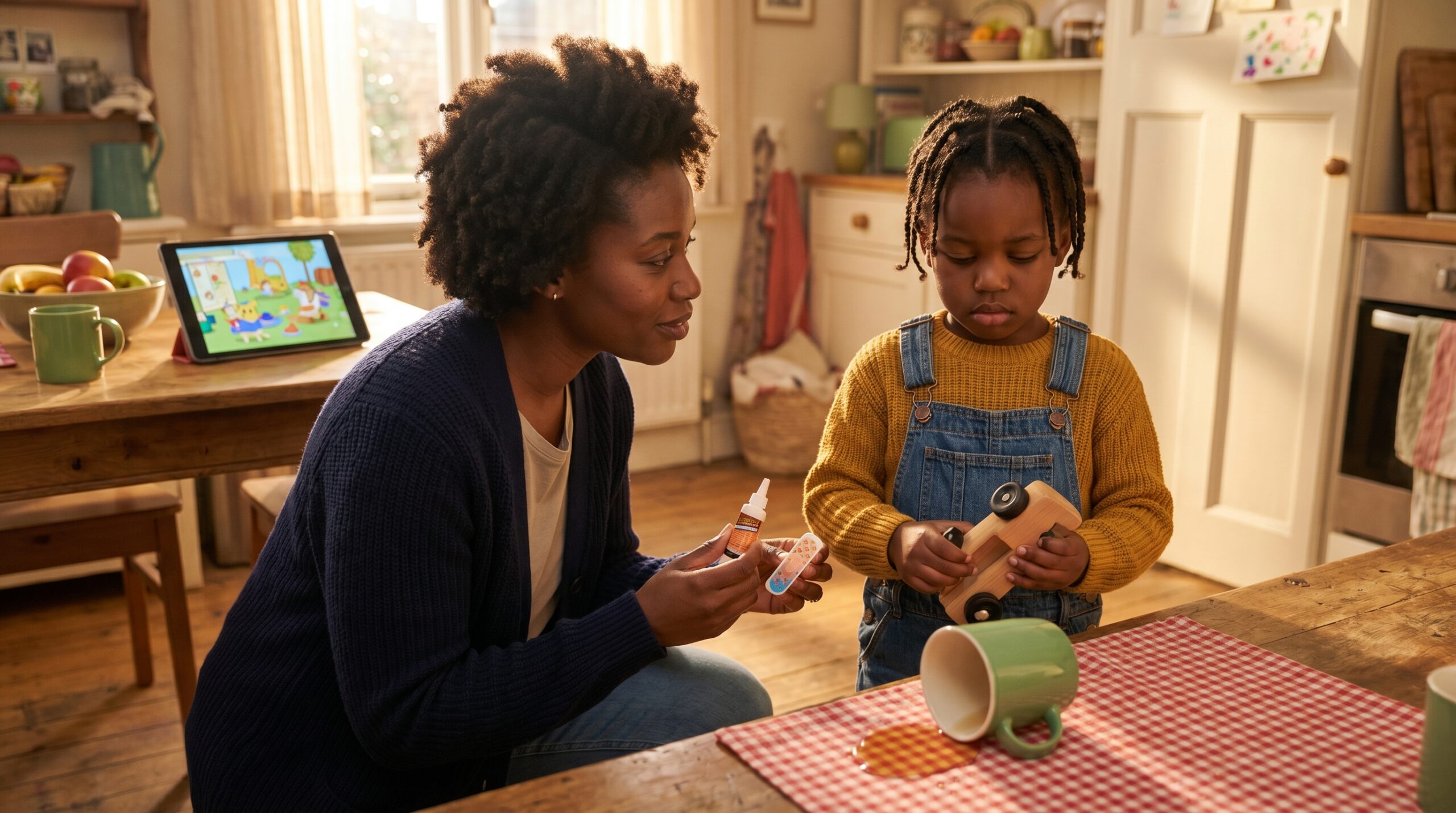
Guilt in children: What it is and why it matters
Guilt in children tells a child they may have hurt someone or broken a rule. It works like a tiny alarm that nudges repair, apology, and reconnection. Short, situation-specific guilt builds empathy. However, long-lasting or unrealistic guilt can harm mood and behavior. Research suggests that persistent guilt can have serious implications; for instance, a 2023 longitudinal study highlighted that trauma-related guilt significantly mediated the association between PTSD symptoms and later suicidal ideation, underscoring the need for supportive interventions.
What guilt does
Guilt signals a child believes they caused harm or failed to meet a standard. Developmental research shows guilt motivates reparative acts like saying sorry or helping. Unlike shame, guilt focuses on an action rather than the person. That focus makes guilt a tool for repair, not a life sentence. A 2024 study found that individuals experiencing guilt exhibited reduced nonverbal behavior compared to other emotions, suggesting that children may need additional support to express their feelings effectively.
How guilt develops by age
Toddlers often show immediate regret or try to comfort a peer before they can name the feeling. Preschoolers start to say sorry aloud and link actions to another person’s feelings. School-age children weigh intent and outcome, and they can take concrete reparative steps. Teens feel more complex guilt and may ruminate, especially when identity or peer norms are involved. Understanding the neurological basis of guilt can also be helpful; a voxel-based meta-analysis published in 2023 identified consistent guilt-related activations in brain regions associated with emotional processing, which can inform how we approach discussions about guilt with older children.
Guilt vs shame
Guilt focuses on the action. Shame focuses on the self. That difference matters. Guilt usually motivates fixing and apology. Shame often leads to withdrawal and low self-esteem. Help your child name the feeling and take one small reparative step. That turns a heavy feeling into a teachable moment.
Practical parenting steps: name it, repair it, let it go
Use short scripts, model repair, and celebrate the fix. Try a simple line such as “It looks like you feel bad about that.” Then offer a concrete next step. Simple repairs work best. For example:
- One brief apology
- Helping to rebuild something
- Replacing a broken item
Praise the repair, not the guilt. Say, “I am proud you helped rebuild the blocks.” Also, role-play and stories make practice playful and natural.
When guilt becomes a concern
If guilt is constant, affects sleep or appetite, or causes withdrawal, seek help. Also get help if the child feels guilty about events beyond their control. Persistent guilt can be a sign of depression, anxiety, or trauma. A narrative review published in 2025 noted that moral injury, which involves feelings of guilt and shame, is prevalent among first responders and can similarly affect children in emotionally charged situations. Safety first: never ask a child to carry guilt for abuse or neglect. Seek immediate help if that arises.
Read or listen to a story about Guilt now
Read or listen to a story about Guilt now: For 3-5 year olds, For 6-8 year olds, For 8-10 year olds, and For 10-12 year olds.
Also, explore stories and activities on Storypie to practice repairs in gentle, imaginative ways.
Final thought
A small apology often does the trick. Model repair, celebrate the fix, and let the tiny alarm fade. Over time, this builds compassion and stronger bonds. Guilt in children can teach kindness when adults guide it with warmth and clarity.