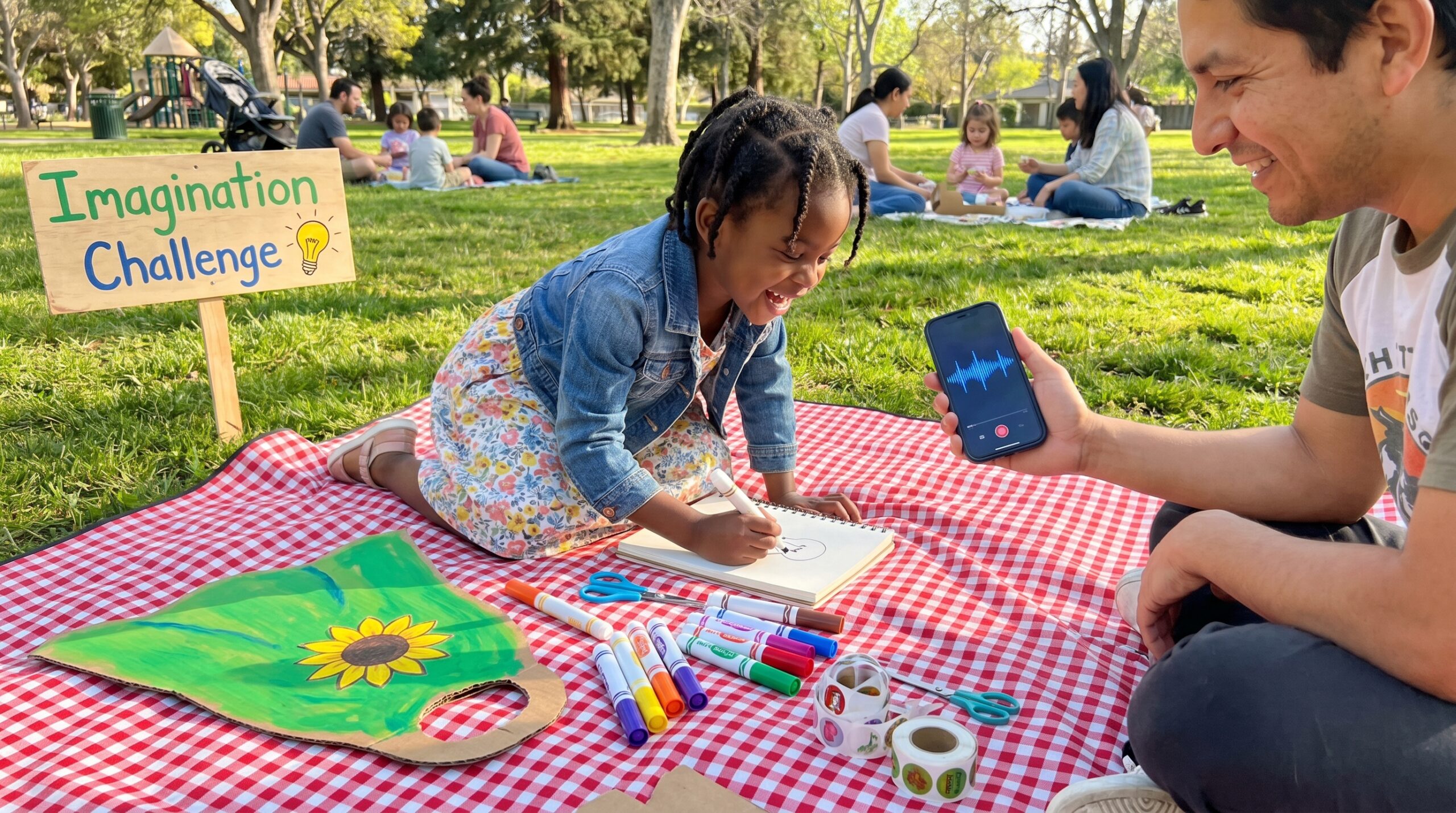
Try a create your own hero challenge this weekend. It is a short, family-friendly project to spark hands-on imagination. Engaging in creative activities like this can significantly enhance children’s sense of life being worthwhile, as found in a 2024 study in Frontiers in Psychology.
What the challenge is
This activity gives a simple prompt. First, choose one power and give it a name. Then, sketch one costume piece. Finally, cut, glue, and decorate. Keep supplies basic: paper, crayons, child-safe scissors, glue, stickers, and fabric scraps. Also, use recycled bits when you like. The goal is curiosity and making, not perfection.
Why this matters
Symbolic play supports language and problem solving. Naming a power grows vocabulary. Also, describing how a cape moves builds sentence skills. Drawing and cutting strengthen fine motor control. Working together teaches turn-taking and empathy. Teachers and child development experts note that such play builds social skills. In short, it is tiny parade, huge pride. Research shows that 61% of individuals engaging in creative activities reported improved mental well-being, according to a 2023 study by the National Alliance on Mental Illness and the Adobe Foundation.
Benefits at a glance
- Language growth through naming and description
- Fine motor practice with drawing and cutting
- Social skills through sharing and teamwork
- Low cost and easy to adapt
Ages and timing
Adapt this create your own hero challenge for ages three to twelve. For preschoolers, choose one power and one color. For early elementary, add a backstory and a mask. Older kids can design multiple costume panels and a simple origin. Time is flexible. Run it as a 10 to 15 minute prompt or a 30 to 60 minute creative session.
Design and set up
Create a small station to invite play. Use a child-height table and a tray for supplies. Also, provide a place to pin or display finished heroes. Limit choices to avoid overwhelm. For example, one hero at eye level guides focus. Keep lighting warm and steady. Add soft textures to help concentration. The test is simple: if a child returns without being asked, the setup works. A nationally-distributed survey of U.S. parents found that they rated free play as having the greatest learning potential, emphasizing the importance of play in learning, as noted in a 2023 study published in Frontiers in Developmental Psychology.
Materials and safety
Keep materials non-toxic and age appropriate. Offer chunky crayons and templates for children with motor needs. Also, swap tiny pieces for larger shapes. Use CE compliant scissors and supervise hot-glue or sharp tools. Try digital drawing tools if that works better for a child.
Variations and extensions
Try group versions that build a team of heroes. Or, turn sketches into messy construction using recyclables. Also, make an audio-only hero origin story. For a hands-free lead, try Storypie audio prompts. Visit Storypie audio prompts to explore guided options.
Sharing and privacy
If you share photos, protect privacy. Use first names or pseudonyms. Avoid full-face images and blur backgrounds. Also, use generic captions and family-friendly hashtags. For more ideas and gentle prompts, visit the Storypie app.
Signs the challenge worked
Look for longer focused play and new words used in descriptions. Also, check for steadier scissor control. Watch for pride when a hero is displayed. Keep a hero folder to collect sketches and notes. Over weeks, hands get steadier and creativity deepens. Regular engagement in arts and creative activities is associated with better mental health, especially among adolescents, as concluded in a 2025 systematic review published in SSM – Population Health.
Try one small twist each weekend. Then, watch curiosity compound. For guided audio prompts and more inspiration, see Storypie audio prompts.