Jamestown Settlement 1607 was the first permanent English colony in North America. On May 14, 1607, approximately 104 English men and boys established Jamestown, which would become a pivotal point in American history. First, they built a triangular fort on a James River peninsula. The London Company sponsored the trip and named the site for King James I.
Jamestown Settlement 1607: Early Days
Captain John Smith became a clear leader. He organized work parties, made maps, and traded with nearby Algonquian-speaking groups. Also, the Powhatan Confederacy lived nearby. Chief Wahunsonacock, called Chief Powhatan, met the settlers with both diplomacy and resistance. Pocahontas appears in many stories. Her later marriage to John Rolfe in 1614 helped a brief peace.
Hardship and Change
The colony faced hunger, disease, and high death rates. By January 1608, only 38 of the original 104 settlers were still alive, with many having perished due to disease, famine, and conflicts with Native Americans, highlighting the severe challenges faced by the early settlers. The Starving Time of 1609 to 1610 was especially brutal, resulting in the death of nearly 90% of the settlers, reducing the population from approximately 500 to just 60 survivors. When relief came, only a tiny number of settlers survived. Then John Rolfe planted a milder tobacco around 1612. As a result, tobacco turned Virginia into a profitable colony. Next, in 1619 the Virginia House of Burgesses met, marking the beginning of self-government in colonial America. This assembly was the first representative assembly in the New World, showcasing the evolution of governance in the colonies. Also in 1619, a Dutch ship brought the first recorded Africans to Point Comfort. These events began political change and a tragic start to slavery.
Archaeology and Memory
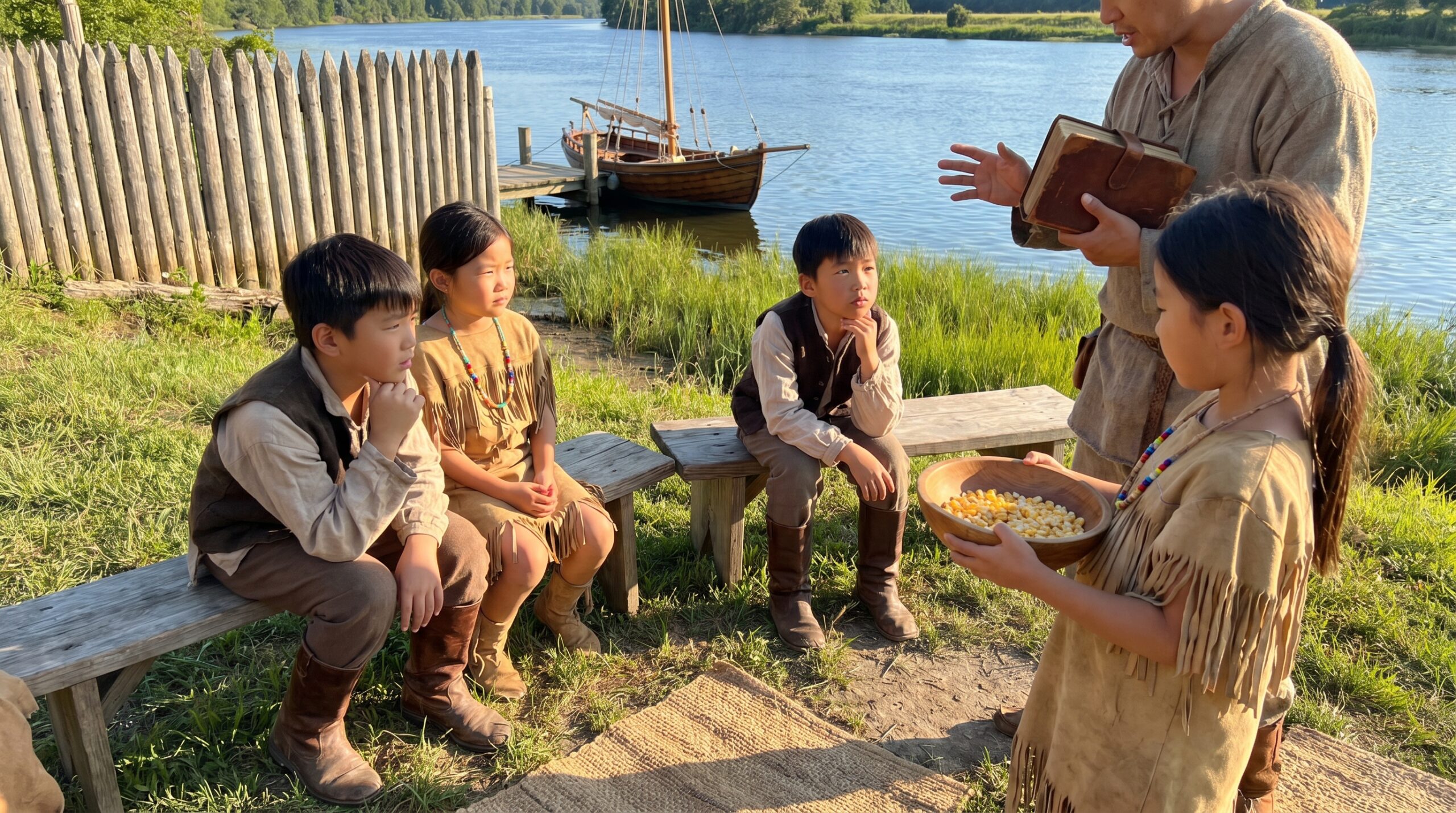
Today archaeology helps us learn details. Recent findings, including a 2024 archaeogenomic study, reported ancient DNA analyses of human remains from the c.1608–1616 Jamestown church, enabling identification of two high-status Englishmen from early Jamestown. These finds changed older ideas about daily life and survival. Families can visit two main sites today. The Jamestown Settlement living-history museum offers reconstructions and short films. Meanwhile Historic Jamestowne shows archaeological parks and real artifacts.
What children can notice
- People worked with tools, boats, and simple houses.
- Food and water were hard to find at first.
- Leaders, trade, and contact shaped daily life.
Try this with your child
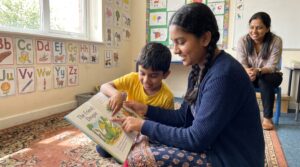
Storypie reads a child-friendly version of the Jamestown story. After a brave or hard moment, pause and ask, “What would you do?” This builds empathy and helps children imagine choices. Also try short prompts such as:
- Who would you help first if food was scarce?
- What would you trade for water or corn?
- How did the Powhatan help the colony survive?
Learning outcomes include creativity, empathy, and new vocabulary. Short questions work best for young listeners.
Read or listen to a story about Jamestown Settlement (1607) now: For 3-5 year olds, For 6-8 year olds, For 8-10 year olds, and For 10-12 year olds.
Final thought on Jamestown Settlement 1607
Jamestown teaches both courage and caution. It is a story of survival, surprise, and hard truths. Tell the tale honestly. Invite questions and let children weigh choices. Finally, a few small acts of curiosity can start big conversations.
Want the Storypie app? Visit Storypie for easy listening and reading for children.