
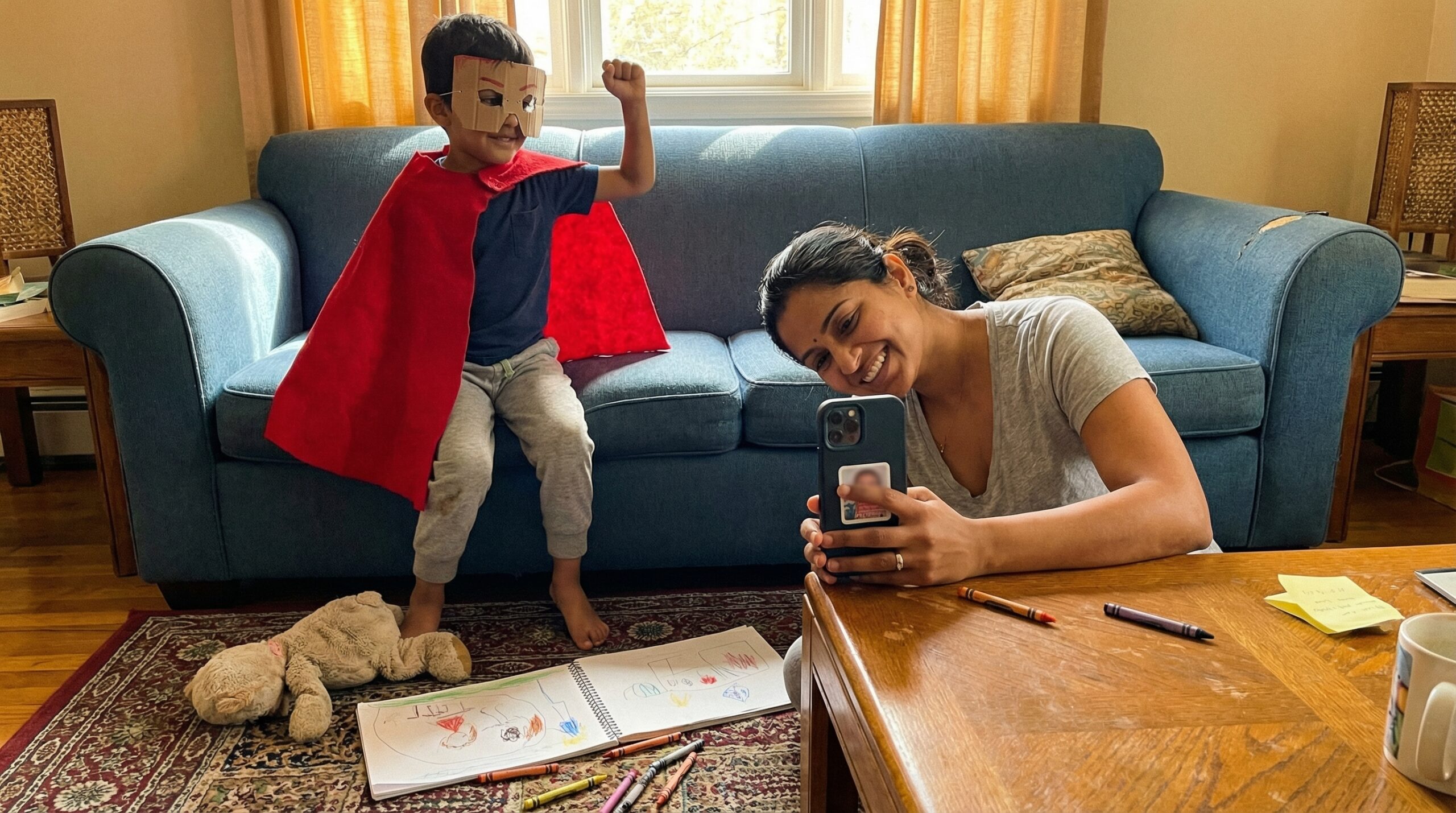
What the weekend imagination challenge create your own hero is
The weekend imagination challenge create your own hero is a short, cozy play ritual for kids. It usually centers on one open question and a five minute story burst. Parents and teachers report joyful surprises, and children practice language, planning, and empathy while they invent characters. Engaging in creative activities like this challenge can also significantly reduce feelings of stress or anxiety; a 2023 study by the National Alliance on Mental Illness (NAMI) and the Adobe Foundation found that 61% of individuals engaging in creative activities reported improved mental well-being.
Why this challenge matters
First, it supports language growth. Next, it builds social emotional skills. Also, it strengthens working memory and planning. In short, the challenge offers high return for little time. Many families enjoy it as a Saturday ritual. Furthermore, regular engagement in arts and creative activities has been associated with better mental health among adolescents, particularly through music, as concluded in a 2025 systematic review published in *SSM – Population Health*.
Core characteristics
- One open question that sparks imagination
- Short duration, typically five to fifteen minutes
- Child led with gentle adult attention
- Simple props or none at all
How the challenge usually looks
Typically, a child names a hero, picks a power, and imagines a first adventure. Then they share a short scene or plan. Finally, the adult listens and celebrates the details. This pattern repeats easily and becomes a friendly ritual. Engaging in such creative play is vital; research by Monash University has shown that infants and toddlers are capable of imaginary play, underscoring its importance for early childhood development, as reported in a 2023 study involving over 2,500 educators and young children.
Starter heroes to inspire
Here are playful hero ideas to spark a child. Use them as gentle seeds rather than scripts.
- Everyday Helper who fixes small neighborhood troubles
- Nature Whisperer who talks to insects and trees
- Gadget Kid who invents clever tools
- Kindness Hero who heals hurt feelings with words
- Invisible Listener who helps people feel heard
- Library Light who finds lost books and ideas
Common first-adventure themes
Most first adventures stay simple and safe. They let a child show how the hero cares or solves a little problem. Creative play like this is essential as a 2024 study in *Frontiers in Psychology* found that crafting activities significantly enhance individuals’ sense of life being worthwhile, which can greatly benefit children.
- Rescue a lost pet
- Fix a broken swing at the park
- Help a classmate find courage for show and tell
- Return a missing library book with a clever plan
- Rescue a stranded ladybird from a puddle
- Recover a special ribbon blown away by wind
Gentle facilitation and typical timing
Most adults give five minutes of quiet, focused attention. Then they reflect one line to show they heard. Also, one soft prompt can restart a stalled story. Overall, the facilitator role is quiet and warm.
Props, capture, and sharing
Common props include scarves, hats, paper, crayons, and a stuffed animal. For longer memory, families record a quick voice memo or jot a note in a Hero Journal. If you share a tale, use care and avoid identifying details. For digital story keeping, explore Storypie and the Storypie app for optional audio and organization.
Extensions that keep the habit alive
- Draw a comic strip of the first adventure
- Act it out with stuffed animals or scarves
- Record an audio version to play at bedtime
Micro sample
Child: My hero can grow wings and whisper to hedgehogs. Parent: Where do the wings take them first? Child: To the puddle where a ladybird needs a ride home.
Final thought
This weekend imagination challenge create your own hero works well as a weekly ritual. Over time, small episodes build confidence and a love of telling. Notably, a 2023 PLAY‑DOH study found that 64% of teens feel their imagination declines as they age, highlighting the need for initiatives like this to foster creativity in children. Try it and savor the tiny, joyful echoes of play.
Learn more about saving voice stories and organizing short tales on Storypie: Storypie or get the app at Storypie – Get App.