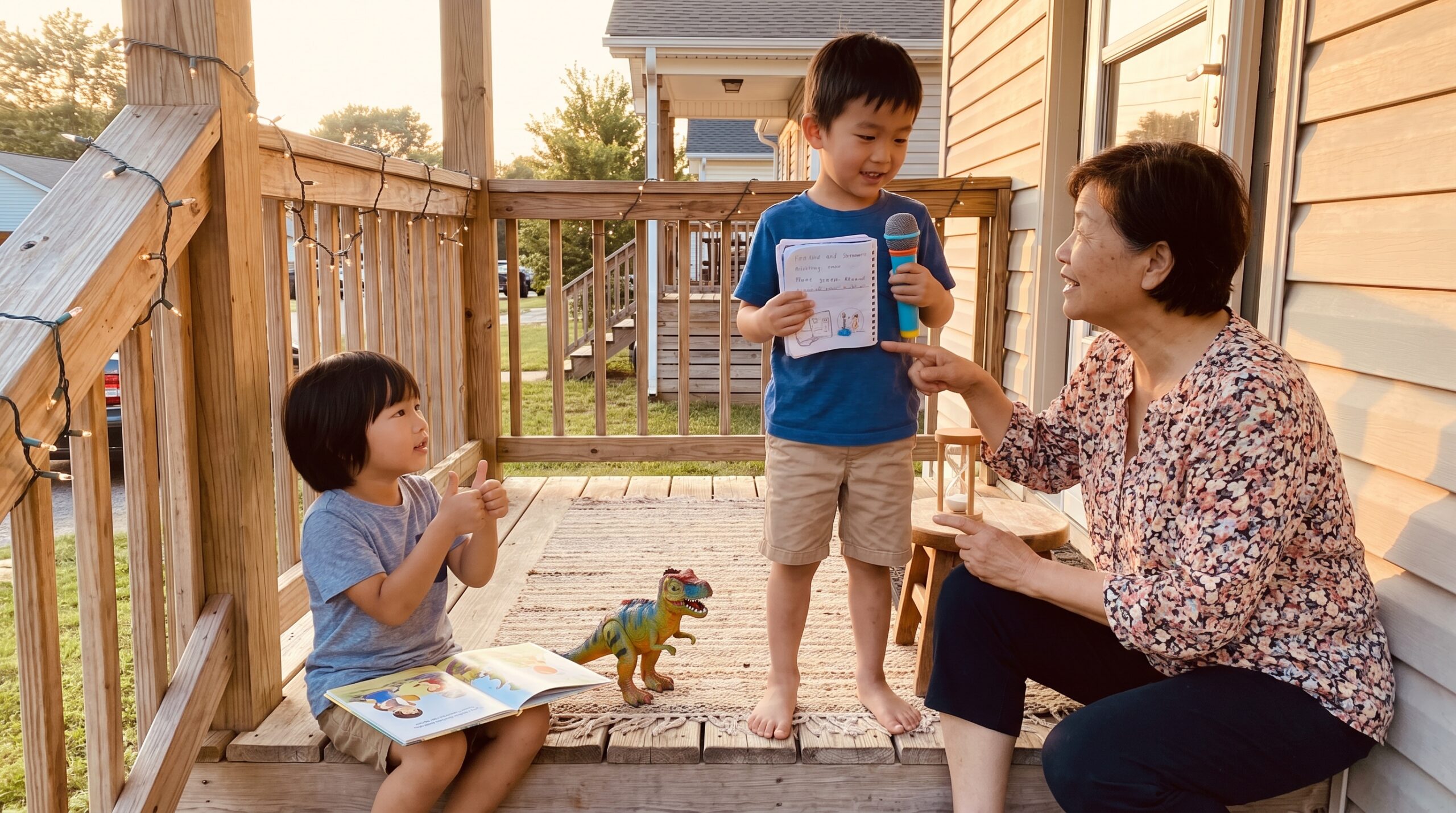
At Storypie we love stories about brave little steps. Building confidence in children often starts with tiny rituals. For example, Leo rehearsed show-and-tell with his grandma. Also, a friend cheered him on. Those small moments helped him show up with a proud smile.
Building confidence in children: What confidence means
Confidence is a child’s growing belief that they can try, learn, and succeed. In plain terms, it means a child expects a good result from effort. Related ideas matter too. For example, self-confidence focuses on tasks. Self-efficacy names a child’s sense of toolkits and will. Self-esteem reflects a broader sense of worth. All three ideas feed each other and shape behavior. However, it’s important to note that societal confidence levels can impact children’s self-perception. For instance, a 2025 Gallup poll found that only about 59% of Americans were optimistic about their future, the lowest measure since the poll began nearly 20 years ago, which reflects a broader concern that can influence how children perceive their own confidence.
How confidence develops
Young children test boundaries through small wins. School-age kids work through stages where competence matters most. Teenagers refine their identity as self-regulation matures. In addition, Vygotsky’s idea of scaffolding explains how help can turn a near-impossible task into a proud achievement. Finally, steady support matters more than one-off compliments. As children observe the confidence levels of adults and institutions around them, they may form their beliefs about their own abilities. For example, according to the 2025 American Values Survey, only 41% of Americans expressed confidence in the federal government, down from 50% in 2015, indicating a general decline in trust that could affect children’s views on authority and their self-assurance.
What actually builds confidence
Research highlights four powerful sources. Mastery experiences rank highest. Give children tasks they can win at, and then raise the challenge slightly. Also, vicarious learning helps. Kids watch similar others succeed and think, I can do that. Next, social persuasion matters. Specific and believable encouragement moves mountains. Lastly, emotional states shape risk taking. Calm, encouraged children try more healthy risks. However, it’s essential to consider the context in which children develop confidence. For example, only 55% of Americans reported feeling confident in the safety of the U.S. food supply in the 2025 IFIC Food & Health Survey, a significant decline from 78% in 2012, which reflects a growing anxiety that could affect children’s outlook on safety and security in their environments.
Practical, age-appropriate habits that help
Build confidence in children with small, predictable rituals. Try short, steady practices that fit family life. Gentle routines feel playful and safe.
- Tiny daily rehearsals. Five minutes of run-through before a presentation or a performance. Tiny wins, big smiles.
- Short challenges. Let a preschooler pour a drink. Invite a 7-year-old to lead a simple chore. Let a teen plan a family outing.
- Safe risk-taking. Choose supervised ways to stretch skills so failure is small and recoverable.
- Comfort rituals. A quiet countdown, a lucky hat, or a thumbs-up handshake signals safety.
Praise and parenting that helps
Skip vague person praise like You are so smart. Instead use process praise. Say, You kept trying and found a new way. This links effort to results and supports growth. Also, scaffold tasks. Break them into doable steps. Stay close, and then step back. Secure emotional support gives children a reliable base to try new things.
Spotting low confidence and next steps
Look for avoidance, social withdrawal, perfectionism, or anxiety. If worry persists, talk to a teacher or pediatrician. Early support reduces long-term risk. For serious concerns, seek professional guidance promptly.
A cultural note and a friendly next step
Different families value different skills. English-speaking settings may prize speaking up. However, confidence is not the same as arrogance. Healthy confidence blends honest self-appraisal with openness to feedback. This is increasingly important as societal confidence wanes; in a 2025 national survey, only 48% of American adults felt confident that their personal data was secure, down from 53% in 2024, reflecting broader concerns that can impact children’s sense of safety and confidence in their surroundings.
Read or listen to a story about Confidence now: Read or listen to a story about Confidence now: For 3-5 year olds, For 6-8 year olds, For 8-10 year olds, and For 10-12 year olds.
Finally, the test is simple. When a child tries something without asking permission, the work is done. Tiny rituals, steady praise, and chances to fail safely build confident kids who show up again and again. If you want more stories and ideas, try the Storypie app for gentle practice and playful learning: Storypie app.