
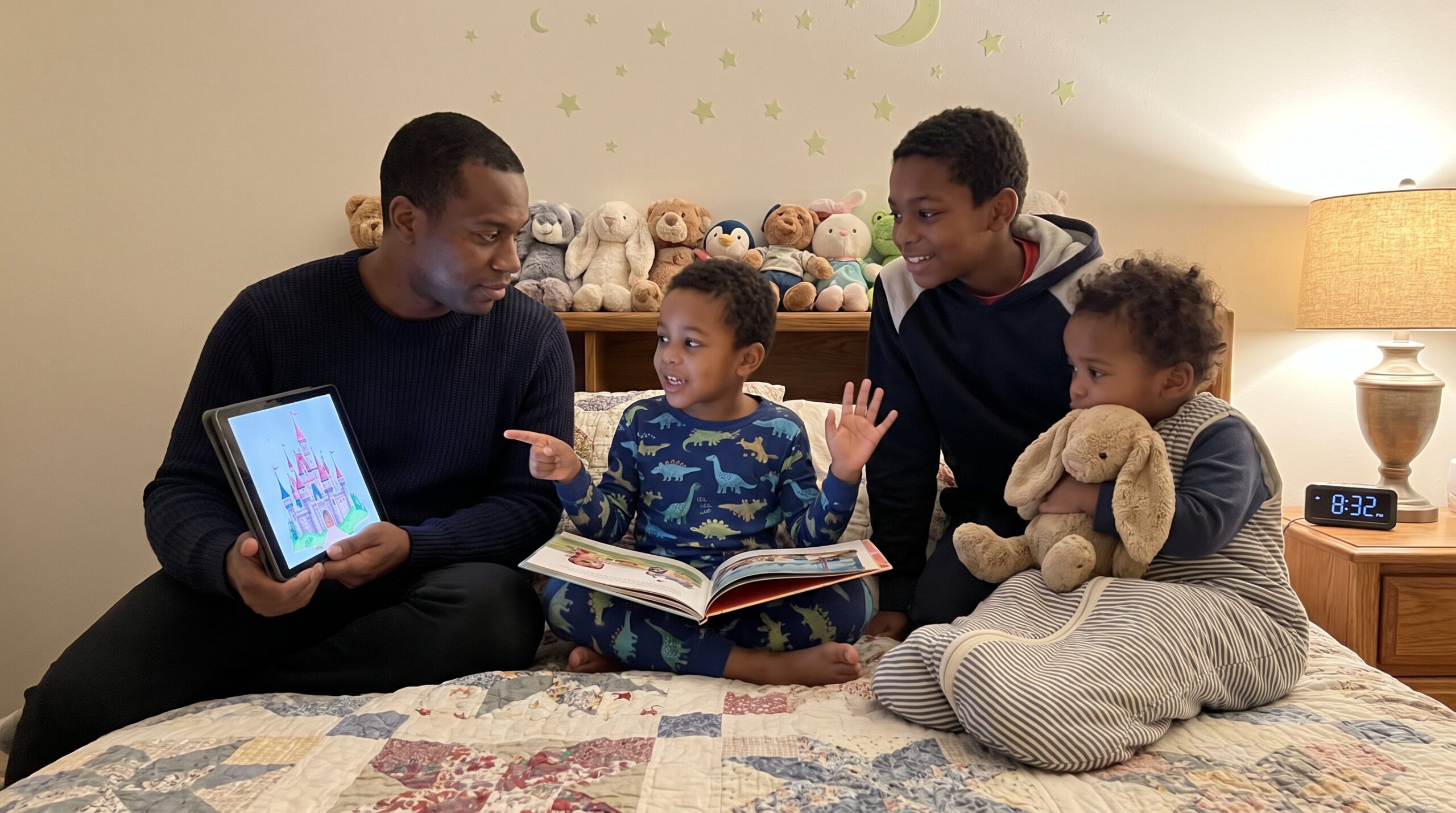
Education through storytelling ages 3-12 lands at a sweet spot where brain, voice, and imagination meet. Stories pack facts into people with goals, causes, and consequences. The brain prefers that tidy structure. Narrative gives facts a spine, so children remember what matters. In fact, a 2023 study found that children who learned through storytelling retained 70% of the information, compared to just 10% when taught through traditional methods.
Developmental fit for education through storytelling ages 3-12
Young children think in scenes. Preschoolers hear a single moment best. Early elementary kids link steps and motives. Older children hold complex plots and moral puzzles. Because stories map events onto people, they match how children form memories. Research from a 2021 meta-analysis of interventions aimed at improving narrative language in preschool and elementary school-age children found overall positive effects, reinforcing the importance of storytelling in educational settings.
How stories anchor memory
Stories create causal chains. They name agents, show goals, and deliver outcomes. That fits episodic memory systems. Also, emotion and pictures boost encoding. In plain terms, memories nest inside characters, feelings, and images.
Language, literacy, and social-emotional gains
Stories boost vocabulary and grammar. Words arrive inside meaning, not lists. Listening comprehension grows with repeated exposure. Over time, these gains support reading readiness. A 2025 study evaluating teacher-designed e-storybooks for young children showed that the experimental group’s mean narrative-competence score rose significantly, demonstrating the effectiveness of e-storybooks in improving children’s narrative skills, crucial for their educational development.
Stories also offer safe practice in perspective taking and empathy. Kids try on other minds inside a tale. That practice shows up as better social thinking and kinder choices.
Attention and motivation
Good tales hold attention. Compared with dry exposition, a well-paced story invites curiosity and focus. That matters for typical listening spans by age. For example:
- Preschoolers: about 3 to 10 minutes
- Early elementary: about 10 to 20 minutes
- Older kids: about 20 to 40 minutes when truly engaged
Simple, low-effort steps that help
Caregivers can use tiny rituals that help memory stick. Repeat favorites across nights. Ask one retrieval question after the tale. For instance, ask, “Tell me one funny thing the hero did.” Retrieval practice strengthens recall.
Use gestures, pictures, or a quick drawing to add imagery. Also, short routines help a lot. Keep stories short for preschoolers and slightly longer for older kids. Additionally, according to data from the 2020–2021 National Survey of Children’s Health, daily storytelling activities significantly improve school-readiness outcomes among young children.
Bedtime practice: an 8 to 10 minute tale
An 8 to 10 minute story fits a wide age band. Make it a gentle ritual. The closeness, soft light, and predictability all help learning. It takes under 10 minutes, and a little wonder goes a long way.
If you want well-paced, age-appropriate picks, explore our features page and then get the app for bedside choices.
Digital stories and shared moments
Audio and apps can reproduce many benefits of live read-alouds. They must keep clear structure, friendly pacing, and chances for interaction. Use them to widen choice, not to replace shared time.
Stories are ancient and powerful. They teach facts, habits, and values with minimal fuss. Share, repeat, delight, and smile. Try a bedtime story tonight and watch small minds carry a tale forward.