
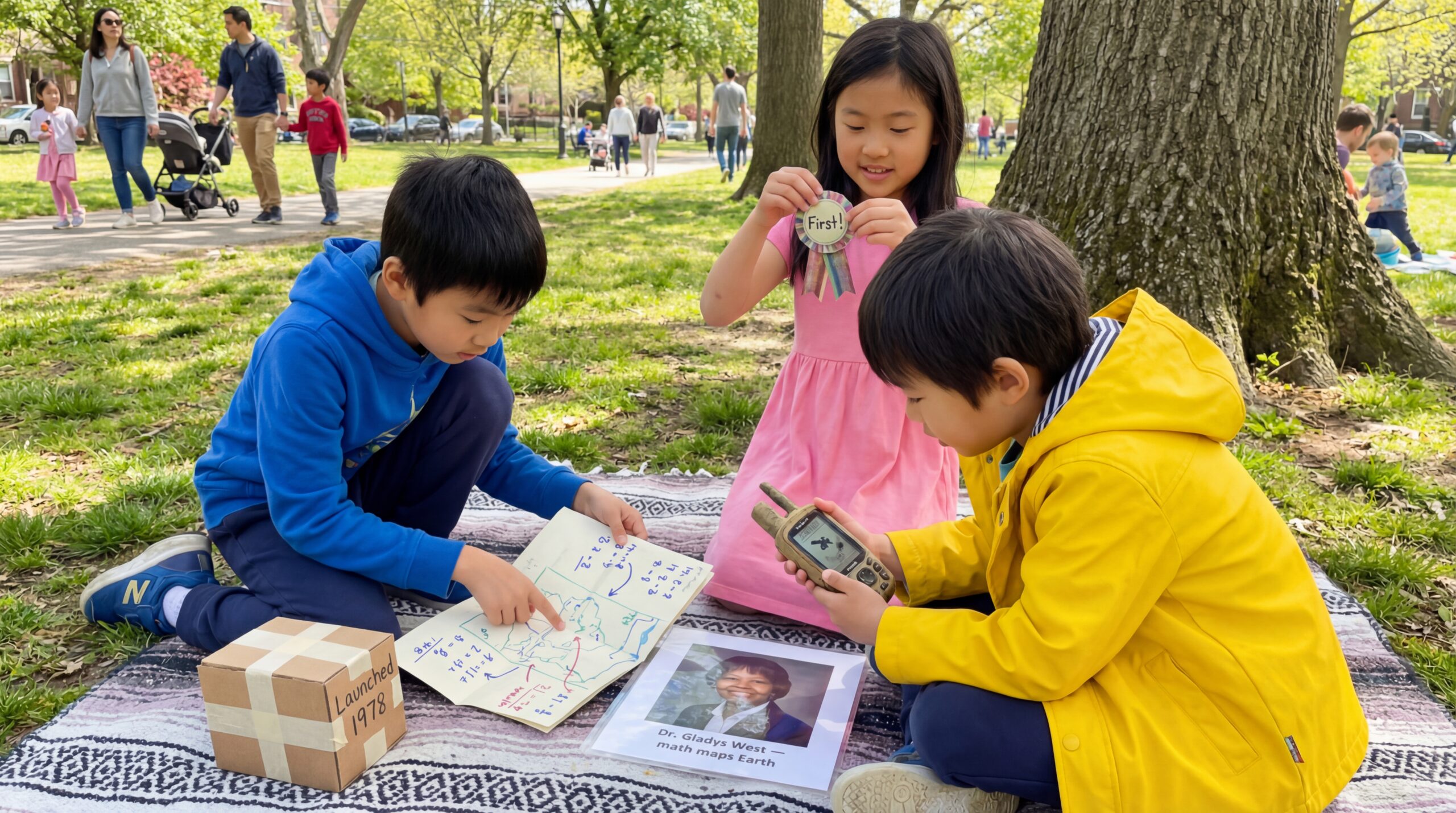
The first GPS satellite launched 1978 changed how we find our way. That February morning, a prototype NAVSTAR GPS satellite, Navstar 1, lifted off from Vandenberg Air Force Base in California. Engineers called these early models Block I. They were tests that proved a bold idea could work.
Block I: A small, precise beginning
Block I was the start of the NAVSTAR experiment. These prototypes checked signals, timing, and orbits. They rode to medium earth orbit, inclined at 63 degrees. That orbit sits about 20,200 kilometers above Earth. Each satellite took roughly 12 hours to circle the planet. Engineers placed precise clocks on board. Then the satellites broadcast time into space. Receivers on the ground listened and measured signal delay. In short, tiny clocks became guides in the sky. Navstar 1 had a design life expectancy of 5 years but exceeded expectations, remaining operational until July 17, 1985, over two years longer than planned, showcasing its reliability and success according to GPS World.
How time turns into a place
Satellites act like clocks in the sky. Each one stamps a time on its signal. A GPS receiver reads that stamp and finds distance. With signals from at least four satellites, a receiver finds latitude, longitude, and altitude. This math depends on atomic clocks aboard the satellites. It also depends on careful models of Earth’s shape. Dr. Gladys West helped with that math and those models. Her work made GPS more accurate. It is precise math that feels like everyday magic.
The NAVSTAR story and growing impact
The NAVSTAR program grew through the 1980s. More Block I satellites flew, with a total of 11 Block I satellites launched between 1978 and 1985, significantly contributing to the development of GPS technology according to the U.S. Coast Guard Navigation Center. By the 1990s, the system reached full operational capability. That constellation held about 24 satellites. In 2000 a feature called Selective Availability was switched off. As a result, civilian accuracy improved dramatically. Today GPS guides our drives and our hikes. It helps phones show maps in seconds. It also times networks that run banks and power grids. In short, small devices use big ideas to make life better.
Everyday effects and a tiny revolution
GPS touches rescue teams, farmers, and delivery drivers. It speeds disaster response and search and rescue. It also keeps communications and banking systems on time. So the quiet work of 1978 still matters. The first GPS satellite launched 1978 began a tiny revolution. That quiet start still helps millions every day.
A short outdoor math walk
Try a five-minute math treasure hunt with kids. First, pick a visible landmark. Then point and guess its direction. Say how many steps might get you there. Next, use a phone GPS to check your guess. Finally, compare distance and bearing with your estimate. Talk about which satellites your phone might be hearing. That quick activity makes the idea come alive in a friendly way.
Read or listen to a story about The First GPS Satellite Launched (1978) now: Read or listen to a story about The First GPS Satellite Launched (1978) now: For 3-5 year olds, For 6-8 year olds, For 8-10 year olds, and For 10-12 year olds.
That first satellite was not flashy. It was precise and quiet. Yet it changed how we move, call for help, and keep the lights on. The tiny revolution that began in 1978 still runs on clever math and steady clocks in the sky.