Louis Braille biography for kids begins in Coupvray, France. He was born on January 4, 1809, and died on January 6, 1852, in Paris at the age of 43, according to Encyclopaedia Britannica. As a young child he lost his sight after an accident in his father’s workshop. The wound became infected, and he went blind in both eyes. Yet curiosity stayed with him. In fact, that curiosity started a life of invention and teaching.
Early life and curiosity
Louis Braille grew up around tools and leather. He learned practical skills from his family. Later he attended the Royal Institute for Blind Youth in Paris. While there, he discovered a tactile military code called night writing. He saw that touch could carry detailed information. Then he asked a simple question: can this be made easier?
The six-dot code
While still a teenager, at the age of 15, Louis Braille developed his tactile reading and writing system in 1824, which consists of a six-dot code allowing for 64 possible combinations, as noted by the Library of Congress. That six-dot cell can form 64 different patterns. Each pattern stands for letters, punctuation, numbers, and even symbols for music and math. He published his method in 1829. After that, he taught the system at the school where he worked until his death on January 6, 1852.
How the code works, simply
Picture a small rectangle with two columns and three rows. Some dots are raised and some stay flat. Different combinations make different letters and signs. Because the cell allows 64 combinations, the system handles more than plain text. Special forms let blind musicians read scores, and blind students work with math.
Why Louis Braille matters
Louis Braille biography for kids shows clear benefits. First, independence. Braille lets blind readers read and write on their own. Also, learning. Braille opened schools and careers to many people who were blind. Moreover, versatility. There is braille for music, math, and many languages. In fact, as of 2025, Braille’s system has been adapted for at least 133 languages worldwide, enabling blind and visually impaired individuals to read and write in their native tongues, according to History.com. Finally, everyday presence. You will see braille on elevator buttons and on some public signs.
A slow start, then worldwide change
Braille did not become universal overnight. Schools and authorities moved cautiously at first. Over time the system spread across nations. Later standardizations, such as Unified English Braille, brought more consistency. Today braille exists as embossed books and on public signage. It also appears in electronic form via refreshable braille displays and embossers. To honor the centennial of his death, in 1952, Louis Braille’s remains were transferred to the Panthéon in Paris, a mausoleum for France’s most distinguished citizens, according to National Geographic.
Simple family ideas
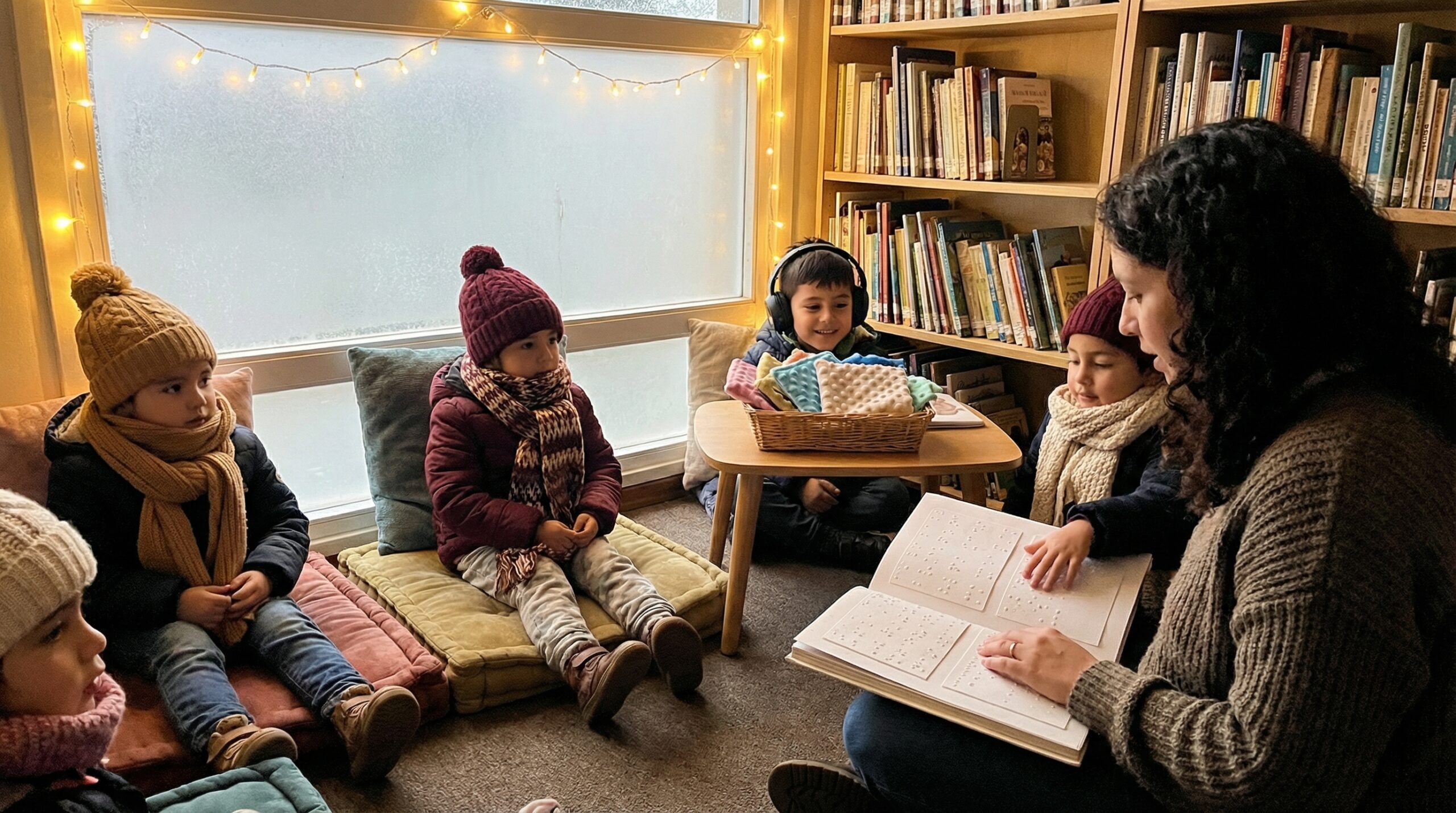
- Show a picture of a braille cell and trace the pattern with a fingertip.
- Read a short audio biography aloud, then ask one question.
- Play with tactile letter blocks or a simple embossing demo.
Read and listen
Read or listen to a story about Louis Braille now: For 3-5 year olds, For 6-8 year olds, For 8-10 year olds, and For 10-12 year olds.
For a cozy family moment, try a short Storypie audio after dinner. It builds listening skills and empathy. Also, World Braille Day on January 4 celebrates Braille’s birthday, as proclaimed by the United Nations General Assembly in 2018. It is a lovely time to remember how one curious child changed millions of lives.
Final thought
Louis Braille turned a personal challenge into a brilliant, practical tool that still matters. His six-dot idea stands as a clear example of invention and kindness widening the world for everyone. Let us read, listen, and touch the stories that connect us. Visit Storypie for more child-friendly biographies and audio stories.