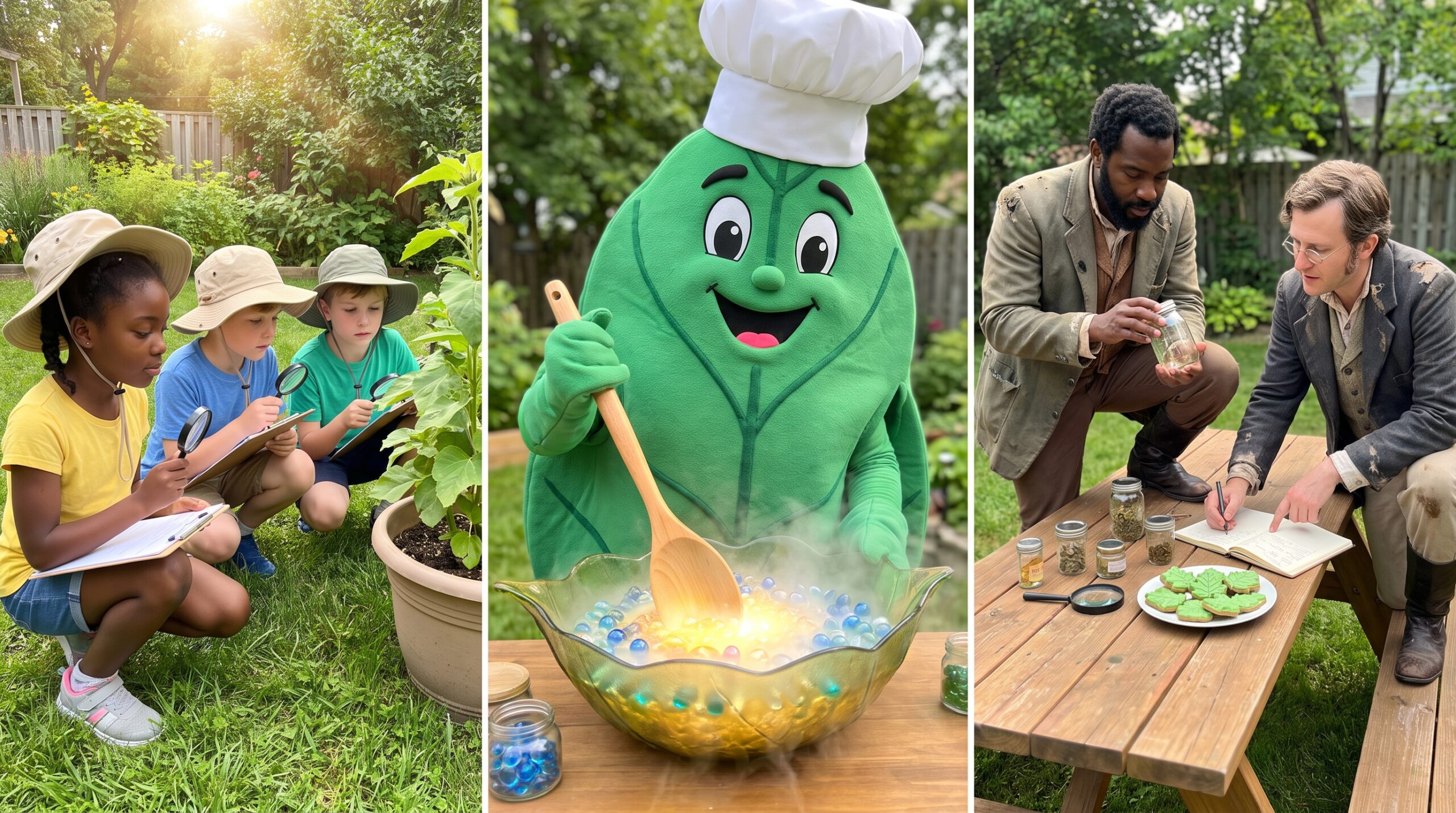
Photosynthesis for kids begins with a simple image: a leaf as a tiny kitchen. In the kitchen, sunlight is the oven. Chlorophyll is the green chef. Plants use light, water, and carbon dioxide to make sugar and oxygen. This process is called photosynthesis for kids and it matters for life on Earth. In fact, approximately 100 billion metric tons of carbon are fixed annually via photosynthesis into organic compounds, replenishing the Earth’s atmospheric oxygen roughly every 2,000 years.
Photosynthesis for Kids: Quick facts
Photosynthesis turns light into food and air. Also, plants, algae, and some bacteria perform it. The simple equation looks like this: 6 CO2 + 6 H2O + light → C6H12O6 + 6 O2. Glucose is the sugar made. Oxygen is released for us to breathe. Research from May 2023 revealed an intermediate reaction step leading to the release of oxygen, shedding light on a critical aspect of this essential process.
- Where it happens: inside chloroplasts in plant cells.
- Light reactions: capture light, make ATP and NADPH, and split water to free oxygen.
- Calvin cycle: uses ATP and NADPH to bake CO2 into sugar.
Where photosynthesis happens
Chloroplasts act like tiny kitchens. They hold stacks of thylakoid membranes and a fluid named stroma. Light reactions run in the thylakoids. The Calvin cycle runs in the stroma. Also, stomata are tiny pores on leaves. They let carbon dioxide in and water vapor out. Plants open stomata to get more CO2. However, open stomata cost water. So plants balance both needs. Interestingly, a study from December 2023 identified 70 new proteins involved in photosynthesis, significantly enhancing our understanding of this complex process.
Why leaves are green and how stomata work
Leaves look green because chlorophyll reflects green light. Also, chlorophyll absorbs blue and red light best. In autumn, other pigments appear when chlorophyll fades. Stomata sit on the leaf surface like tiny doors. They open for gas exchange and close to save water.
History in a snapshot
People studied photosynthesis for centuries. For example, Jan Baptista van Helmont showed that soil was not the main source of plant mass. Joseph Priestley found that plants restore the air. In addition, Jan Ingenhousz proved that light and green parts are needed. Finally, Melvin Calvin mapped carbon fixation with radioactive carbon. These discoveries shaped our understanding of photosynthesis.
Variations, limits, and why photosynthesis matters
Most plants use C3 photosynthesis. However, some like corn use C4 to avoid photorespiration. A 2023 study found that C4 crops like corn and sorghum tolerate increased ozone levels better than C3 crops such as rice and snap beans, due to differences in their photosynthetic machinery. Also, CAM plants such as cacti open stomata at night to save water. Photosynthesis depends on light, CO2, temperature, water, and nutrients. If one factor drops, another becomes limiting.
Photosynthesis supplies the oxygen we breathe. It also builds the base of food chains. Forests and oceans pull carbon from the air into living things, converting about 250 billion metric tons of carbon dioxide into organic matter each year, with nearly half occurring in the oceans and slightly more on land. Therefore, photosynthesis links to food and climate.
Try a simple leaf hunt
Spend five minutes finding leaves in sun and shade. Which are greener? Which are bigger? Ask: where does the plant get its food? Why are some leaves different? This quick activity sparks curiosity and close observation.
Read or listen to a story about Photosynthesis now: For 3-5 year olds, For 6-8 year olds, For 8-10 year olds, and For 10-12 year olds.
If you want more kid-friendly explanations and a hands-on pathway, try Storypie for guided reads and activities. It can help families and teachers explore photosynthesis together.
Glossary
- Chlorophyll: the green pigment in leaves.
- Chloroplast: the cell kitchen where photosynthesis happens.
- Stomata: tiny pores for gas exchange.
- Glucose: sugar made by photosynthesis.
- Carbon dioxide: CO2 gas used by plants.