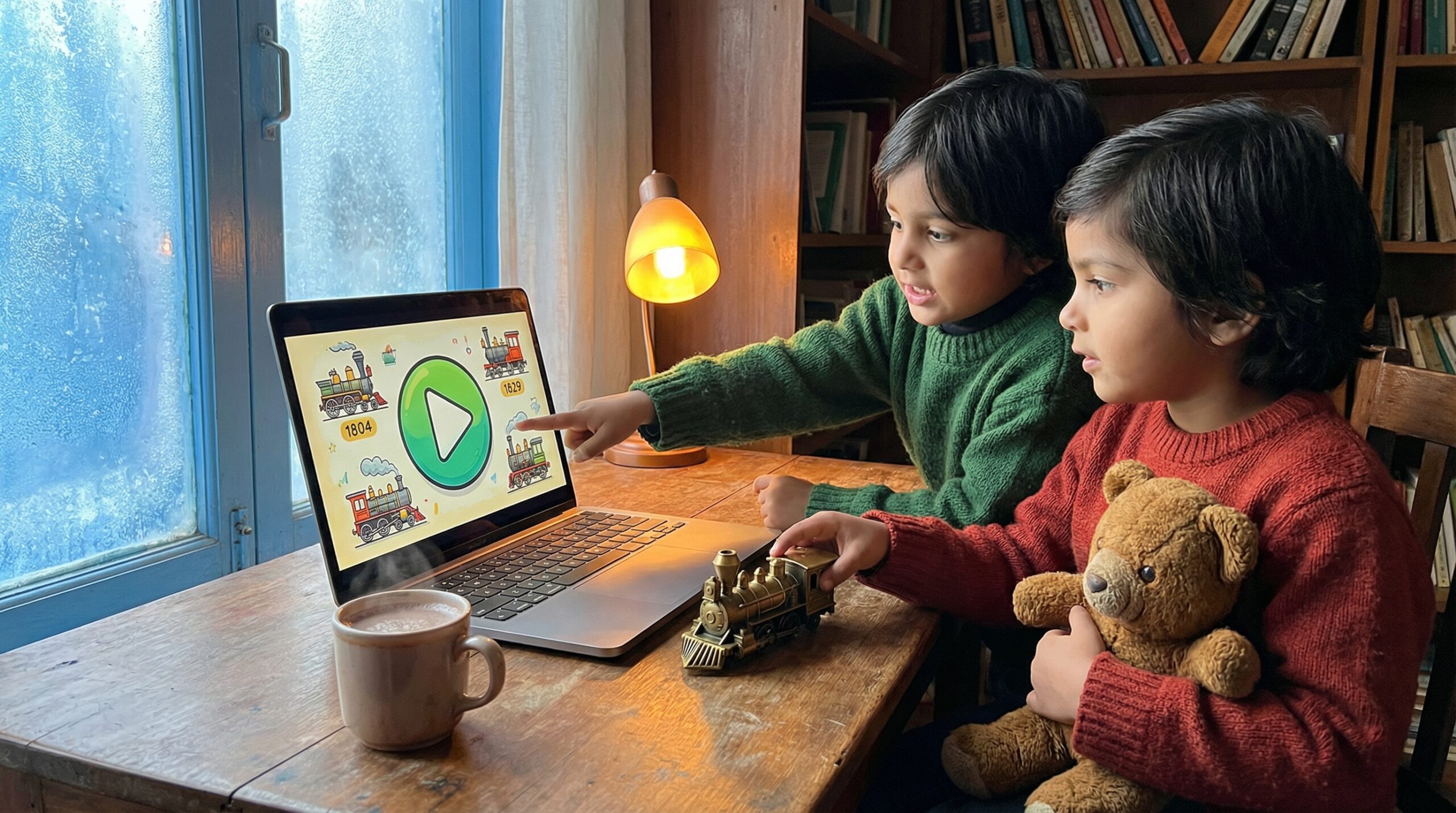
A steam locomotive for kids can feel like a giant kettle that moves the world. I still remember the first time I heard a steam whistle. It sounded like a cozy call to the playground. A steam locomotive uses steam pressure to push pistons and turn wheels. That small idea powered the clanking engines in old photos and museums. As of January 2026, there are 1,918 steam locomotives in the United States, with 1,833 of them documented with photos, showcasing the importance of preservation efforts.
Steam Locomotive for Kids: A Tiny History
First, in 1804 Richard Trevithick built a full scale steam locomotive at Penydarren. Then Locomotion No. 1 ran on the Stockton and Darlington Railway in 1825. The boiler barrel in the locomotive ‘Locomotion’ dates from 1827 and is the world’s oldest known standard-gauge boiler, according to the National Railway Museum. Next, George Stephenson’s Rocket won the Rainhill Trials in 1829. It proved steam could move people between cities. By 1830 the Liverpool and Manchester Railway opened and changed travel forever. Later improvements made engines faster and stronger. Finally, diesel and electric engines mostly replaced steam by mid 20th century. Today, many lovely locomotives live on in heritage railways and museums. The Heritage Railway Association represents 173 working railways and members operate about 800 steam locomotives, showcasing the ongoing relevance of these machines.
How a Steam Locomotive Works
Coal or oil heats water in a boiler to make steam. Then steam pushes pistons inside cylinders. The pistons move rods that turn the driving wheels. Spent steam leaves through the chimney. Main parts you can point out include:
- Firebox
- Boiler
- Cylinders and pistons
- Driving wheels
- Cab and tender
Also, the driver and fireman worked as a team to keep steam and water right.
Fun Facts and Safety
Mallard holds the steam speed record at 126 miles per hour. The Union Pacific Big Boy was one of the largest locomotives ever built. The whistle changes pitch because of steam pressure and shape. For safety, never play near live tracks. Always visit supervised platforms or heritage events. Teach children to wait behind the yellow line and to enjoy steam engines from a safe distance.
Activities and Stories
Try simple activities at home. Let kids listen to a kettle to feel steam pressure. Make a cardboard locomotive. Read aloud and record your co-created story to save as a family moment. Read or listen to a story about Steam Locomotive now: For 3-5 year olds, For 6-8 year olds, For 8-10 year olds, and For 10-12 year olds.
If you want a cozy listen, try Storypie to save that moment. Now go make a tiny locomotive tale. Ask your child to be the engine and whistle with joy.