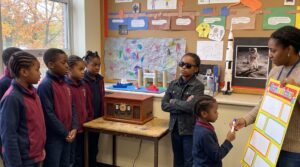

Story creation shaped my childhood. I loved pretending to be Anne from Anne of Green Gables. I walked with my chin high and delivered dramatic monologues. Many classmates had no idea what I meant. Still, story creation let me step into a new world I shaped with imagination and courage. It felt calm and thrilling at the same time.
Why Story Creation Instantly Captures Attention
There is something magical about story creation. Even the most restless students pause. They sit “criss-cross applesauce” and listen closely. A talking squirrel or a spaghetti-eating dragon pulls them in. Because the pacing flows and the characters feel real, they stay engaged. Often, they ask for “just one more.” That is the power of a well-told story.
Story Creation Offers More Than Entertainment
Story creation opens doors to creativity, emotional insight, and cognitive growth. In practice, children lean in, listen, and imagine freely. From Eric Carle to Andrea Beaty, strong stories spark curiosity and courage. For a deeper dive into social narratives, see our related post on the subtle power of social stories.
- Creativity: Children remix ideas and build new worlds.
- Emotional understanding: Characters model feelings and choices.
- Cognitive growth: Plots build memory, focus, and problem-solving.
How Story Creation Builds Language and Thinking
As children hear stories, they absorb vocabulary and rhythm. They also practice sequencing and cause-and-effect. In many early childhood classrooms, teachers weave story creation into the day. For example, the Storyline approach organizes learning around a central narrative. Instead of isolated facts, children explore ideas in context. As a result, concepts make sense and stick. For research-backed practices, explore NAEYC and classroom strategies from Edutopia.
From Listening to Writing: Story Creation Blooms
With time, children author their own tales. First, they write simple autobiographical pieces starring family and pets. Next, their creativity expands. Soon, dragons, fairies, and unicorns appear. They turn stuffed animals into heroes and mishaps into cliffhangers. Consequently, everyday life becomes wondrous.
Make Story Creation Part of Every Day
- Model out loud. Tell short, vivid stories during transitions.
- Offer prompts. Try “What if our classroom pet could talk?”
- Use simple structures. Begin–Middle–End keeps ideas clear.
- Invite visuals. Stickers, drawings, and puppets add momentum.
- Celebrate voice. Share author chairs and quick read-alouds.
Want tools that make story creation easy and joyful? Explore Storypie for flexible prompts, delightful characters, and audio narration that help young learners shine.
Final Thought
The earlier and more meaningfully we invite story creation, the stronger our learners become. Every child has a story to tell. When we help them find that voice, imagination grows louder, brighter, and more confident.