
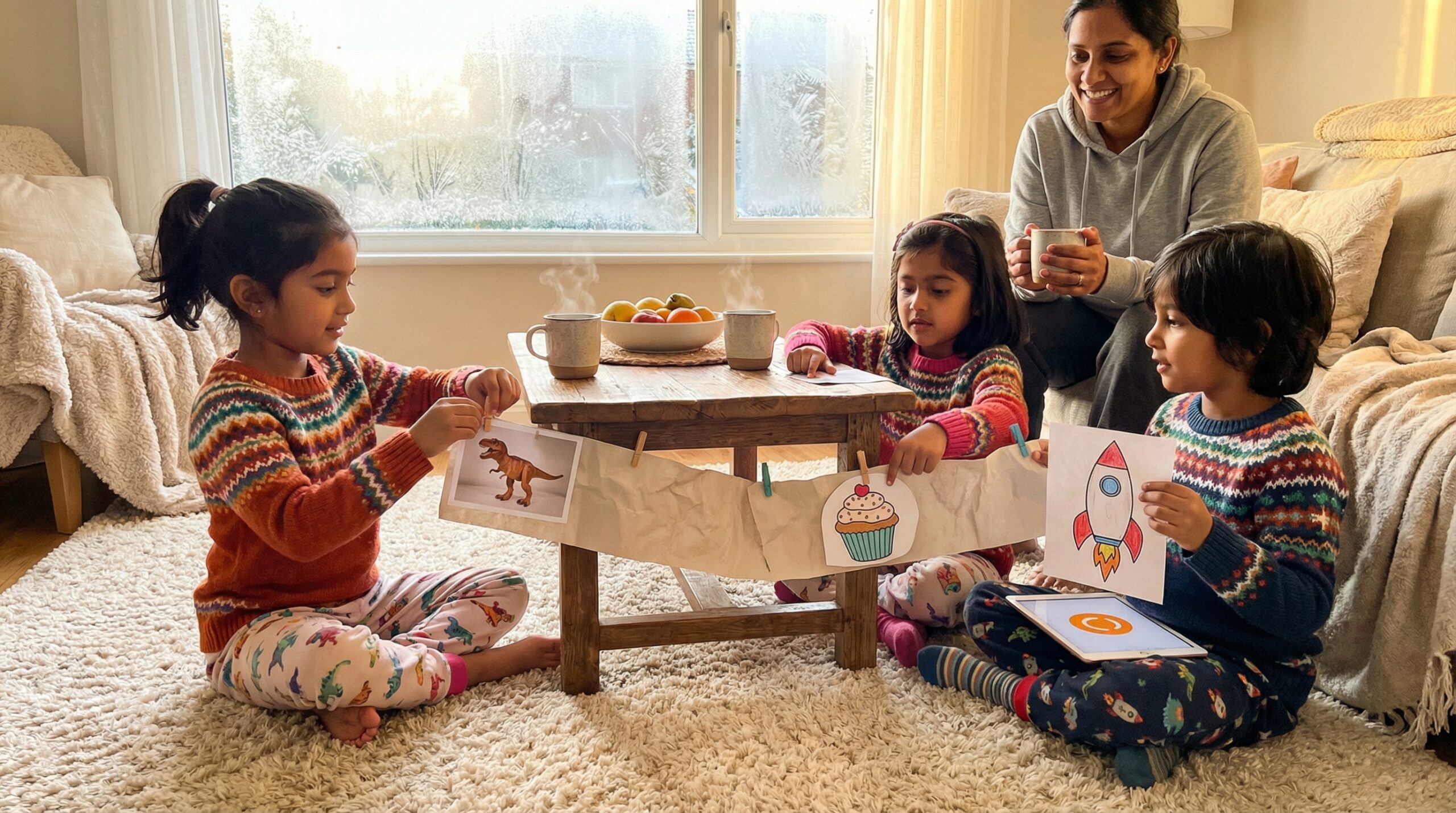
A timeline for kids turns scattered moments into a friendly map of days and years. It makes time feel concrete for little minds. Use pictures, big icons, and clear words to show order and meaning.
What is a timeline for kids?
A timeline is a simple line that places events in order. It shows when things happened and the sequence they followed. For children, a timeline for kids makes abstract time easy to see and touch.
A short history
In the 18th century Joseph Priestley popularized the modern timeline. He drew readable charts that placed lives and events on a line. Since then, timelines stayed popular because they are visual and calm. Today, timelines can be digital, and with the rise of mobile applications, the way we interact with timelines has evolved significantly. In fact, in 2023, global app downloads reached 257 billion, averaging over 489,000 downloads every minute, showing how integral these apps are in our daily lives.
Types of timelines
Timelines appear in many forms. Each type fits a different purpose.
- Historical timelines: sequences of past events.
- Personal or life timelines: baby milestones, school years, family moves.
- Project timelines: tasks and durations, such as a school assignment.
- Geological timelines: very long periods often shown on compressed scales.
- Social-media timelines: streams of posts that show now more than history.
What makes a good timeline for kids?
Keep the layout tidy. Use a baseline, clear ticks, large icons, and short labels. Choose points for single moments and bars for spans like a holiday.
Also, use even spacing for short spans. Compress the scale for very long time spans. Pictures, stickers, and short captions make timelines playful and friendly.
Concrete examples
- Baby’s first year: a horizontal strip with 8 to 12 photos and labels like first smile and first word.
- School year highlights: month ticks and two or three favorite moments per month.
- Family lifeline: birthdays, moves, and special days shown as a vertical story.
Digital timelines and safety
Digital timelines add photos, audio notes, zoom, and filters. They let children tap pictures to hear a short voice note. However, always check privacy settings and parental controls. In 2023, the average smartphone user has about 80 apps installed but uses only around 9 apps daily, which can help kids understand how to prioritize their time and activities.
Store family photos in private mode and limit public sharing. Also choose apps that let you export a safe PDF or image for printing.
Age guide for timeline for kids
- Preschool: 4 or 5 pictorial events with simple words.
- Early primary: add dates, short sentences, and cause and effect.
- Older primary: show intervals, comparisons, and simple scales.
Timeline vocabulary
Key words to use: yesterday, today, tomorrow, before, after, era. These words help children place events in order.
Safety checklist
- Use private mode for family photos.
- Limit public sharing and require parental controls.
- Add alt text or short audio so more children can enjoy the timeline.
A tiny family ritual
Make a two-minute nightly moment. Each evening, ask one ‘yesterday’ story and one ‘tomorrow’ thought. Little rituals like this build memory and confidence. They feel cozy and slow, like a small celebration.
On this cozy morning, we are Storypie. Meet the Timeline: a gentle line that links yesterdays, today, and tomorrows. Tip: a tiny ritual each night helps memory bloom.
Read or listen to a story about Timeline now: For 3-5 year olds, For 6-8 year olds, For 8-10 year olds, and For 10-12 year olds.
Want more ideas? Visit Storypie for gentle, child-friendly learning and safe family sharing at Storypie.