Imagine a city that lives on water. For parents and teachers, Venice for kids offers a clear, playful way to explain that Venice’s streets are canals and boats are like cars.
Venice for kids: A floating city they will love
Venice sits on about 118 small islands in a shallow lagoon. Bridges and canals join those islands. The Grand Canal winds like a big S through the center. In 2024, Venice welcomed approximately 5.88 million tourist arrivals, marking a 4% increase from 2023, showcasing its enduring appeal.
First, long ago people fled the mainland. Then they drove millions of wooden piles into the mud. Those poles hold houses up because submerged wood resists rot. Over time, Venice grew into La Serenissima, a powerful maritime republic of sailors and merchants. As of 2024, the resident population of Venice’s historic center declined to approximately 48,000, a significant decrease from its peak of 174,800 in 1951, which highlights the demographic challenges the city faces alongside its tourism boom.
A tiny timeline
For many centuries Venice traded across the sea. Marco Polo even began his travels from this trading world. The Republic lasted until 1797 when Napoleon changed everything. Today the city still shows its history in palaces, bridges, and churches. Starting in June 2024, Venice implemented a regulation limiting tourist group sizes to a maximum of 25 people to reduce congestion in the historic center and on popular islands, reflecting its commitment to sustainable tourism management.
Scenes that spark curiosity
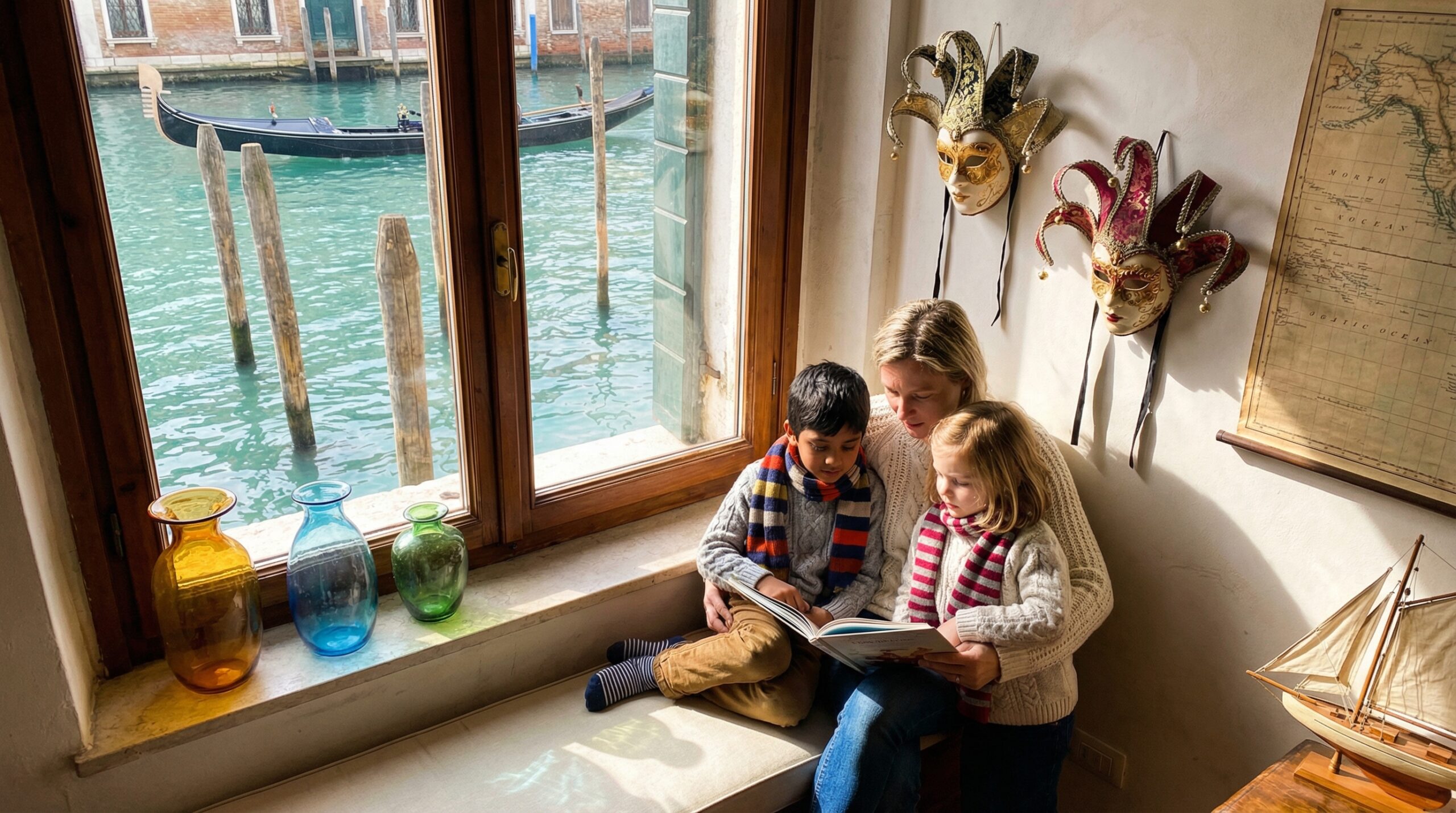
Kids love sensory details. For example, point out St. Mark’s Basilica with its glittering mosaics. Also show photos of the Doge’s Palace and the Rialto Bridge. Mention gondolas and licensed gondoliers who still row through narrow canals. Then describe the clink of glass on Murano and Burano’s bright threads and lace. Carnival masks are a favorite. Simply explain that masks let people hide and have fun together. These images make Venice for kids feel magical and memorable.
Hands-on ideas and simple projects
Try quick, safe activities to bring Venice to life. For example:
- Make a cardboard mask together.
- Build a small gondola from popsicle sticks to show how piles support buildings.
- Watch a short, adult-guided Murano glassblowing video for safe viewing.
Next, count bridges on a walk or pretend to ride a vaporetto, the water bus. These tiny acts help history stick, and they keep kids curious.
Practical family tips
Also pack a small pair of foldable galoshes for acqua alta, the seasonal high tides that flood low squares. Keep boat rides short for little legs. Book child-friendly museum slots in advance and avoid the busiest hours in Piazza San Marco. In 2024, Venice introduced a €5 day-tripper fee on 29 peak days between April and mid-July to manage tourist numbers and protect the city’s infrastructure.
Finally, teach children not to feed pigeons and to stay close on quays and bridges. These simple rules keep visits safe and fun.
Conservation and conversation
Venice faces rising seas, subsidence, and many visitors. Scientists built the MOSE gates to help protect the lagoon. However, the city still needs care. Ask children: how would you protect a floating city? That question invites ideas without panic.
Places to plan with kids
Plan a few sensory stops: Murano glass demos, Burano’s candy-colored houses, a mask-making workshop, and a short Grand Canal boat ride. For quieter moments, try Torcello island with its peaceful cathedral. For tastes, sample cicchetti and gelato. Small joys like a neat gelato shop become lasting memories.
Read or listen to a story about Venice now: Read or listen to a story about Venice now: For 3-5 year olds, For 6-8 year olds, For 8-10 year olds, and For 10-12 year olds.
A tiny challenge
Ask your child: what would you do if your street was water? Then turn their answer into tonight’s six-sentence story. Try it and watch curiosity float into life.
For more family-friendly stories and activities, visit Storypie for related places and tales about travel, history, and imagination.