The weekend imagination hero challenge invites kids to invent a tiny hero in a short, joyful session. It fits busy weekends and sparks playful thinking right away.
What the weekend imagination hero challenge is
This challenge is a simple prompt-based game. Children name three superpowers and one kind flaw. The format encourages quick creativity, playful choices, and small rituals that repeat easily. Research indicates that children who engage in creative play exhibit enhanced problem-solving abilities and social skills, as they learn to communicate, negotiate, and collaborate effectively, which aligns perfectly with the goals of this challenge according to The Parenting Daily.
Core characteristics
The challenge uses a friendly constraint. Three powers stimulate unexpected combos. One kind flaw keeps characters relatable. Also, the flaw opens doors for empathy and caring choices. A study published in December 2022 found that a “Creative Movement Program” significantly improved the creative thinking skills of 5-6-year-old children over an 11-week period, highlighting the effectiveness of structured creative activities in enhancing children’s creativity as noted in the Thinking Skills and Creativity Journal.
Benefits of the challenge
In just ten minutes, it boosts several areas of growth.
- Vocabulary expands when kids describe powers and scenes.
- Narrative thinking grows as children connect cause and effect.
- Social-emotional skills develop through imagining a kind flaw.
- Confidence builds from short, repeatable practice. A longitudinal study found that creativity at age 7 is associated with a lower risk of social and behavioral maladjustment at age 11, including reduced symptoms of depression and restlessness according to the National Center for Biotechnology Information.
Age-friendly adaptations
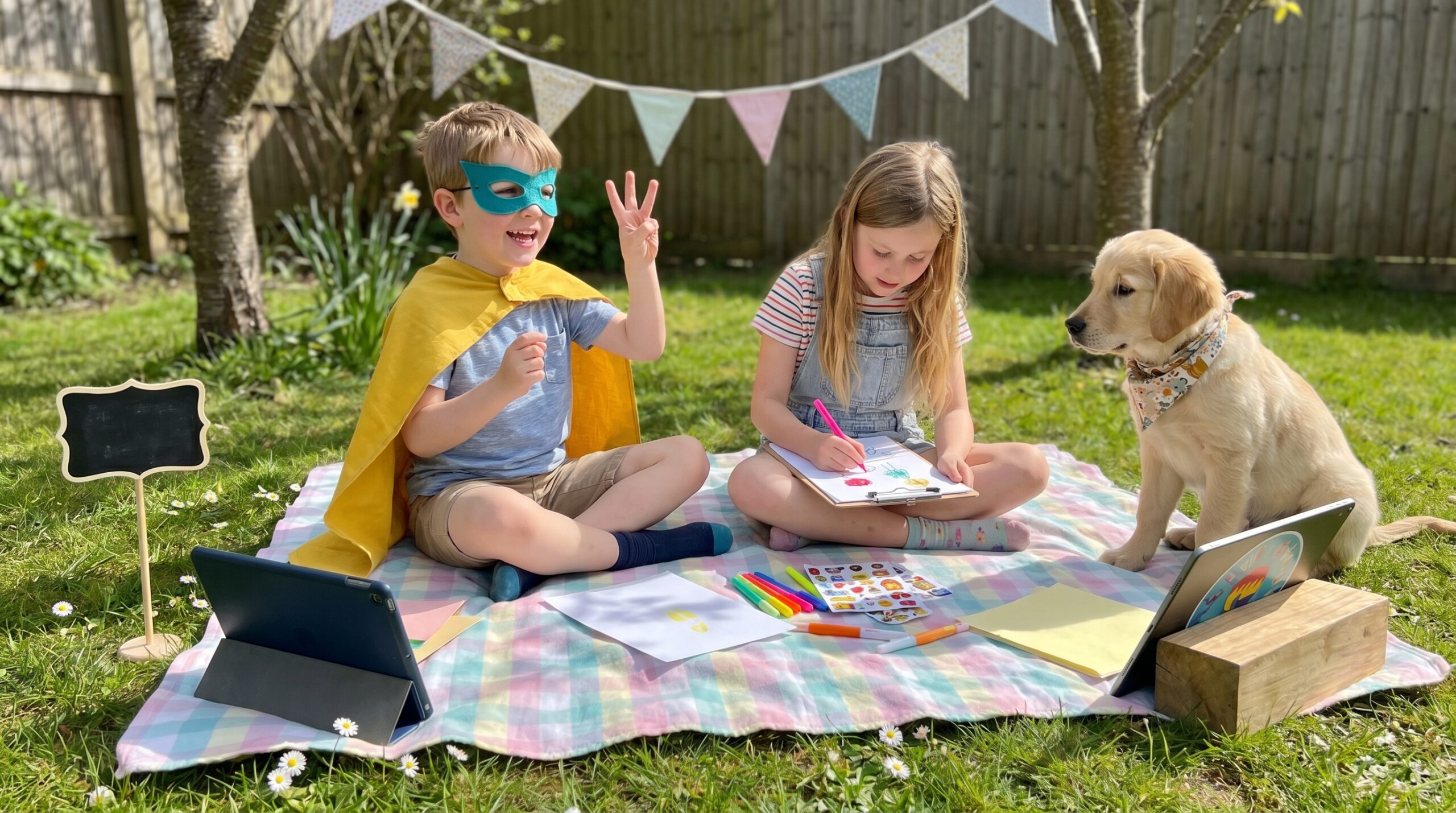
Preschoolers enjoy tactile prompts. Use stickers, crayons, or toys to represent a hero. For example, offer three simple options like flying, glowing, and super speed. In a recent lab experiment, children who identified as superheroes took significantly more risks on behavioral tasks than those in control conditions, demonstrating how imaginative play in superhero contexts can influence children’s decision-making as published in the Journal of Pediatric Psychology.
Older children can add a short motivation or a secret origin. These small additions deepen the idea without stretching the time.
Materials and formats
No special gear is required. You can play verbally while walking. Alternatively, use paper and pencils or family-friendly apps to save ideas.
Also, parents who want a digital option can try Storypie to record or store brief prompts. Visit Try Storypie to explore the app.
Inclusivity and group play
The challenge welcomes heroes of all backgrounds and abilities. Invite diverse names, costumes, and powers so children see themselves reflected. A survey by STAEDTLER revealed that approximately 80% of parents consider their children to be creative, with girls slightly ahead of boys in terms of creativity indicating a positive perception of children’s creativity.
Moreover, the format works solo, as a parent-child duet, or as a family round-robin. Group versions teach listening and turn-taking.
Follow-ups and celebration
Simple extensions make the idea stick. Draw a portrait, act out a brief scene, or name a sidekick. Later, revisit favorites and celebrate quirky choices.
Finally, if you want to save ideas for later, use Storypie to keep short clips or notes. It helps families return to sparks of imagination again and again.
Try the weekend imagination hero challenge this weekend. Spend ten playful minutes inventing a tiny but mighty hero. Celebrate the quirky choices and notice steady growth in storytelling confidence.