English

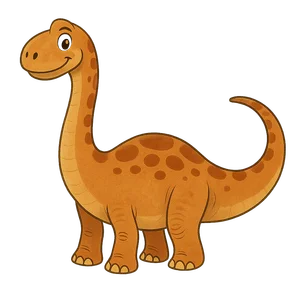
Argentinosaurus
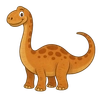
Argentinosaurus was a giant, long-necked sauropod dinosaur that lived during the Late Cretaceous period…
Reads at Grades 6–8 Listens at Grades 4–8
Print & create
Answer keys·No prep·Free with an account
28 worksheets · answer keys · full story · quiz · Ages 10-12 · CEFR B2
Plus adds 164,000+ more stories in 27 languages, audio for every one, and printables for all of them.
Just want Argentinosaurus?
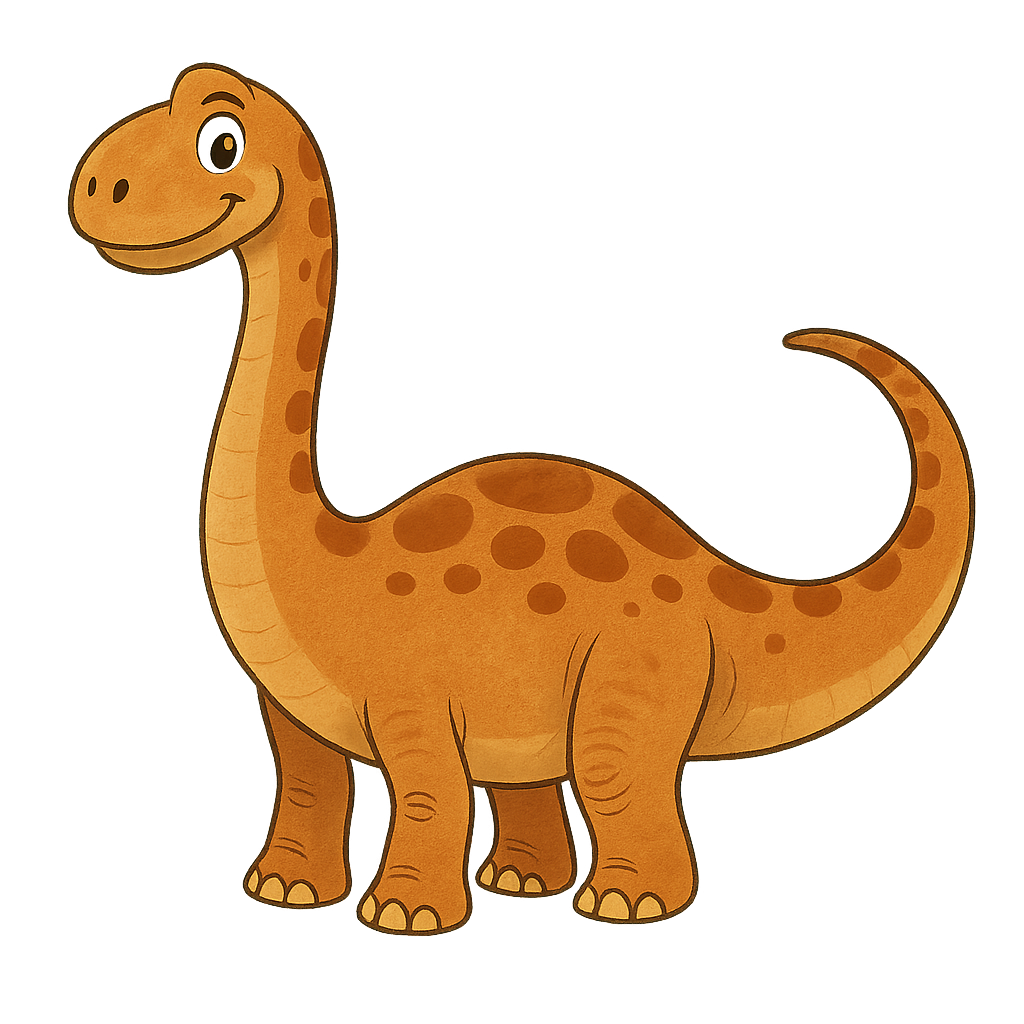
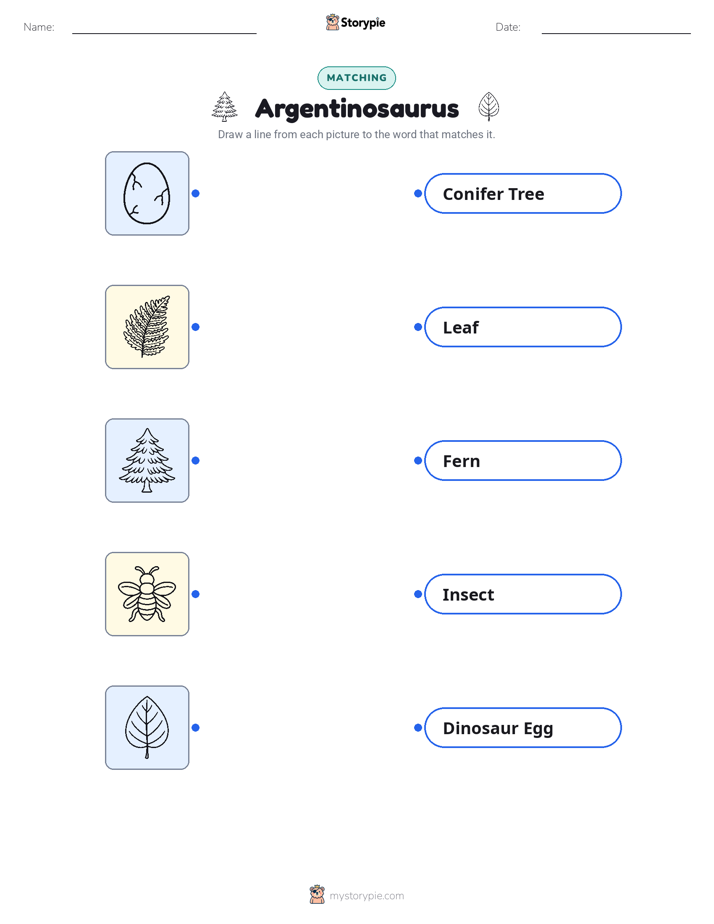
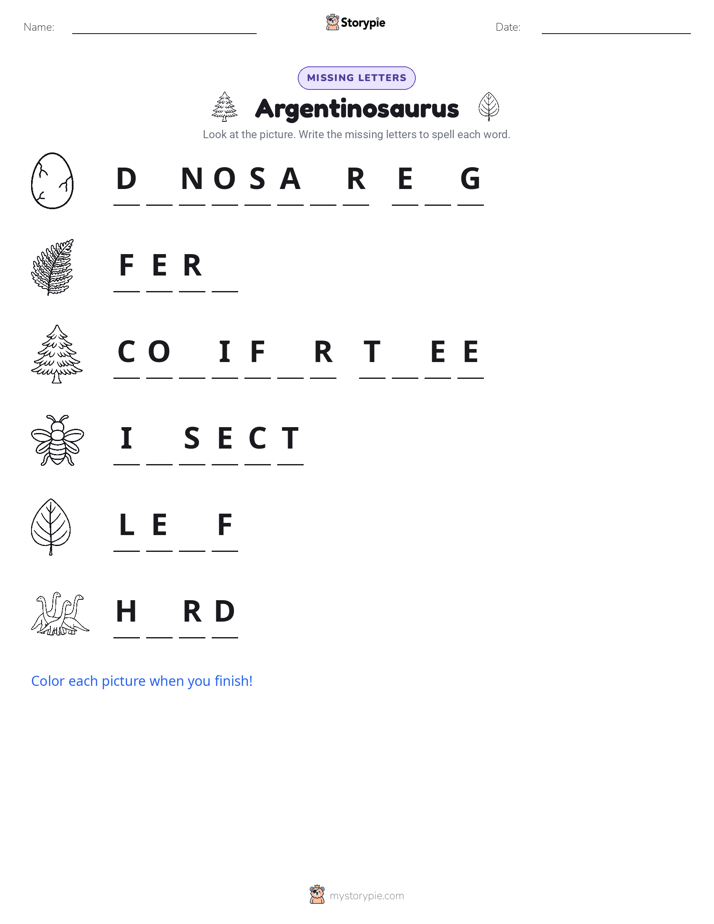
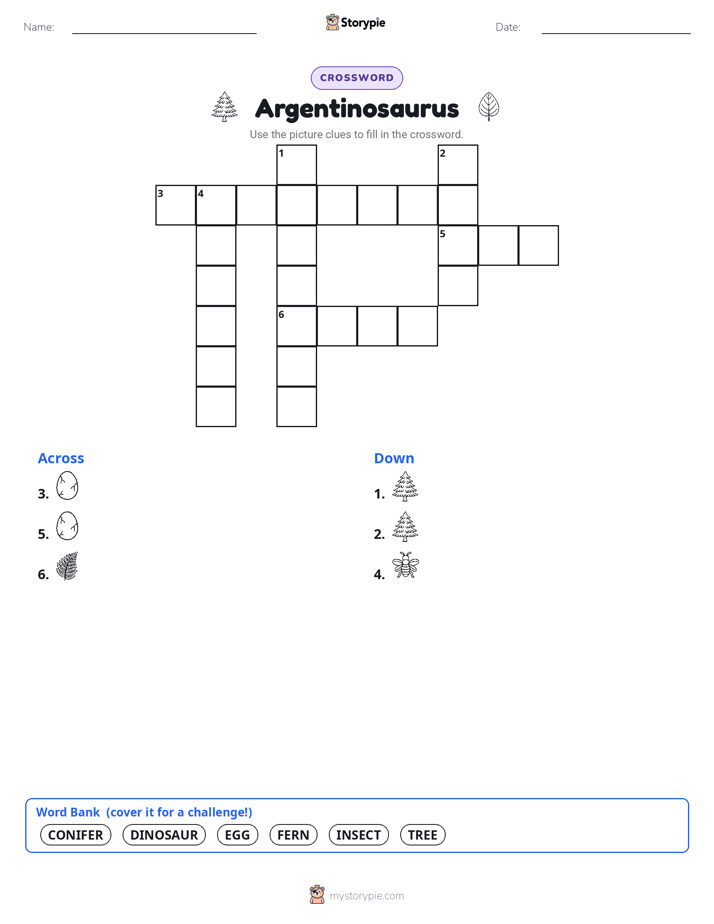
Hello there. My name is Argentinosaurus, and my story begins a very, very long time ago, around 97 million years ago, during the Late Cretaceous period. I hatched from an egg about the size of a football on a vast, warm floodplain in a place you now call Patagonia, Argentina. My world was a complex ecosystem filled with enormous ferns, towering conifer trees, and the sounds of strange insects and other dinosaurs. Even as a tiny hatchling, surrounded by the immense scale of my environment, I knew I was destined for big things. My species was part of a group of dinosaurs known as sauropods, and size was our most defining feature.
I spent my early years focused on two things: eating and growing. And I mean, really growing. As a herbivore, my diet consisted entirely of plants. I used my incredibly long neck to my advantage, reaching the tender leaves and shoots at the tops of the tallest trees that were inaccessible to most other plant-eaters. I could strip entire branches in a single, sweeping motion of my head. To fuel the rapid growth of my enormous body, I had to eat almost constantly, consuming a huge amount of vegetation every single day. I traveled with my family in a massive herd, and the ground would tremble with every synchronized step we took across the ancient plains.
Being part of a herd was essential for survival. Our immense size was a powerful defense against most threats, but our world was not without its dangers. Giant predators, like the carcharodontosaurid Mapusaurus, would sometimes stalk our herd, always watching for an opportunity to attack the young, old, or weak. To protect the most vulnerable members, we would keep them in the center of the group as we moved. We were not passive giants; if a predator got too close, we would use our powerful, whip-like tails as formidable weapons to drive it away. We were a moving forest of legs and necks, constantly migrating across the landscape in search of fresh feeding grounds to sustain us.
The Story of Argentinosaurus
Hello there. My name is Argentinosaurus, and my story begins a very, very long time ago, around 97 million years ago, during the Late Cretaceous period. I hatched from an egg about the size of a football on a vast, warm floodplain in a place you now call Patagonia, Argentina. My world was a complex ecosystem filled with enormous ferns, towering conifer trees, and the sounds of strange insects and other dinosaurs. Even as a tiny hatchling, surrounded by the immense scale of my environment, I knew I was destined for big things. My species was part of a group of dinosaurs known as sauropods, and size was our most defining feature.
I spent my early years focused on two things: eating and growing. And I mean, really growing. As a herbivore, my diet consisted entirely of plants. I used my incredibly long neck to my advantage, reaching the tender leaves and shoots at the tops of the tallest trees that were inaccessible to most other plant-eaters. I could strip entire branches in a single, sweeping motion of my head. To fuel the rapid growth of my enormous body, I had to eat almost constantly, consuming a huge amount of vegetation every single day. I traveled with my family in a massive herd, and the ground would tremble with every synchronized step we took across the ancient plains.
Being part of a herd was essential for survival. Our immense size was a powerful defense against most threats, but our world was not without its dangers. Giant predators, like the carcharodontosaurid Mapusaurus, would sometimes stalk our herd, always watching for an opportunity to attack the young, old, or weak. To protect the most vulnerable members, we would keep them in the center of the group as we moved. We were not passive giants; if a predator got too close, we would use our powerful, whip-like tails as formidable weapons to drive it away. We were a moving forest of legs and necks, constantly migrating across the landscape in search of fresh feeding grounds to sustain us.
My world was a land of giants. The air during the Late Cretaceous period was thick and humid, and the landscape was carved by wide, slow-moving rivers that nourished the lush vegetation. I saw many other types of dinosaurs during my travels, but none were as large as the titanosaurs in my herd. We shared our home with armored ankylosaurs that were like living tanks and swift-running iguanodonts that grazed on lower-lying plants. Our ecosystem was a complex web of life, and as one of the largest animals in it, my herd and I played a huge role. By consuming massive amounts of foliage, we cleared paths through dense forests, which allowed new plants to grow, and we helped spread seeds wherever we roamed.
After a long life of migrating across the plains of ancient South America, my journey came to an end. My massive body came to rest on the bank of a river. Over countless seasons, floods came and went, covering my bones with layers upon layers of mud, sand, and silt. The immense pressure from the sediment above and the passing of millions of years slowly mineralized my bones, turning them into stone and preserving them deep within the earth. My time of walking the Earth was over, but my story was not yet finished.
Millions of years passed. The continents shifted, mountains rose, and the world changed completely. Then, in 1987, a man named Guillermo Heredia, a farmer in Argentina, was tending to his land when he stumbled upon something incredible. It was one of my bones—a leg bone so enormous he initially thought it was a giant piece of fossilized wood. He knew it was something special, a message from a long-lost world. His discovery would be the key to bringing my story back to life for a new kind of being: humans.
The discovery brought scientists called paleontologists to investigate. Two of them, José F. Bonaparte and Rodolfo A. Coria, led the team that carefully excavated my fossilized bones from the rock. They did not find my whole skeleton, which is common for an animal of my size. They found a few giant vertebrae from my back, some enormous ribs, and parts of my leg. But even from those few pieces, they could calculate that I was one of the biggest animals to have ever lived on land. In 1993, they gave me my official scientific name: Argentinosaurus huinculensis, which means 'Argentine lizard from Huincul,' honoring the country and the nearby town where I was found.
I lived during the Late Cretaceous period, a time when dinosaurs ruled the Earth. Though my kind no longer walks the plains of Patagonia, our story lives on through the fossils we left behind. My bones are a window into the past, reminding you of the incredible diversity and scale of life that has existed on our planet. I am a symbol of nature's power to create something truly gigantic, and my legacy is to inspire wonder and curiosity about the ancient world that you can still uncover today.
Wow facts
About
Argentinosaurus was a giant, long-necked sauropod dinosaur that lived during the Late Cretaceous period, about 97 to 93 million years ago. It is considered one of the largest and heaviest land animals ever to have existed.
Take a Quiz
Question 1 of 5
Based on the story, describe the environment where the Argentinosaurus lived during the Late Cretaceous period.
Explore next


Want to do even more?
Go beyond exploring. Unlock tools that turn every story into real learning.

Storypie Plus for families
Full stories, quizzes, and printables. Nights and car rides, sorted.
- Unlimited audio stories
- Create Mode: your child stars in the story
- Offline downloads
- Printable worksheets & coloring pages

Why Storypie for Schools
Students engaged. Prep in seconds. Evenings back to you.
- Worksheets & Quizzes
- Classroom Management
- Formative Assessment
- Custom Curriculum & Lesson Plans
- 27 Languages

Why Storypie for Homeschool
Curriculum done. They'll ask for more. Hours back in your day.
- Worksheet Generator
- First-Person Audio Stories
- Built-in Comprehension Quizzes
- Custom Curriculum & Lesson Plans
- Print & Go Activities