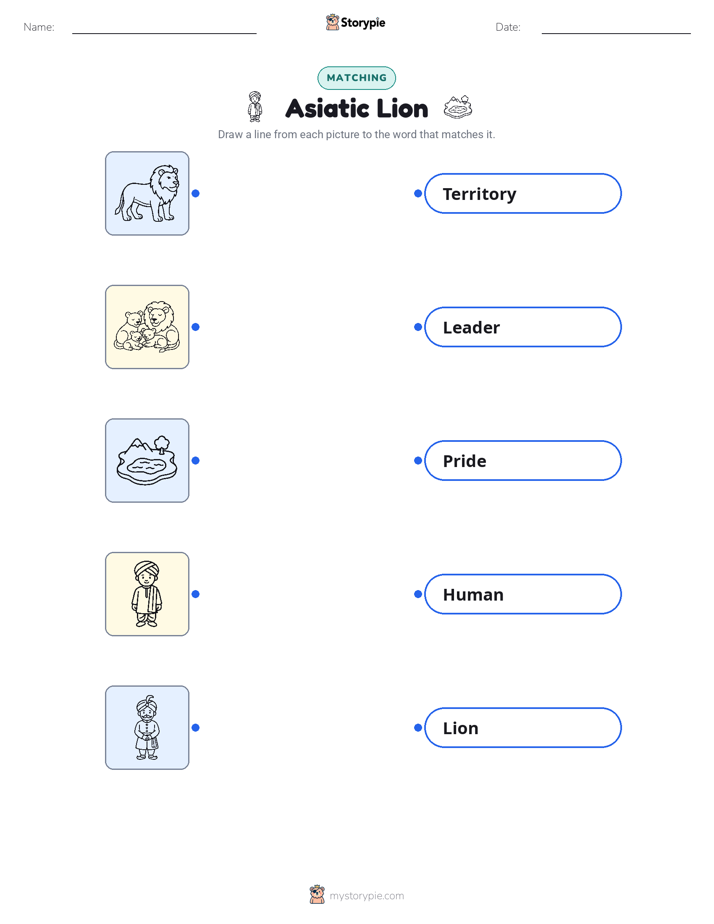
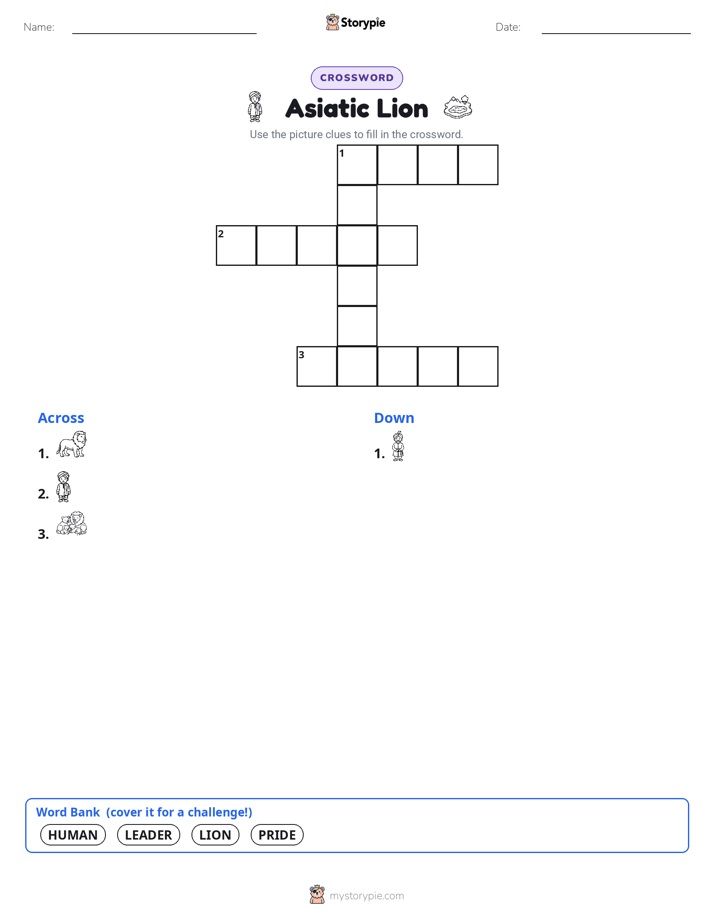
English


Asiatic Lion
The Asiatic lion is a lion subspecies that exists in multiple populations…
Reads at Grades 6–8 Listens at Grades 4–8
Print & create
Answer keys·No prep·Free with an account
28 worksheets · answer keys · full story · quiz · Ages 10-12 · CEFR B2
Plus adds 164,000+ more stories in 27 languages, audio for every one, and printables for all of them.
Just want Asiatic Lion?
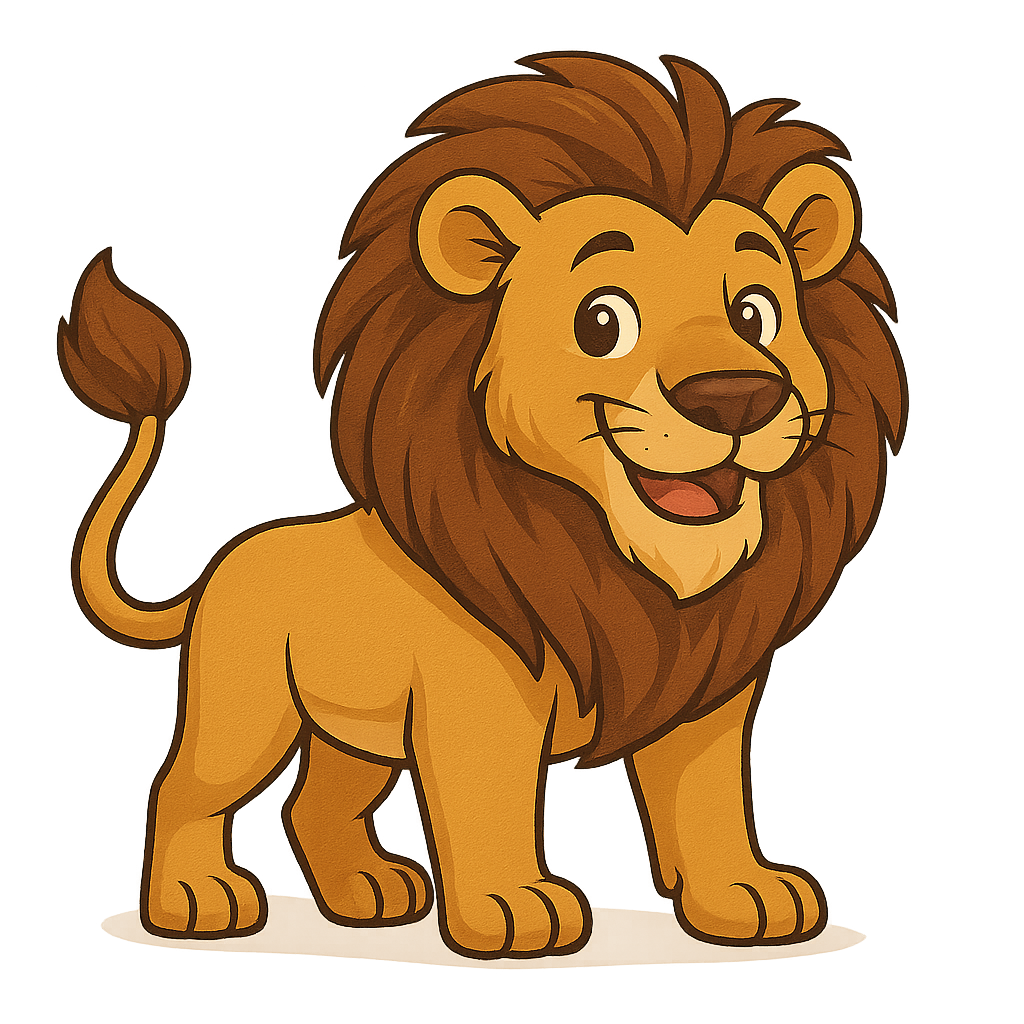
My name is Singh, and I am an Asiatic lion, a king of the forest. My home is a special place called the Gir Forest in Gujarat, India, which is the only place in the entire world where my kind still lives wild and free. We are a bit different from our famous African cousins. If you look closely, you’ll see a long fold of skin running along my belly, a feature unique to us. My mane is also less dense, which means my ears are always visible, giving me a distinct and regal appearance. I live with my family, which we call a pride. Our prides are smaller and more closely connected than those in Africa. We are a small kingdom, but a proud one, and our bonds are what give us strength in this ancient forest that we call home.
I want to share the story of my ancestors, for our kingdom was not always so small. Hundreds of years ago, our territory was vast, stretching from the lands of southeastern Europe, through the Middle East, and all the way across to India. But as centuries passed, the world changed. Humans began to alter the land, and we were hunted. Our forests shrank, and our numbers dwindled. The situation became dire. By the late 1800s, we were in grave danger of disappearing from the Earth entirely. The world had closed in on us, and by the year 1900, our entire species was confined to this one forest. It is believed there were perhaps only a dozen of us left. Imagine that, a kingdom of lions reduced to so few. We had almost vanished forever, and our roar was nearly silenced.
Just when all hope seemed lost, a promise of protection arrived. In the early 1900s, a human leader, the Nawab of Junagadh, recognized our plight and declared our forest a protected sanctuary. He made our home a safe place, and this single act was the turning point in our story of survival. For the first time, we had a powerful ally. Years passed, and people began to wonder how many of us there were. The first official attempt to count us was in 1936. To everyone's relief, they found 287 lions. It was incredible news and proof that with protection, we could survive and our numbers could grow. Much later, in 1972, the government of India launched a dedicated program called 'Project Lion'. This initiative brought scientists and park rangers together to ensure our home and our families would be safe for generations to come. Their hard work strengthened the promise that was made to us so long ago.
The Lion's Roar
My name is Singh, and I am an Asiatic lion, a king of the forest. My home is a special place called the Gir Forest in Gujarat, India, which is the only place in the entire world where my kind still lives wild and free. We are a bit different from our famous African cousins. If you look closely, you’ll see a long fold of skin running along my belly, a feature unique to us. My mane is also less dense, which means my ears are always visible, giving me a distinct and regal appearance. I live with my family, which we call a pride. Our prides are smaller and more closely connected than those in Africa. We are a small kingdom, but a proud one, and our bonds are what give us strength in this ancient forest that we call home.
I want to share the story of my ancestors, for our kingdom was not always so small. Hundreds of years ago, our territory was vast, stretching from the lands of southeastern Europe, through the Middle East, and all the way across to India. But as centuries passed, the world changed. Humans began to alter the land, and we were hunted. Our forests shrank, and our numbers dwindled. The situation became dire. By the late 1800s, we were in grave danger of disappearing from the Earth entirely. The world had closed in on us, and by the year 1900, our entire species was confined to this one forest. It is believed there were perhaps only a dozen of us left. Imagine that, a kingdom of lions reduced to so few. We had almost vanished forever, and our roar was nearly silenced.
Just when all hope seemed lost, a promise of protection arrived. In the early 1900s, a human leader, the Nawab of Junagadh, recognized our plight and declared our forest a protected sanctuary. He made our home a safe place, and this single act was the turning point in our story of survival. For the first time, we had a powerful ally. Years passed, and people began to wonder how many of us there were. The first official attempt to count us was in 1936. To everyone's relief, they found 287 lions. It was incredible news and proof that with protection, we could survive and our numbers could grow. Much later, in 1972, the government of India launched a dedicated program called 'Project Lion'. This initiative brought scientists and park rangers together to ensure our home and our families would be safe for generations to come. Their hard work strengthened the promise that was made to us so long ago.
I am proud to tell you that because of that promise, our roar has returned, stronger than ever. From those few remaining lions, our population began its slow but steady climb. The efforts of conservationists paid off. The official census in 2015 counted 523 of us roaming the forest. And the good news continued; by 2020, our population was estimated to be 674. Our family has grown so much that some of us have begun to move into new areas beyond the main forest, reclaiming a small piece of our ancient territory. This comeback is not just important for us, but for the entire ecosystem. As an apex predator, I have a vital job. By hunting animals like deer and wild boar, I help maintain the delicate balance of the forest, ensuring it remains healthy and vibrant for every plant and creature that lives here.
My story is a true story of survival, and it is a journey that continues today. I am a living symbol of India’s magnificent wildlife and a powerful reminder that conservation is not just a dream—it works. When people care enough to act and work together, a species can be brought back from the very edge of extinction. The roar that now echoes through the Gir Forest every morning is more than just a sound; it is a declaration of hope. It is a promise that as long as we respect one another, lions and humans, we can share this beautiful world and both look forward to a bright and thriving future.
Wow facts
About
The Asiatic lion is a lion subspecies that exists in multiple populations, primarily in India's Gir Forest and surrounding areas. It is known for a distinctive longitudinal fold of skin on its belly and is a powerful symbol of successful wildlife conservation.
Take a Quiz
Question 1 of 5
What was the main problem my ancestors faced in the late 1800s, and what was the turning point that helped solve it?
Explore next






Want to do even more?
Go beyond exploring. Unlock tools that turn every story into real learning.

Storypie Plus for families
Full stories, quizzes, and printables. Nights and car rides, sorted.
- Unlimited audio stories
- Create Mode: your child stars in the story
- Offline downloads
- Printable worksheets & coloring pages

Why Storypie for Schools
Students engaged. Prep in seconds. Evenings back to you.
- Worksheets & Quizzes
- Classroom Management
- Formative Assessment
- Custom Curriculum & Lesson Plans
- 27 Languages

Why Storypie for Homeschool
Curriculum done. They'll ask for more. Hours back in your day.
- Worksheet Generator
- First-Person Audio Stories
- Built-in Comprehension Quizzes
- Custom Curriculum & Lesson Plans
- Print & Go Activities