English


Asiatic Lion
The Asiatic lion is a lion subspecies that exists in multiple populations…
Reads at Grades 3–5 Listens at Grades 1–5
Print & create
Answer keys·No prep·Free with an account
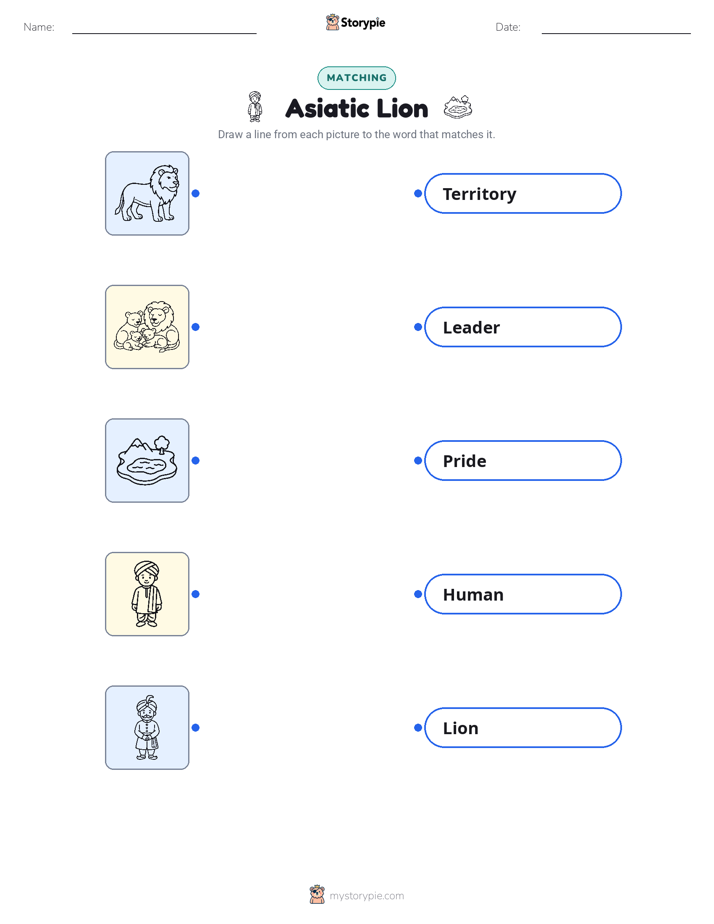
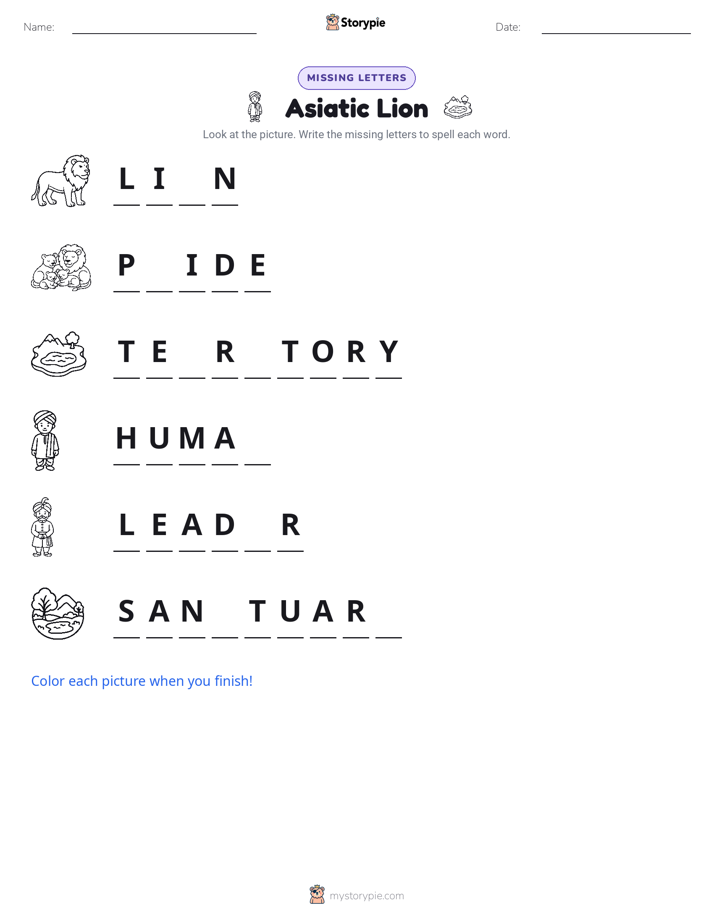
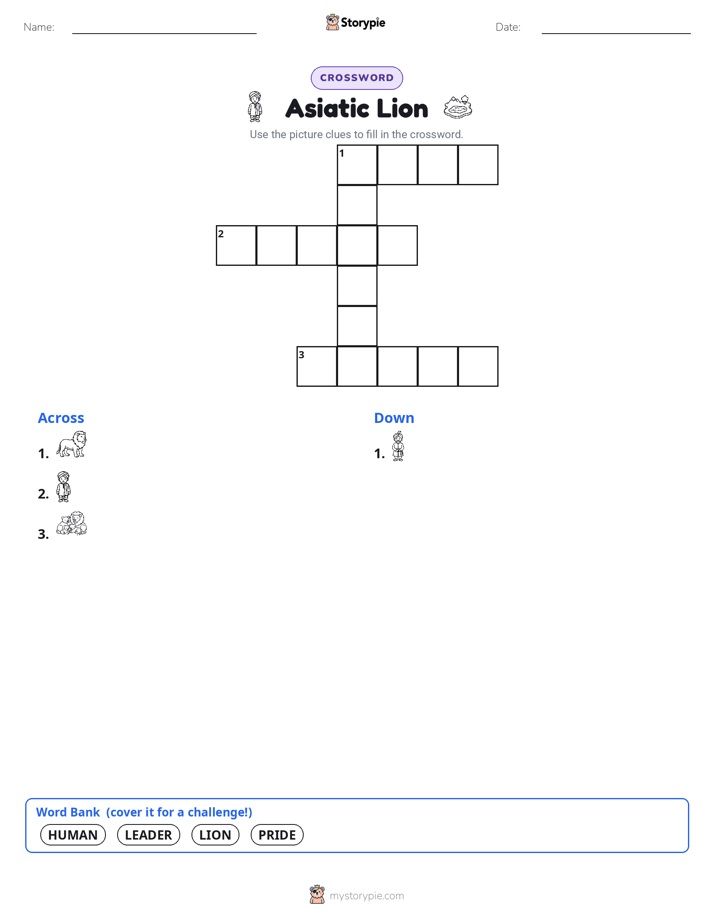
28 worksheets · answer keys · full story · quiz · Ages 8-10 · CEFR B1
Plus adds 164,000+ more stories in 27 languages, audio for every one, and printables for all of them.
Just want Asiatic Lion?
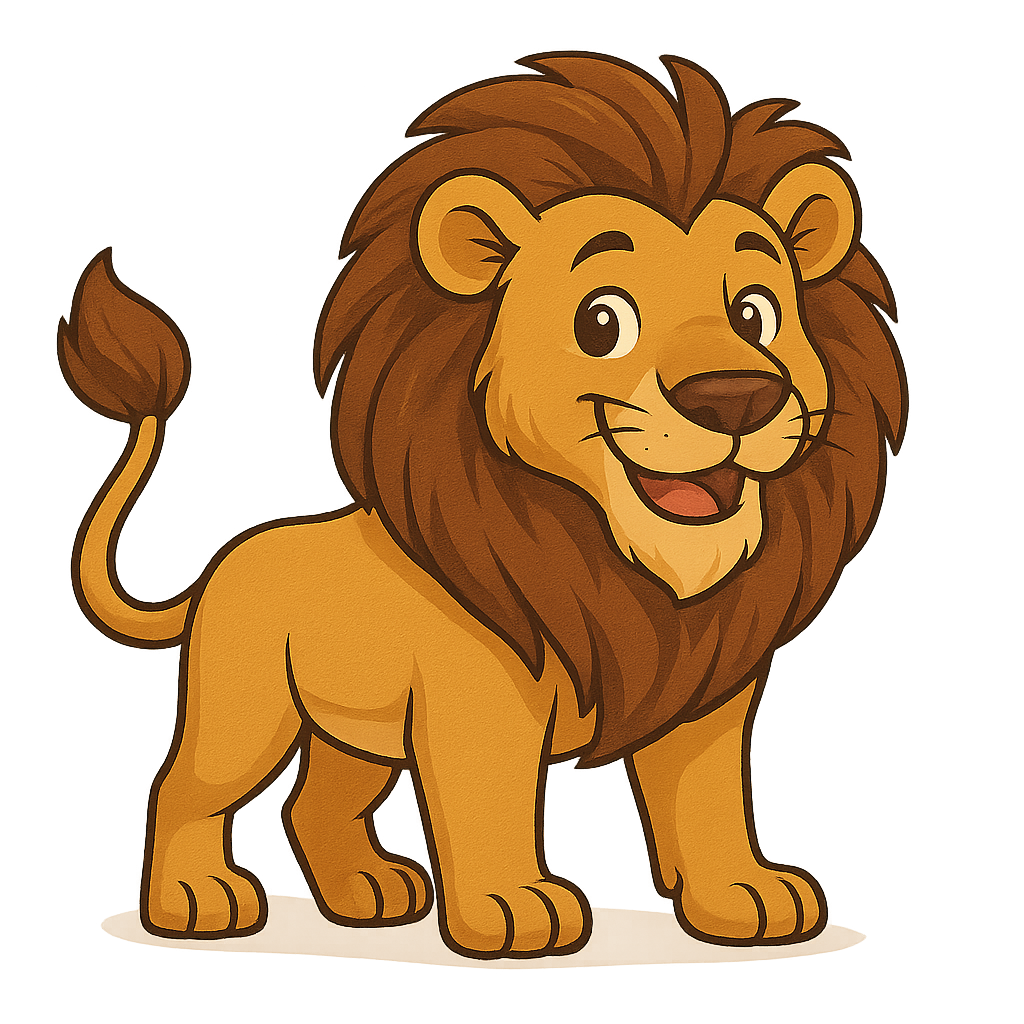
Hello, I am an Asiatic lion, and I have a story to share with you. My home is a special place called the Gir Forest in India. If you were to search the whole wide world, you would find that this is the only place where my kind still roams free in the wild. I look a little different from my cousins in Africa. I have a long fold of skin that runs along my belly, and the mane of hair around my head is a bit shorter. But one thing we share is our love for family. We live together in groups called prides, and being with my pride is the most important thing in the world to me.
My ancestors had a much larger kingdom. Thousands of years ago, they roamed across a huge territory that stretched all the way from southeastern Europe to the forests of India where I live now. But our world began to shrink. Humans hunted us, and the forests we called home were cut down. Slowly, our numbers became smaller and smaller. By the late 1800s, our roar was fading from the world. We were in grave danger of disappearing forever, and it seemed like our story was coming to an end.
Just when all hope seemed lost, a kind ruler saw our struggle. Around the year 1900, the Nawab of Junagadh noticed how few of us were left and decided he had to protect us. It was a very scary time for my ancestors. A count was done in the year 1913, and the results were terrifying. It showed there may have been only 20 of us left in the entire world. We were on the very edge of vanishing. But the Nawab's protection was the beginning of a new chapter for us. Then, a truly wonderful thing happened. In 1965, our home was officially declared the Gir Wildlife Sanctuary. For the first time in a long while, we had a safe place to live, hunt, and raise our cubs without fear.
A Lion's Tale from the Gir Forest
Hello, I am an Asiatic lion, and I have a story to share with you. My home is a special place called the Gir Forest in India. If you were to search the whole wide world, you would find that this is the only place where my kind still roams free in the wild. I look a little different from my cousins in Africa. I have a long fold of skin that runs along my belly, and the mane of hair around my head is a bit shorter. But one thing we share is our love for family. We live together in groups called prides, and being with my pride is the most important thing in the world to me.
My ancestors had a much larger kingdom. Thousands of years ago, they roamed across a huge territory that stretched all the way from southeastern Europe to the forests of India where I live now. But our world began to shrink. Humans hunted us, and the forests we called home were cut down. Slowly, our numbers became smaller and smaller. By the late 1800s, our roar was fading from the world. We were in grave danger of disappearing forever, and it seemed like our story was coming to an end.
Just when all hope seemed lost, a kind ruler saw our struggle. Around the year 1900, the Nawab of Junagadh noticed how few of us were left and decided he had to protect us. It was a very scary time for my ancestors. A count was done in the year 1913, and the results were terrifying. It showed there may have been only 20 of us left in the entire world. We were on the very edge of vanishing. But the Nawab's protection was the beginning of a new chapter for us. Then, a truly wonderful thing happened. In 1965, our home was officially declared the Gir Wildlife Sanctuary. For the first time in a long while, we had a safe place to live, hunt, and raise our cubs without fear.
Thanks to the safety of our sanctuary and the hard work of many dedicated people, our pride began to grow again. For decades, we were watched over and protected, and our population made an amazing comeback. I am so proud to tell you that when a count was done in the year 2020, there were 674 of us! It fills my heart with joy. Today, I live a good life here in Gir. I spend my days with my pride, and we hunt for deer in the forest. Our growing numbers show that we are a true success story, a roar that returned from the silence.
My story is not just about survival; it's also about my role as the King of the Forest. As the top predator in Gir, I have a very important job. By hunting, I help keep the populations of other animals healthy, which keeps the entire ecosystem in balance. My journey is a message of hope. It shows that even when a species is on the very edge of extinction, we can come back if humans decide to help. I am proud of my home, my pride, and my place as the King of Gir.
Wow facts
About
The Asiatic lion is a lion subspecies that exists in multiple populations, primarily in India's Gir Forest and surrounding areas. It is known for a distinctive longitudinal fold of skin on its belly and is a powerful symbol of successful wildlife conservation.
Take a Quiz
Question 1 of 5
In what year did the Gir Wildlife Sanctuary officially become a protected home for the lions?
Explore next






Want to do even more?
Go beyond exploring. Unlock tools that turn every story into real learning.

Storypie Plus for families
Full stories, quizzes, and printables. Nights and car rides, sorted.
- Unlimited audio stories
- Create Mode: your child stars in the story
- Offline downloads
- Printable worksheets & coloring pages

Why Storypie for Schools
Students engaged. Prep in seconds. Evenings back to you.
- Worksheets & Quizzes
- Classroom Management
- Formative Assessment
- Custom Curriculum & Lesson Plans
- 27 Languages

Why Storypie for Homeschool
Curriculum done. They'll ask for more. Hours back in your day.
- Worksheet Generator
- First-Person Audio Stories
- Built-in Comprehension Quizzes
- Custom Curriculum & Lesson Plans
- Print & Go Activities