English

Axolotl
The Axolotl is a species of salamander native to lakes near Mexico City…
Reads at Grades 6–8 Listens at Grades 4–8
 Screen-free speaker. Built for your kids.
No card, no commitment. One email when there is real news, and one click to stop.
Print & create
Answer keys·No prep·Free with an account
28 worksheets · answer keys · full story · quiz · Ages 10-12 · CEFR B2
Plus adds 102,000+ more stories in 27 languages, audio for every one, and printables for all of them.
Just want Axolotl?
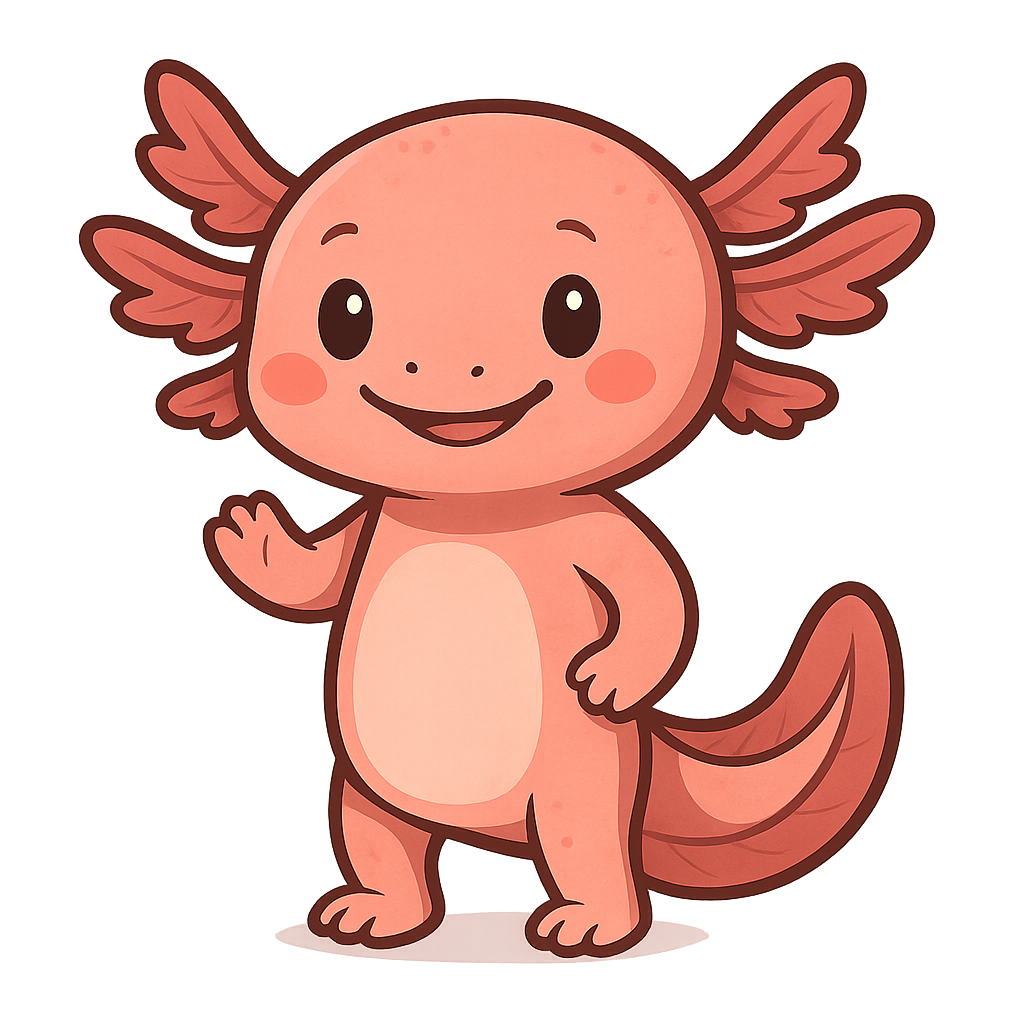
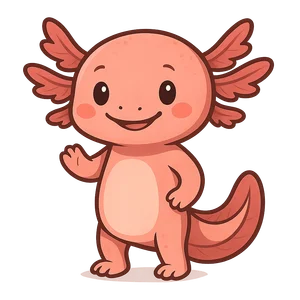
Hello, my name is Axolotl. In the ancient Aztec language, my name means "water dog," which is a fitting name from the people who lived in the Valley of Mexico long ago. You might think I'm a fish, but I am actually a special type of salamander that lives its entire life underwater. I never go through a metamorphosis to live on land like many other salamanders do. My home has always been the canals and lakes near what is now Mexico City, specifically in a beautiful and historic place called Lake Xochimilco. For many centuries, this vibrant, watery world was all my ancestors knew. Then, in 1863, a significant event happened: some of my relatives were carefully collected and sent on a long journey across the ocean to Paris. This journey introduced me to the wider world, and soon, scientists and curious people everywhere began to learn about my unique features, especially my feathery gills that fan out from my head like a delicate, fluffy mane.
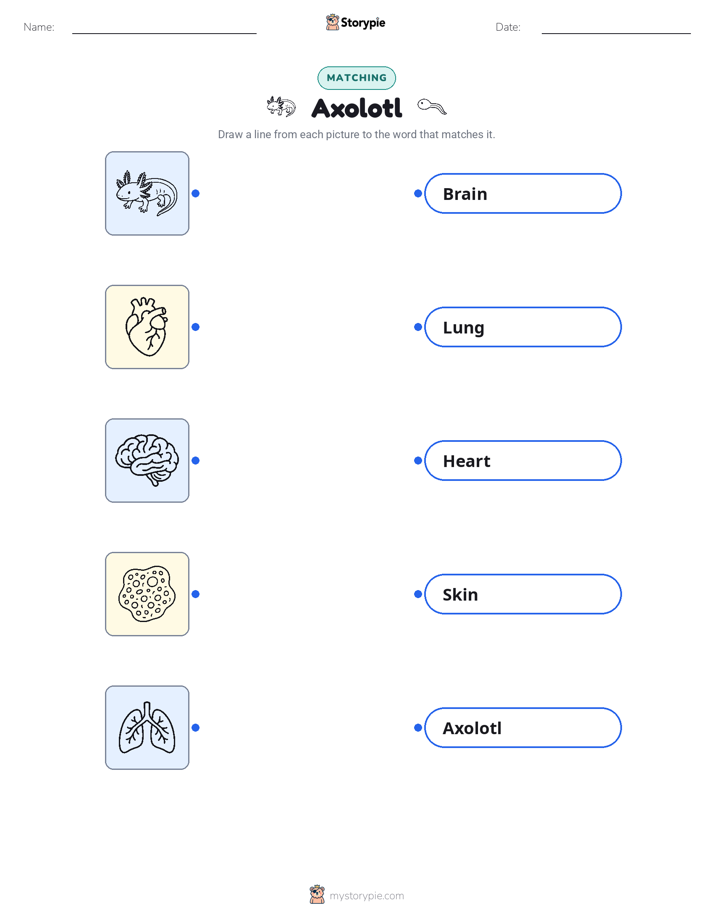
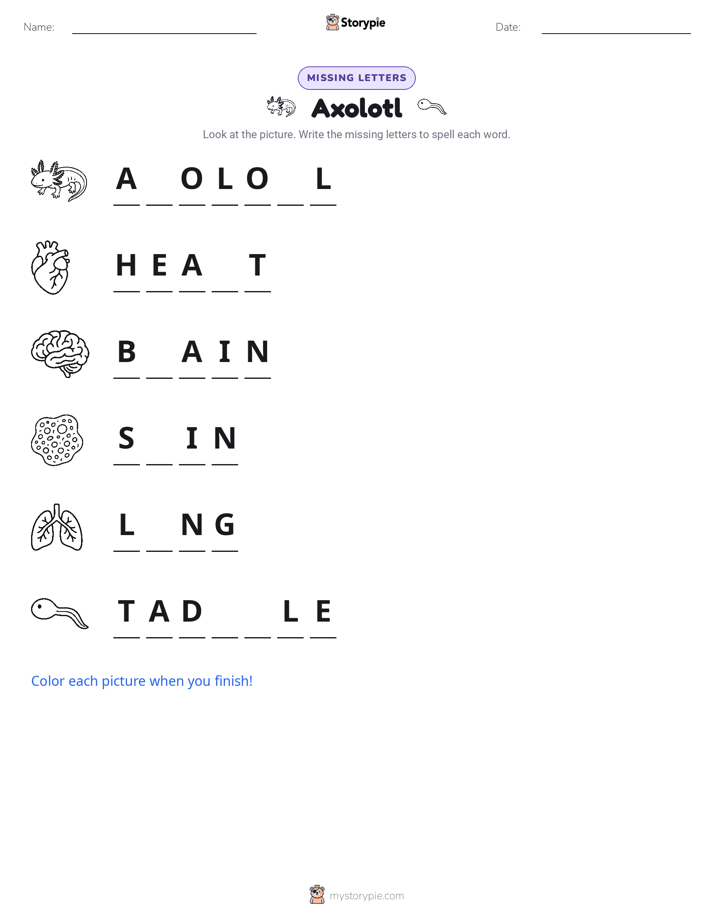
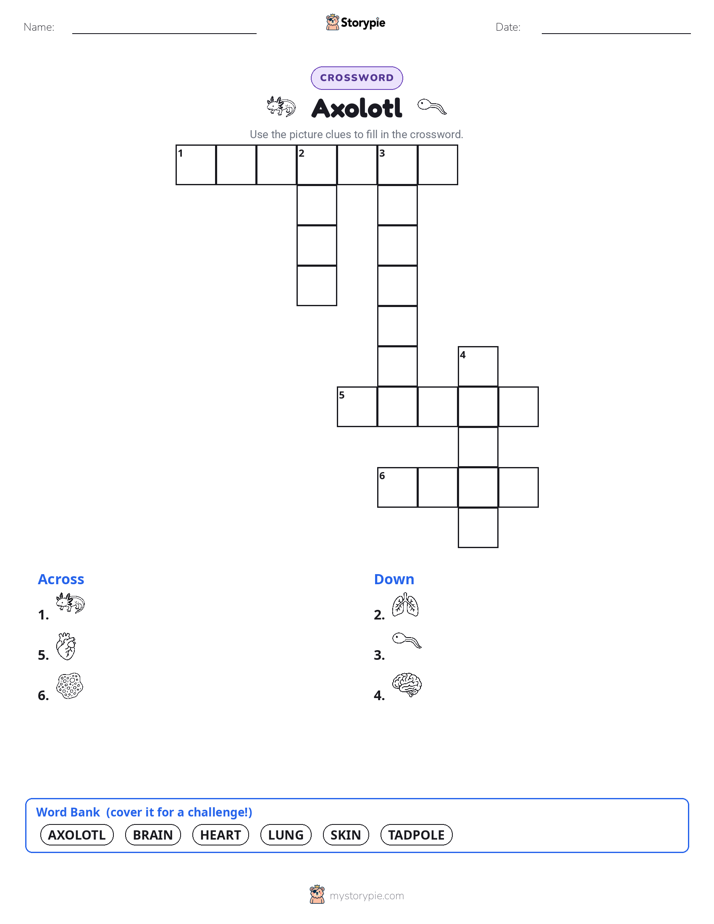
Living in the unique environment of Lake Xochimilco allowed me to develop some truly incredible abilities that continue to fascinate scientists today. My most famous 'superpower' is regeneration. If I am injured and lose a leg, or even if parts of my brain or heart are damaged, I have the remarkable ability to grow them back perfectly, without a single scar. This amazing skill made me incredibly important to scientific research, especially throughout the 20th century, as researchers began to study my genes to unlock the secrets of this process. I also have several ways to breathe. I can absorb oxygen through my feathery external gills, I can come to the surface and gulp air with my lungs, and I can even breathe directly through my skin. I am a perfect example of what scientists call neoteny. This means I retain my youthful, tadpole-like characteristics for my entire life, even when I am mature enough to have my own offspring.
The Story of the Axolotl
Hello, my name is Axolotl. In the ancient Aztec language, my name means "water dog," which is a fitting name from the people who lived in the Valley of Mexico long ago. You might think I'm a fish, but I am actually a special type of salamander that lives its entire life underwater. I never go through a metamorphosis to live on land like many other salamanders do. My home has always been the canals and lakes near what is now Mexico City, specifically in a beautiful and historic place called Lake Xochimilco. For many centuries, this vibrant, watery world was all my ancestors knew. Then, in 1863, a significant event happened: some of my relatives were carefully collected and sent on a long journey across the ocean to Paris. This journey introduced me to the wider world, and soon, scientists and curious people everywhere began to learn about my unique features, especially my feathery gills that fan out from my head like a delicate, fluffy mane.
Living in the unique environment of Lake Xochimilco allowed me to develop some truly incredible abilities that continue to fascinate scientists today. My most famous 'superpower' is regeneration. If I am injured and lose a leg, or even if parts of my brain or heart are damaged, I have the remarkable ability to grow them back perfectly, without a single scar. This amazing skill made me incredibly important to scientific research, especially throughout the 20th century, as researchers began to study my genes to unlock the secrets of this process. I also have several ways to breathe. I can absorb oxygen through my feathery external gills, I can come to the surface and gulp air with my lungs, and I can even breathe directly through my skin. I am a perfect example of what scientists call neoteny. This means I retain my youthful, tadpole-like characteristics for my entire life, even when I am mature enough to have my own offspring.
My world began to change dramatically during the late 20th century. As the massive metropolis of Mexico City expanded around my home in the 1970s and 1980s, the water quality in my lakes and canals started to decline. Much of the water was drained for the growing city, and what remained often became polluted. This was a serious threat, but another challenge soon arrived. New kinds of fish, like carp and tilapia, were introduced into my waters. These fish are not native to my home, and they became aggressive competitors. They ate my food and, even worse, they preyed on my eggs, making it nearly impossible for my family to thrive. The impact was devastating. A survey conducted in 1998 found around 6,000 of my kind living in a single square kilometer. But by 2014, another survey in the same area found fewer than 35 of us. Because of these severe threats, my wild relatives were officially listed as a Critically Endangered species in 2006.
Even though my home in the wild is in great danger, my story is far from over. Today, many of my species live safely in research laboratories and conservation centers around the globe. In these protected environments, scientists continue to study my regenerative abilities, hoping that my biological secrets might one day help people heal from injuries. Back in my native Xochimilco, dedicated conservationists are working tirelessly to restore my habitat. They are building special shelters called "chinampas," which are traditional floating gardens that create clean, protected water zones for my relatives. These areas are designed to keep us safe from the invasive fish and polluted water. These important efforts give me hope that one day, my wild home can be healthy and safe again for future generations of axolotls.
Today, I am known as a symbol of both the incredible and unique biodiversity of Mexico and the urgent need for conservation. While my kind is critically endangered in the wild, my species survives, teaching humans valuable lessons about resilience and the amazing power of nature. My legacy continues in laboratories, where scientists learn from my regenerative gifts, and in the hearts of the people who are fighting to protect the fragile ecosystems of our planet. My story serves as an important reminder that even the smallest creatures play a vital role in their environment, and that it is up to everyone to help protect our shared world.
Wow facts
About
The Axolotl is a species of salamander native to lakes near Mexico City, famous for its ability to regenerate lost body parts and for retaining its juvenile features throughout life (neoteny). It is critically endangered in the wild.
Take a Quiz
Question 1 of 5
According to the story, what were the two main reasons the Axolotl's wild population declined so dramatically in the late 20th century?
Explore next






Want to do even more?
Go beyond exploring. Unlock tools that turn every story into real learning.

Storypie Plus for families
Full stories, quizzes, and printables. Nights and car rides, sorted.
- Unlimited audio stories
- Create Mode: your child stars in the story
- Offline downloads
- Printable worksheets & coloring pages

Why Storypie for Schools
Students engaged. Prep in seconds. Evenings back to you.
- Worksheets & Quizzes
- Classroom Management
- Formative Assessment
- Custom Curriculum & Lesson Plans
- 27 Languages

Why Storypie for Homeschool
Curriculum done. They'll ask for more. Hours back in your day.
- Worksheet Generator
- First-Person Audio Stories
- Built-in Comprehension Quizzes
- Custom Curriculum & Lesson Plans
- Print & Go Activities