English

Magellanic Penguin
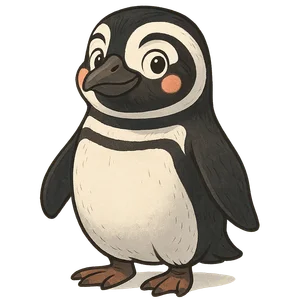
The Magellanic penguin is a medium-sized penguin found on the coasts of South America.
Reads at Grades 6–8 Listens at Grades 4–8
Print & create
Answer keys·No prep·Free with an account
28 worksheets · answer keys · full story · quiz · Ages 10-12 · CEFR B2
Plus adds 164,000+ more stories in 27 languages, audio for every one, and printables for all of them.
Just want Magellanic Penguin?
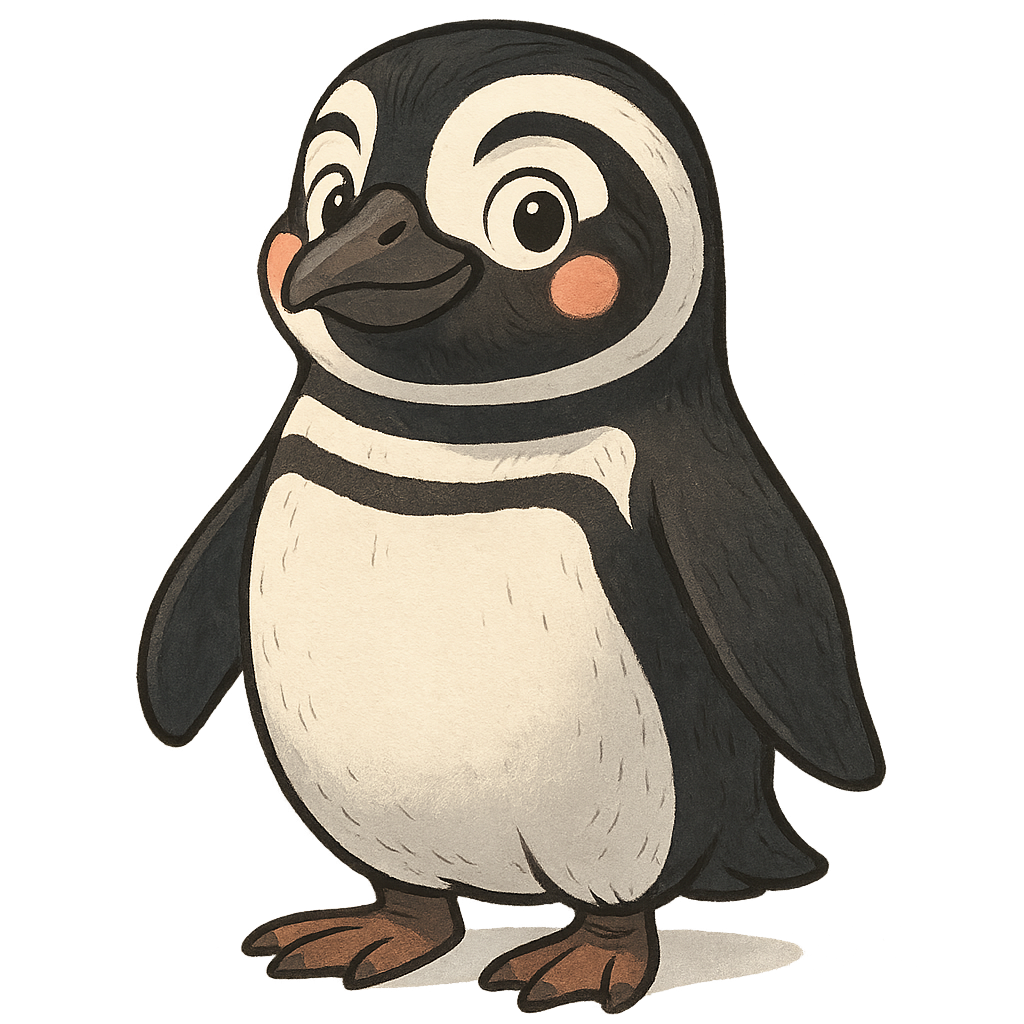
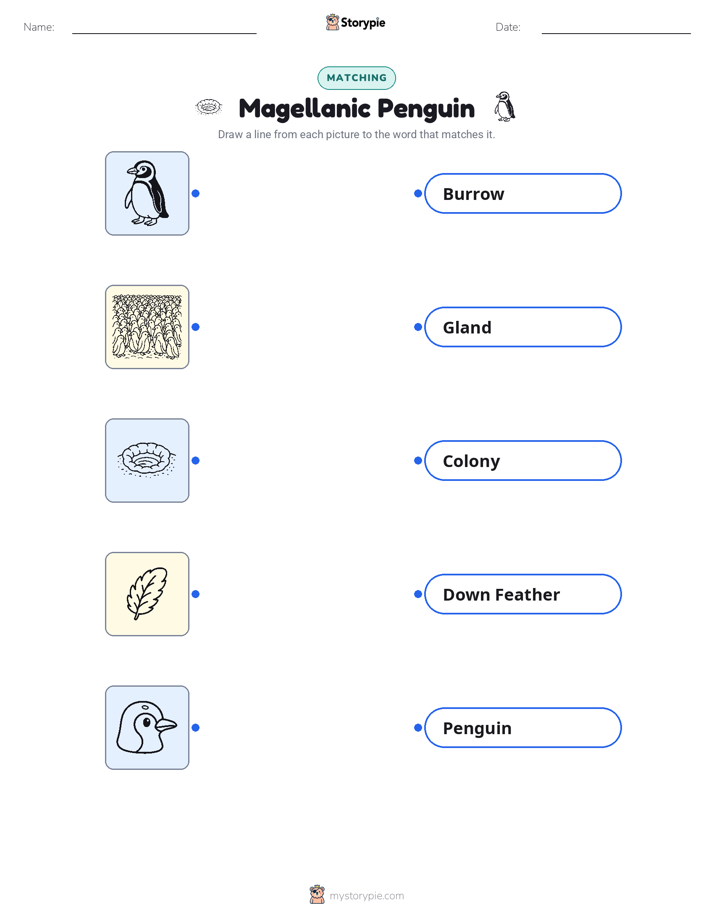
Hello, my name is Sphen, and I am a Magellanic penguin. I'd like to share my story with you. My species first came to the attention of European explorers in the year 1520, during an expedition led by Ferdinand Magellan—which is how we received our name. I was hatched into an enormous colony on the coast of Patagonia in South America. It's hard to imagine, but there are hundreds of thousands of us living together, and our calls sound very much like the braying of donkeys. This noisy, bustling city of black and white is the only home I have ever known, a place where the land meets the cold Atlantic Ocean.
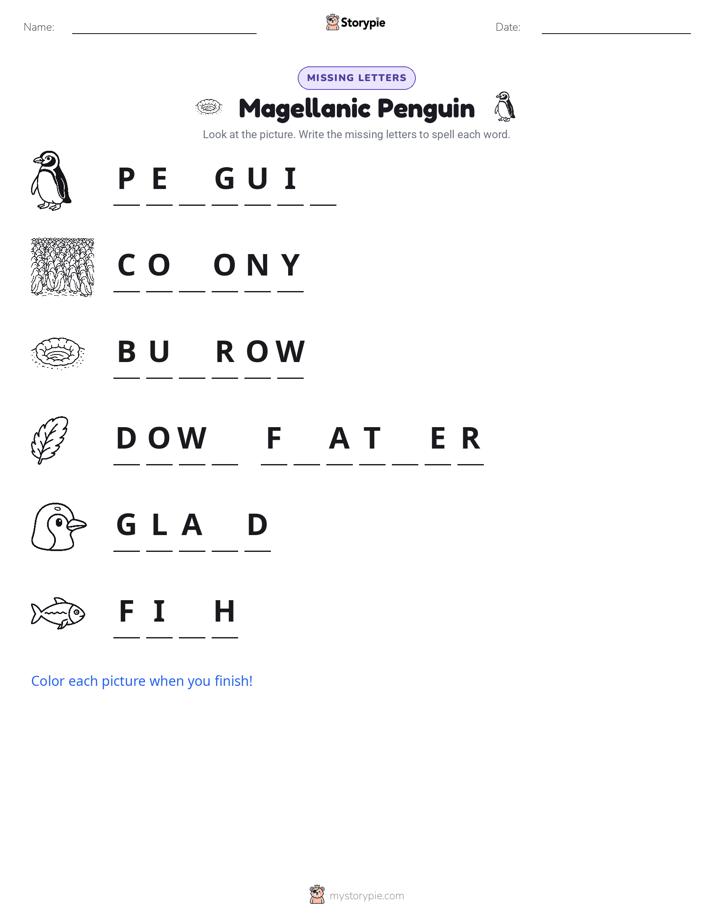
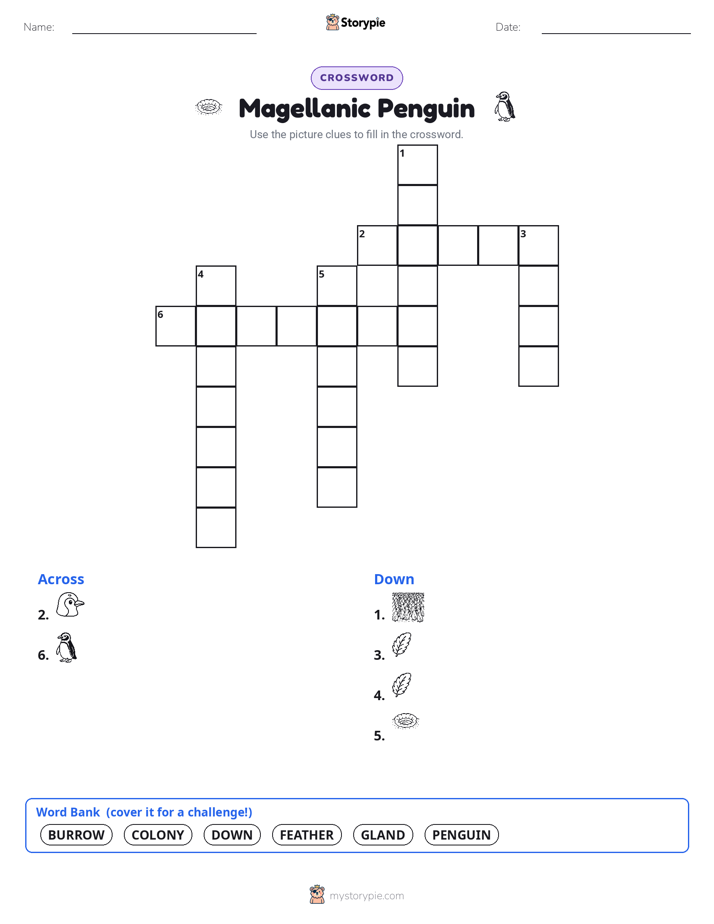
My life began safely tucked away inside a warm burrow that my parents had dug into the sandy soil. For the first month of my life, they took turns making the long waddle to the sea to hunt for fish and squid. They would return with food for me, which I eagerly ate. At first, I was covered in soft, gray down feathers that were very fluffy but not at all suited for the ocean. I knew that to survive, I needed to grow my adult feathers. It was a significant day when my waterproof “tuxedo”—a sleek coat of black and white feathers—finally grew in. This coat not only keeps me warm in the chilly ocean waters but also provides excellent camouflage from predators above and below. I also have a special gland located just over my eye that acts as a natural filter, removing the excess salt I ingest from the seawater. My first swim was a bit clumsy, but it didn't take long for me to learn how to zip through the water like a torpedo, chasing after silvery fish with speed and agility.
Sphen the Magellanic Penguin
Hello, my name is Sphen, and I am a Magellanic penguin. I'd like to share my story with you. My species first came to the attention of European explorers in the year 1520, during an expedition led by Ferdinand Magellan—which is how we received our name. I was hatched into an enormous colony on the coast of Patagonia in South America. It's hard to imagine, but there are hundreds of thousands of us living together, and our calls sound very much like the braying of donkeys. This noisy, bustling city of black and white is the only home I have ever known, a place where the land meets the cold Atlantic Ocean.
My life began safely tucked away inside a warm burrow that my parents had dug into the sandy soil. For the first month of my life, they took turns making the long waddle to the sea to hunt for fish and squid. They would return with food for me, which I eagerly ate. At first, I was covered in soft, gray down feathers that were very fluffy but not at all suited for the ocean. I knew that to survive, I needed to grow my adult feathers. It was a significant day when my waterproof “tuxedo”—a sleek coat of black and white feathers—finally grew in. This coat not only keeps me warm in the chilly ocean waters but also provides excellent camouflage from predators above and below. I also have a special gland located just over my eye that acts as a natural filter, removing the excess salt I ingest from the seawater. My first swim was a bit clumsy, but it didn't take long for me to learn how to zip through the water like a torpedo, chasing after silvery fish with speed and agility.
Every year, our lives follow a predictable and ancient rhythm. After the breeding season concludes around March, my entire colony prepares for an incredible journey. We dive into the ocean and commence our great migration north. This is not a short trip; we swim for thousands of kilometers, following the ocean currents up the coast of Argentina, past the shores of Uruguay, and sometimes as far as Brazil. This massive migration can take several months to complete. We are not on vacation; we are following our food sources as they move with the seasons. The ocean is filled with incredible sights, but it also holds dangers. We must remain vigilant and keep a sharp lookout for predators such as sea lions and orcas. It is a long and exhausting swim, but it is a pattern of life that my ancestors have followed for thousands of years.
When the month of September arrives, a powerful instinct calls me to return south. No matter how far I've traveled, I am always drawn back to the very same beach where I was born. Upon my return, the most important task is to find my mate. We Magellanic penguins often form bonds that last for life, and we locate each other within the vast, noisy crowd by making our own unique braying calls. Once we are reunited, we get straight to work. We either reclaim our burrow from the previous year or dig a new one, ensuring it is a cozy and safe place to start our family. My mate lays two eggs, and we share the responsibility of keeping them warm, taking turns incubating them until our chicks hatch. For us, raising the next generation is the most critical job we have.
In recent years, however, life has become more challenging for my kind. The fish we rely on for food are becoming more difficult to find due to human overfishing. This scarcity means that my flock and I must swim much farther to find a meal, sometimes traveling over 80 kilometers in a single hunting trip. Pollution is another significant threat. During the 1990s, devastating oil spills off the coast of Argentina caused immense harm, affecting tens of thousands of my relatives. Furthermore, as the oceans grow warmer because of climate change, the fish we eat are moving to cooler, deeper waters. This forces us to undertake longer and more dangerous journeys for food. In response to these growing threats, scientists updated our conservation status to 'Near Threatened' in 2004, a designation that shows they are concerned about the future of my species.
Despite these challenges, I have a vital role to play in my environment. By consuming fish and krill, I help maintain the delicate balance of the ocean ecosystem. Our nesting grounds, which are enriched by our guano, support the growth of plant life along the coast. I can live for 25 or even 30 years, and during my lifetime, I am hopeful that humans will continue their efforts to help us. Scientists are studying our long migrations to better understand how to protect our essential feeding grounds, and many people are working hard to keep the oceans clean. My story serves as a reminder that the sea connects every living thing, and protecting my home is essential for protecting a world that we all share.
Wow facts
About
The Magellanic penguin is a medium-sized penguin found on the coasts of South America. Named after Ferdinand Magellan, it is known for its distinctive black and white bands and its special way of moving. Some Magellanic penguins travel long distances during certain times of the year, while others stay close to where they raise their young.
Take a Quiz
Question 1 of 5
In your own words, describe the main challenges Sphen and other Magellanic penguins face today, as mentioned in the story.
Explore next





Want to do even more?
Go beyond exploring. Unlock tools that turn every story into real learning.

Storypie Plus for families
Full stories, quizzes, and printables. Nights and car rides, sorted.
- Unlimited audio stories
- Create Mode: your child stars in the story
- Offline downloads
- Printable worksheets & coloring pages

Why Storypie for Schools
Students engaged. Prep in seconds. Evenings back to you.
- Worksheets & Quizzes
- Classroom Management
- Formative Assessment
- Custom Curriculum & Lesson Plans
- 27 Languages

Why Storypie for Homeschool
Curriculum done. They'll ask for more. Hours back in your day.
- Worksheet Generator
- First-Person Audio Stories
- Built-in Comprehension Quizzes
- Custom Curriculum & Lesson Plans
- Print & Go Activities