English

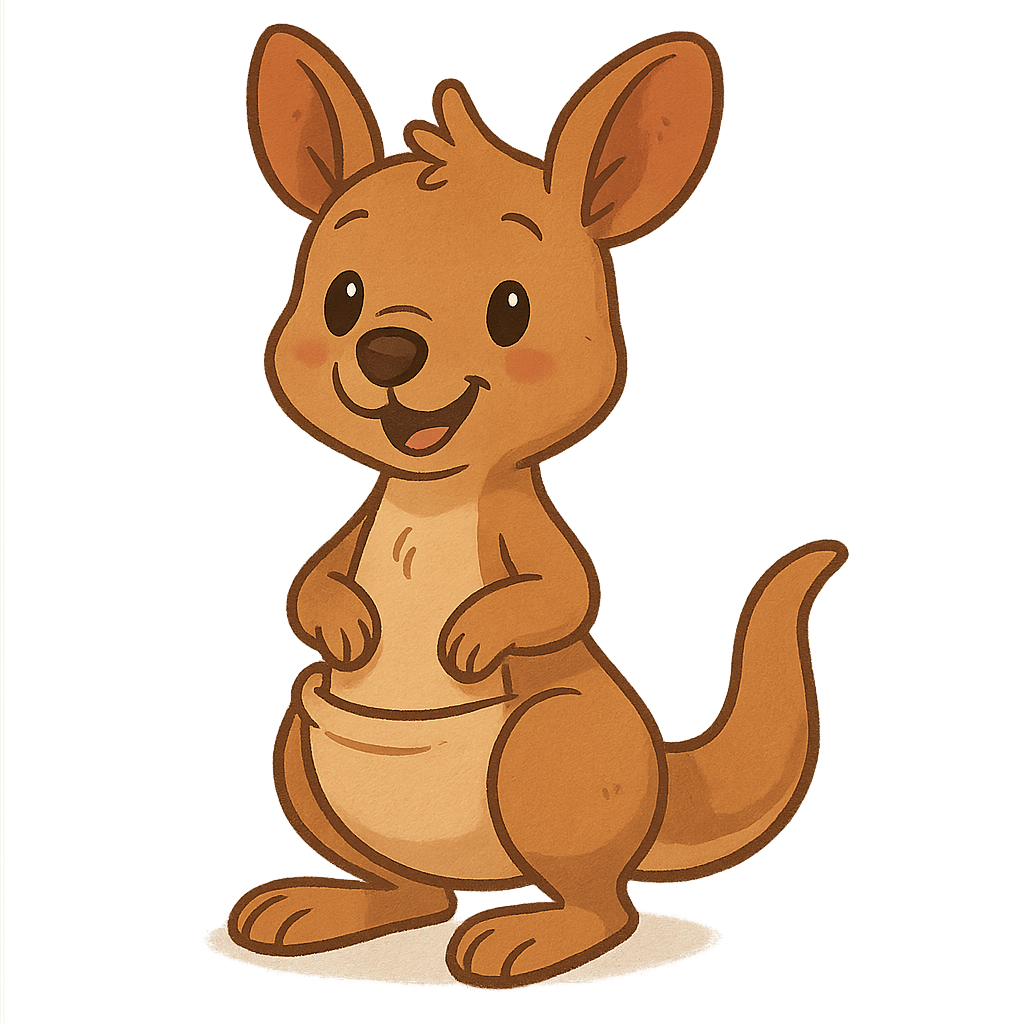
Marsupial
Marsupials are an infraclass of mammals characterized by giving birth to relatively undeveloped young…
Reads at Grades 6–8 Listens at Grades 4–8
Print & create
Answer keys·No prep·Free with an account
28 worksheets · answer keys · full story · quiz · Ages 10-12 · CEFR B2
Plus adds 164,000+ more stories in 27 languages, audio for every one, and printables for all of them.
Just want Marsupial?
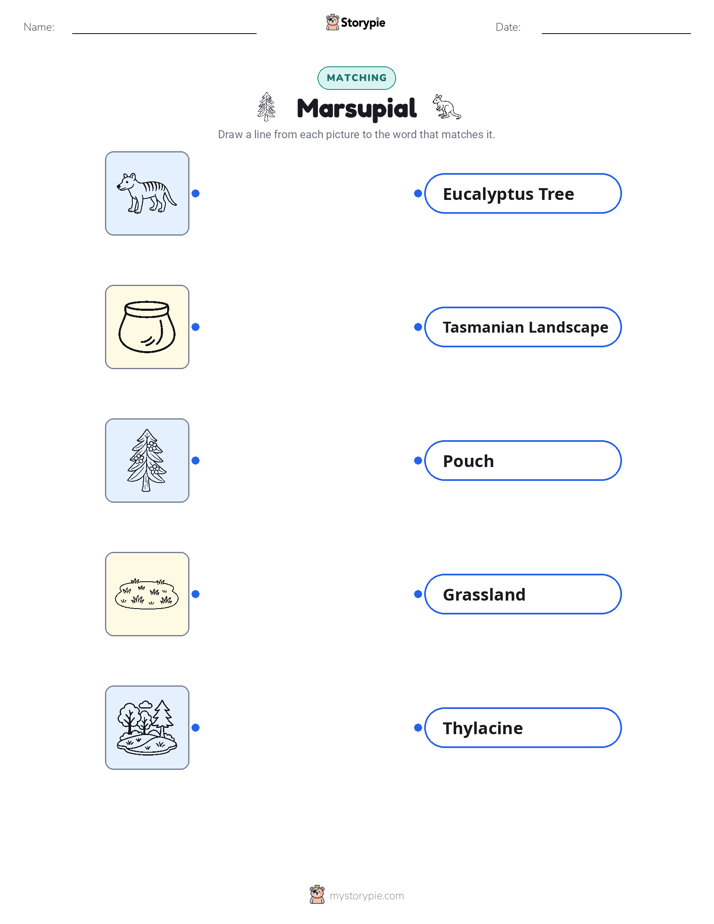
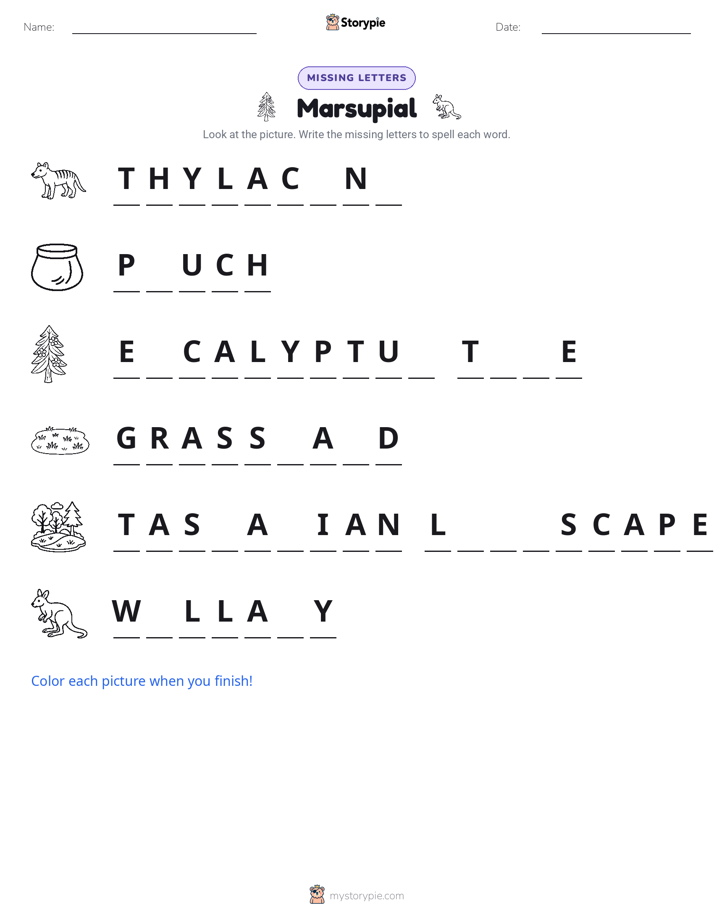
My name is Thylacine, and I am a whisper from the past. You might have heard of me by another name, the Tasmanian Tiger, because of the fourteen to sixteen dark, beautiful stripes that ran across my lower back. But I was not a tiger or any kind of cat. My story begins in the temperate forests and grasslands of Tasmania, an island south of Australia, during the late 1800s. My world was one of eucalyptus trees and grassy plains, a place I knew like the back of my own paw. I was a unique creature, a marsupial, which means I carried my young in a pouch. My pouch was quite clever; it opened to the rear, which was perfect for keeping dirt out as I navigated the dense undergrowth of my home. Perhaps my most remarkable feature was my jaw. I could open it wider than any other mammal, a truly amazing sight that helped me in my daily life.
I was a hunter of the twilight hours, a creature most active when the sun dipped below the horizon. As a nocturnal animal, I relied not on great speed, but on my keen sense of smell and my persistence. I would track prey like wallabies and birds, following their scent through the cool night air. I was not built for long, fast chases. Instead, I was a strategic hunter. I would pursue my prey steadily, tiring them out until I had the advantage. This was my role in the great web of life on the island. As an apex predator, I stood at the top of the food chain, which was a very important job. By hunting, I helped keep the populations of other animals in balance, ensuring that the entire ecosystem remained healthy and strong. My presence meant that the grasslands weren't overgrazed and that smaller predators didn't become too numerous.
A Thylacine's Tale: The Ghost of Tasmania
My name is Thylacine, and I am a whisper from the past. You might have heard of me by another name, the Tasmanian Tiger, because of the fourteen to sixteen dark, beautiful stripes that ran across my lower back. But I was not a tiger or any kind of cat. My story begins in the temperate forests and grasslands of Tasmania, an island south of Australia, during the late 1800s. My world was one of eucalyptus trees and grassy plains, a place I knew like the back of my own paw. I was a unique creature, a marsupial, which means I carried my young in a pouch. My pouch was quite clever; it opened to the rear, which was perfect for keeping dirt out as I navigated the dense undergrowth of my home. Perhaps my most remarkable feature was my jaw. I could open it wider than any other mammal, a truly amazing sight that helped me in my daily life.
I was a hunter of the twilight hours, a creature most active when the sun dipped below the horizon. As a nocturnal animal, I relied not on great speed, but on my keen sense of smell and my persistence. I would track prey like wallabies and birds, following their scent through the cool night air. I was not built for long, fast chases. Instead, I was a strategic hunter. I would pursue my prey steadily, tiring them out until I had the advantage. This was my role in the great web of life on the island. As an apex predator, I stood at the top of the food chain, which was a very important job. By hunting, I helped keep the populations of other animals in balance, ensuring that the entire ecosystem remained healthy and strong. My presence meant that the grasslands weren't overgrazed and that smaller predators didn't become too numerous.
My island home did not stay the same forever. Big changes arrived with new neighbors, the European settlers, who brought their fluffy sheep with them. These newcomers did not understand my kind or my role in the ecosystem. They saw my sharp teeth and hunting skills and believed I was a threat to their flocks. This misunderstanding became dangerous for me and all other thylacines. In 1888, a shadow fell over our world when the government began offering a bounty, a sum of money, for every thylacine hunted. Suddenly, our forest home was no longer safe. It became a place of fear, where we had to hide from hunters who saw us not as a vital part of the wild, but as a pest to be eliminated. My family and I lived in constant peril, a terrifying time for a species that had roamed the land freely for so long.
During the early 1900s, our stripes began to fade from the forests. Our numbers grew smaller with each passing year. The government finally ended the bounty program in 1909, but the damage was already done, and the danger had not passed. The world continued to change around us, and by 1930, the last thylacine known to be living in the wild was gone. My story, and the story of my species, then shifted to one kept within the walls of the Hobart Zoo. The last known thylacine lived his final years there. In a moment of sad irony, our species was granted official protection by the government, but it was too late. This protection came just 59 days before he passed away on September 7th, 1936, and with him, the last living memory of my kind vanished from the Earth.
I lived in an era when my kind still roamed the island of Tasmania. Though you can no longer see us padding silently through the eucalyptus forests, we are not forgotten. My image has become a powerful symbol of Tasmania, appearing on everything from license plates to company logos, a constant reminder of the wild that once was. My story serves as a lesson for people everywhere about how fragile a species can be and why it is so critically important to understand and protect animals and their homes before it's too late. Scientists still study us, learning from the fossils and records we left behind. In this way, our legacy continues, and my stripes will never truly fade from memory.
Wow facts
About
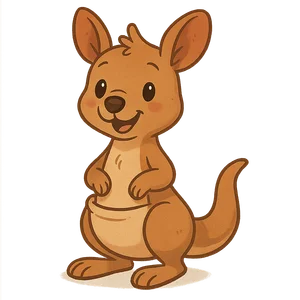
Marsupials are an infraclass of mammals characterized by giving birth to relatively undeveloped young, which then complete their development inside a maternal pouch called a marsupium.
Take a Quiz
Question 1 of 5
What was the tragic irony concerning the official protection of the Thylacine species?
Explore next






Want to do even more?
Go beyond exploring. Unlock tools that turn every story into real learning.

Storypie Plus for families
Full stories, quizzes, and printables. Nights and car rides, sorted.
- Unlimited audio stories
- Create Mode: your child stars in the story
- Offline downloads
- Printable worksheets & coloring pages

Why Storypie for Schools
Students engaged. Prep in seconds. Evenings back to you.
- Worksheets & Quizzes
- Classroom Management
- Formative Assessment
- Custom Curriculum & Lesson Plans
- 27 Languages

Why Storypie for Homeschool
Curriculum done. They'll ask for more. Hours back in your day.
- Worksheet Generator
- First-Person Audio Stories
- Built-in Comprehension Quizzes
- Custom Curriculum & Lesson Plans
- Print & Go Activities