English

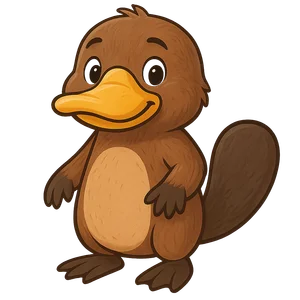
Platypus
The platypus is a semi-aquatic, egg-laying mammal (a monotreme) native to eastern Australia…
Reads at Grades 6–8 Listens at Grades 4–8
Print & create
Answer keys·No prep·Free with an account
28 worksheets · answer keys · full story · quiz · Ages 10-12 · CEFR B2
Plus adds 164,000+ more stories in 27 languages, audio for every one, and printables for all of them.
Just want Platypus?
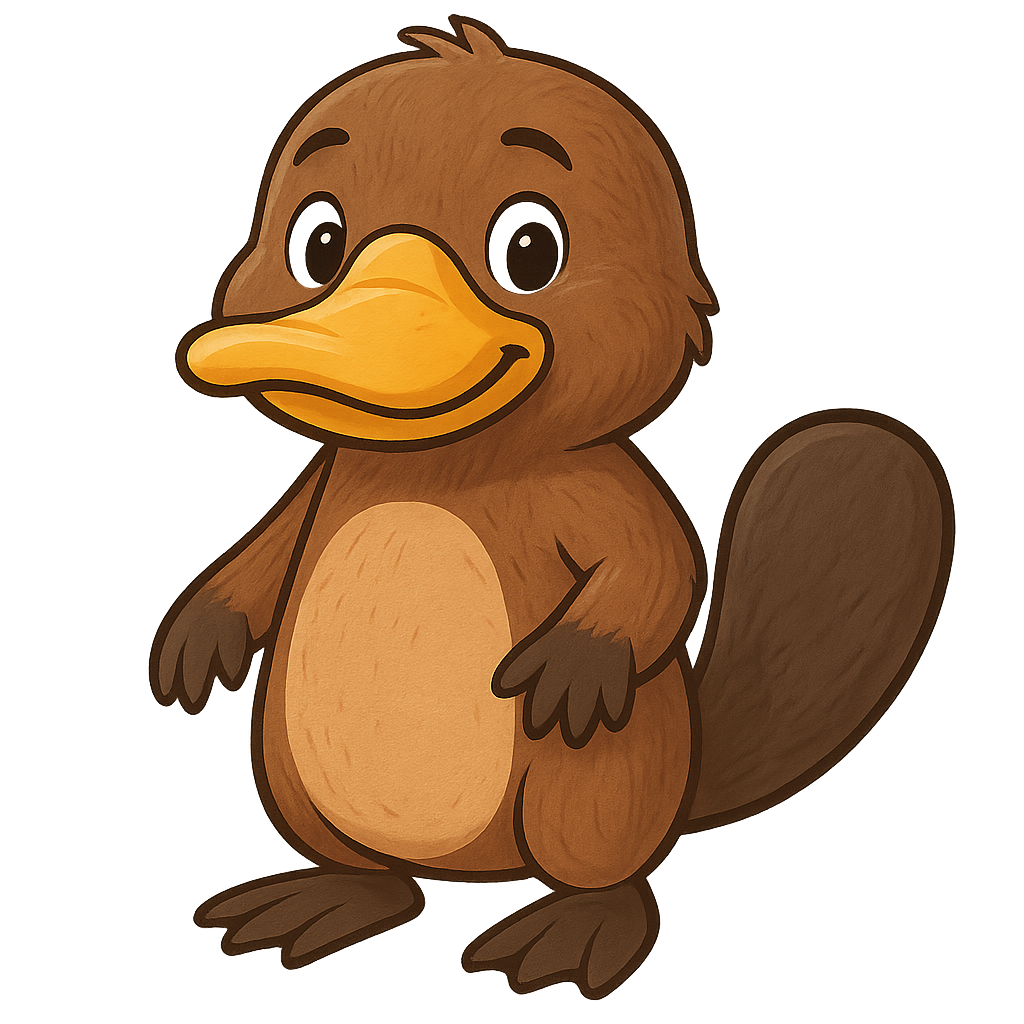
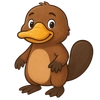
Hello there. I am a platypus, and my home is in the freshwater rivers of eastern Australia. If you look at me, you might think I’m a collection of puzzles put together. I have a soft, rubbery bill that looks like a duck’s, a broad, flat tail like a beaver, and webbed front feet perfect for swimming, much like an otter's. I am a creature of contradictions, so much so that when the first preserved body of one of my ancestors was sent to England, a scientist named George Shaw examined it on November 4th, 1799. He was certain it had to be a prank, some strange creature cleverly stitched together. But we are very real. I belong to a rare and special group of mammals called monotremes. We are quite unique because, unlike almost all other mammals, we lay eggs.
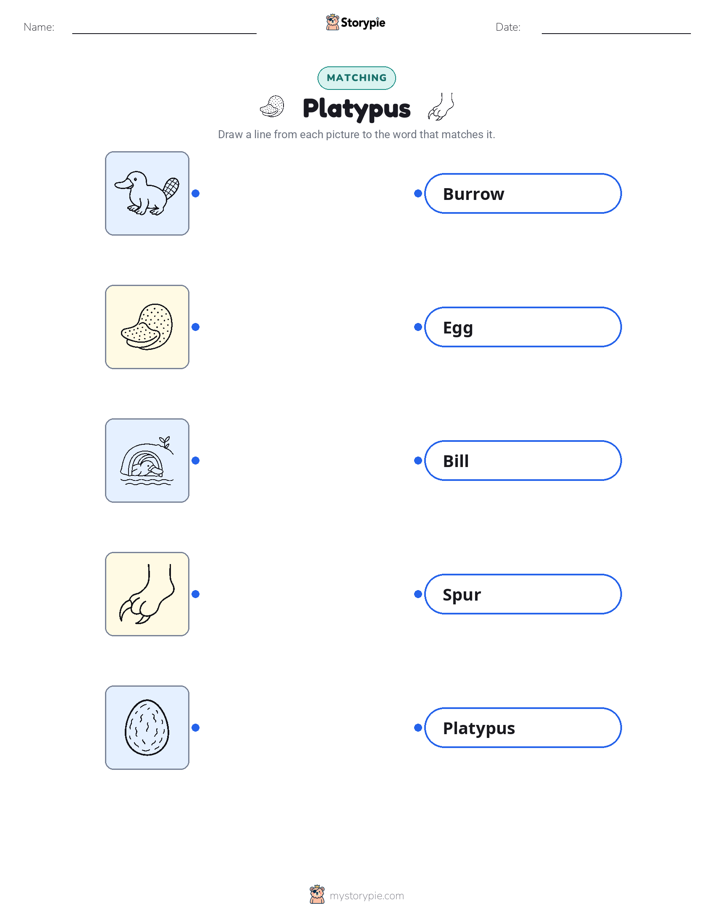
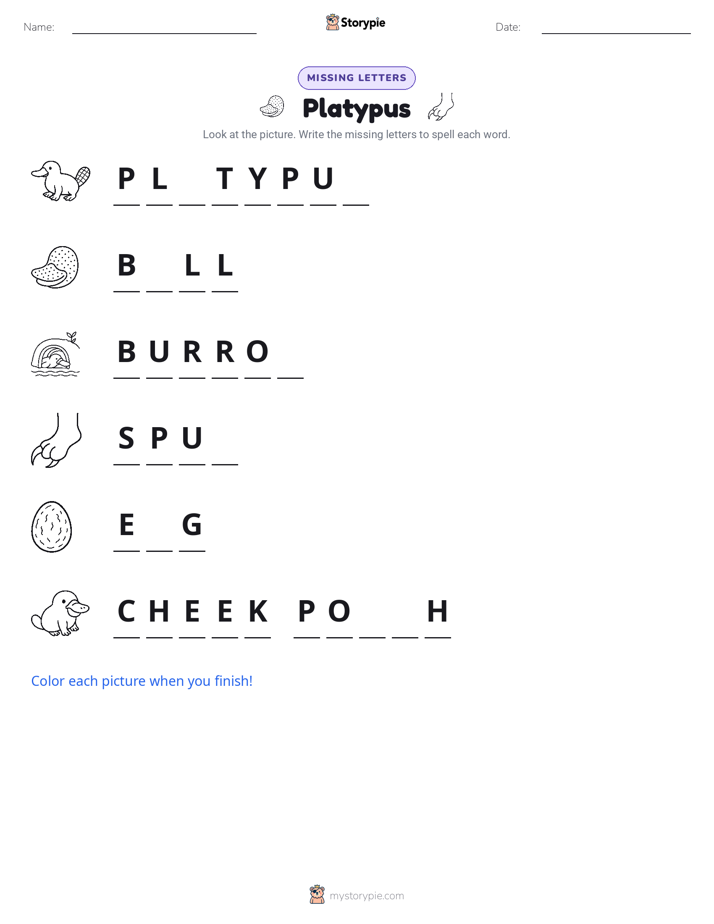
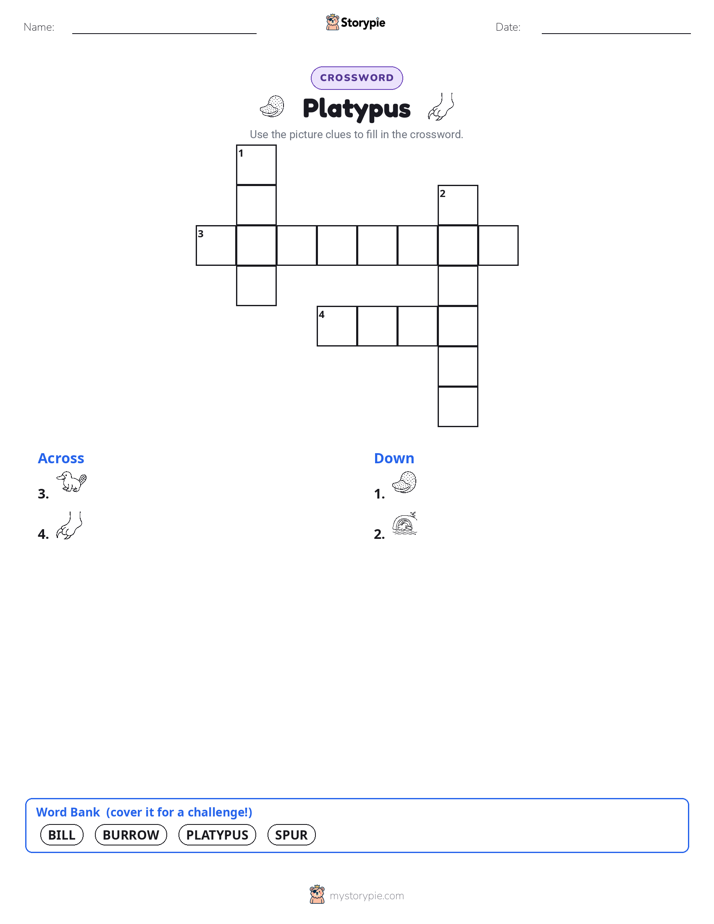
My entire life revolves around the water. Using the sharp claws on my feet, I dig a cozy burrow deep into the riverbank, which serves as my safe and hidden home. When it’s time to hunt, I slip into the cool water for an underwater adventure. As I dive, I do something that might surprise you: I close my eyes, my ears, and my nostrils completely. I don’t need them to find my food. Instead, I rely on a special 'sixth sense' called electrolocation. My rubbery bill isn’t just for show; it’s covered with thousands of tiny receptors. These receptors are incredibly sensitive and can detect the faint electrical fields that all living things create with their muscle movements. This allows me to find my prey, like freshwater shrimp and insect larvae, as they hide in the mud and sand on the river bottom. When I find a tasty meal, I scoop it up and store it in my cheek pouches. Once my pouches are full, I return to the surface to eat everything in safety.
My Life as a Platypus
Hello there. I am a platypus, and my home is in the freshwater rivers of eastern Australia. If you look at me, you might think I’m a collection of puzzles put together. I have a soft, rubbery bill that looks like a duck’s, a broad, flat tail like a beaver, and webbed front feet perfect for swimming, much like an otter's. I am a creature of contradictions, so much so that when the first preserved body of one of my ancestors was sent to England, a scientist named George Shaw examined it on November 4th, 1799. He was certain it had to be a prank, some strange creature cleverly stitched together. But we are very real. I belong to a rare and special group of mammals called monotremes. We are quite unique because, unlike almost all other mammals, we lay eggs.
My entire life revolves around the water. Using the sharp claws on my feet, I dig a cozy burrow deep into the riverbank, which serves as my safe and hidden home. When it’s time to hunt, I slip into the cool water for an underwater adventure. As I dive, I do something that might surprise you: I close my eyes, my ears, and my nostrils completely. I don’t need them to find my food. Instead, I rely on a special 'sixth sense' called electrolocation. My rubbery bill isn’t just for show; it’s covered with thousands of tiny receptors. These receptors are incredibly sensitive and can detect the faint electrical fields that all living things create with their muscle movements. This allows me to find my prey, like freshwater shrimp and insect larvae, as they hide in the mud and sand on the river bottom. When I find a tasty meal, I scoop it up and store it in my cheek pouches. Once my pouches are full, I return to the surface to eat everything in safety.
While I may look gentle and unassuming, I have a secret weapon that is unique to male platypuses like myself. On each of my hind ankles, I have a sharp, venomous spur. Now, I don't use this spur for hunting my food. Its purpose is entirely defensive. I use it to protect myself from rivals, especially other males, during the competitive breeding season. This spur makes me one of the very few venomous mammals on the entire planet. It’s a surprising fact for a creature that seems so calm, but it’s an important tool that helps me survive and defend my territory in the wild world of the river.
My life began in a way that puzzled scientists for nearly a century. Deep inside a special nesting burrow, my mother laid one or two small, leathery eggs that were not much bigger than grapes. For a long time, people couldn't believe a mammal could lay eggs. It wasn't until the year 1884 that a scientist named W.H. Caldwell sent a message confirming to the world that we do, in fact, lay eggs. After I hatched, I was tiny, blind, and had no fur. A baby platypus like me is called a 'puggle.' I didn't get milk from a nipple the way other mammal babies do. Instead, I lapped up milk that seeped from special pores on my mother's belly, a unique way of feeding for a unique creature.
My family and I play an important role in our ecosystem. We are what is known as an indicator species, which means our presence in a river is a sign that the water is clean and the ecosystem is healthy. If we are thriving, it’s a good sign for all the other life in and around the river. But our homes are being threatened. We face many dangers, such as pollution that contaminates our water, and land clearing, which destroys the riverbanks where we build our burrows. On top of that, increasing droughts linked to climate change are making it harder for us to find food and water. Because of all these challenges, our conservation status was officially changed to 'Near Threatened' around 2016. This was a warning that humans need to be more careful to protect us and our river homes.
My story is a living reminder of the incredible, surprising diversity of life on our planet. I am proof that nature is full of wonders and that not everything fits into neat little boxes. My future, and the future of my kind, depends entirely on the health of Australia's freshwater rivers. By protecting these waterways, people are not just saving a strange-looking creature with a duck's bill and a beaver's tail; they are preserving a unique evolutionary masterpiece that has existed for millions of years. My story is still being written, every single day, in the flowing waters I call home.
Wow facts
About
The platypus is a semi-aquatic, egg-laying mammal (a monotreme) native to eastern Australia, known for its unique combination of features including a duck-like bill, a beaver-like tail, and venomous spurs on the male's hind legs.
Take a Quiz
Question 1 of 5
In your own words, what is the main idea of the platypus's story?
Explore next



Want to do even more?
Go beyond exploring. Unlock tools that turn every story into real learning.

Storypie Plus for families
Full stories, quizzes, and printables. Nights and car rides, sorted.
- Unlimited audio stories
- Create Mode: your child stars in the story
- Offline downloads
- Printable worksheets & coloring pages

Why Storypie for Schools
Students engaged. Prep in seconds. Evenings back to you.
- Worksheets & Quizzes
- Classroom Management
- Formative Assessment
- Custom Curriculum & Lesson Plans
- 27 Languages

Why Storypie for Homeschool
Curriculum done. They'll ask for more. Hours back in your day.
- Worksheet Generator
- First-Person Audio Stories
- Built-in Comprehension Quizzes
- Custom Curriculum & Lesson Plans
- Print & Go Activities