English


Rodents
Rodents are mammals of the order Rodentia…
Reads at Grades 6–8 Listens at Grades 4–8
Print & create
Answer keys·No prep·Free with an account
28 worksheets · answer keys · full story · quiz · Ages 10-12 · CEFR B2
Plus adds 244,000+ more stories in 27 languages, audio for every one, and printables for all of them.
Just want Rodents?

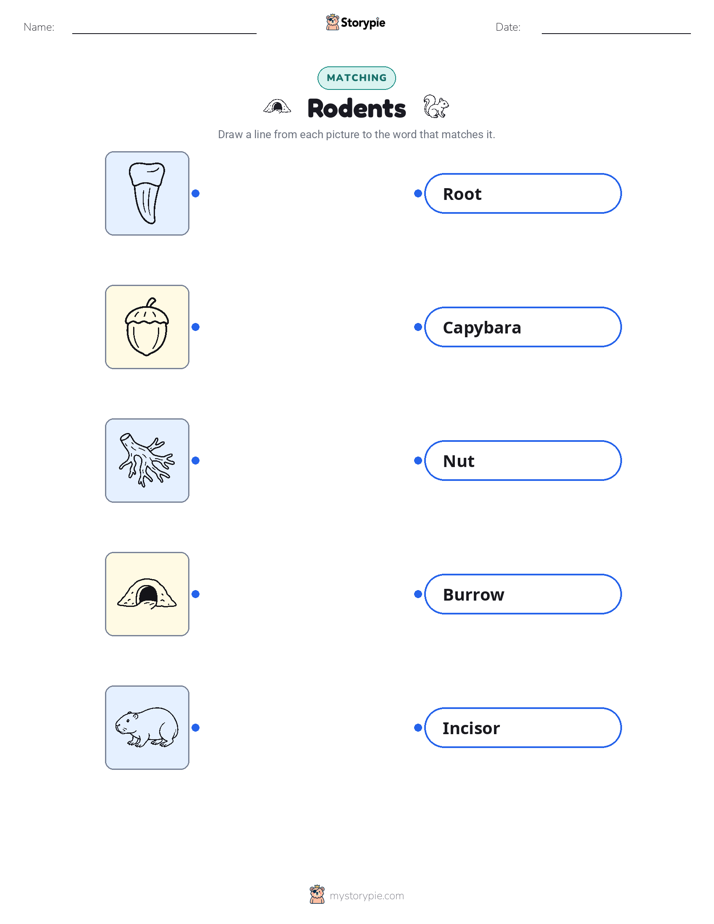
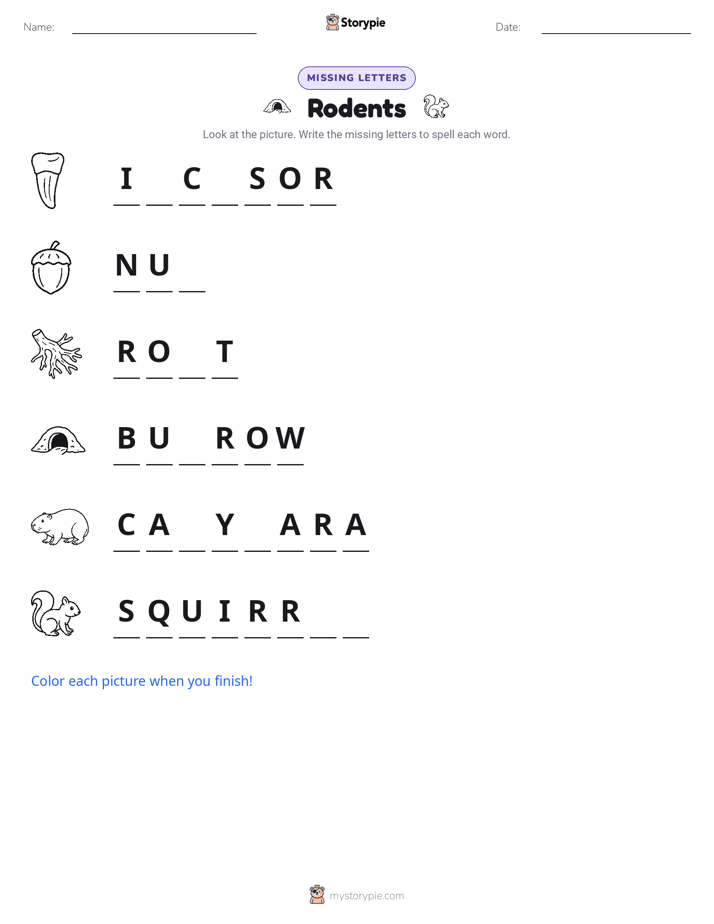
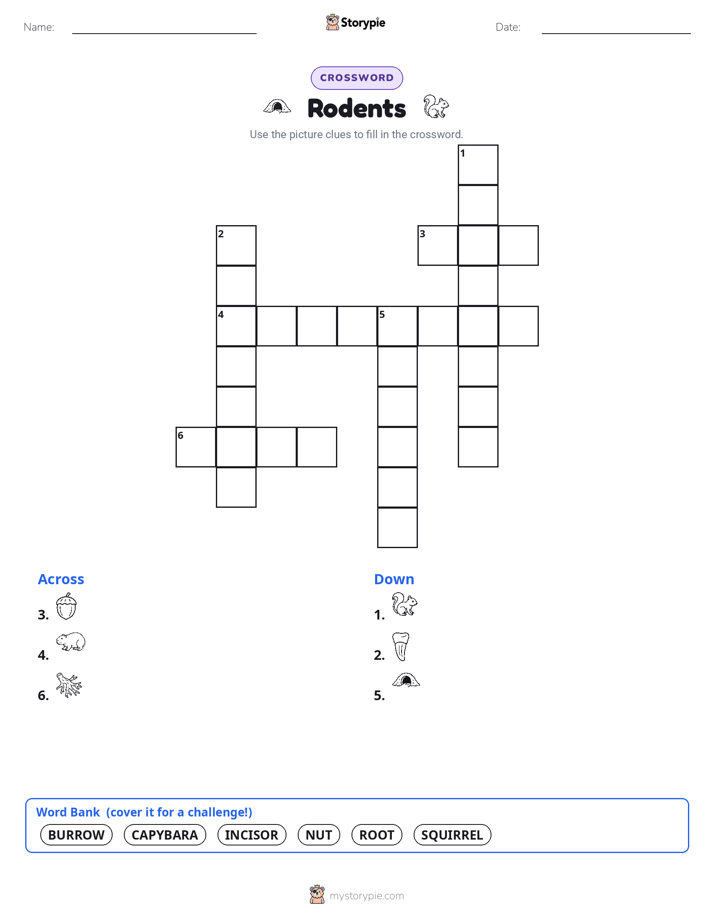
Hello there. I am a member of one of the oldest and largest families on Earth: the Rodents. My family’s story is a long and fascinating one, beginning around 56 million years ago, shortly after the age of the dinosaurs came to a dramatic close. The world was changing, and my earliest ancestors were there to witness it, adapting and thriving in the new landscapes. We are known for many things, but our most defining feature is something we carry right in front of our mouths: our teeth. We have four special front teeth, called incisors, which are truly remarkable because they never, ever stop growing. Imagine having teeth that grew your entire life. This might sound like a problem, but for us, it is our greatest tool. To keep our incisors from getting too long, we must constantly gnaw on hard materials like wood, nuts, and roots. This continuous gnawing doesn't just shorten our teeth; it sharpens them into fine, chisel-like points. With these built-in tools, we can break open the toughest shells to find food, dig complex burrows for shelter, and even, in the case of some of my relatives, cut down entire trees to build our homes. Our teeth are the key to our survival, allowing us to shape the world around us in powerful ways.
My family is enormous and incredibly diverse. In fact, we are the largest group of mammals on the planet, with over 2,000 different species that call themselves rodents. We have relatives living on every single continent except for icy Antarctica. This success is due to our amazing ability to adapt to almost any environment imaginable. You can find us in the scorching heat of the driest deserts and the freezing cold of the Arctic tundra. Let me introduce you to a few of my impressive relatives. In South America lives my cousin, the capybara, the largest rodent in the world. They are gentle giants who love the water. Then there are the clever squirrels you see in parks and forests. They are nature’s gardeners; by burying thousands of nuts for the winter and forgetting where some are, they plant new trees and help forests grow. And you can’t forget the industrious beavers, who are master engineers. They use their powerful incisors to build dams and lodges, creating vast wetlands that become thriving habitats for countless other animals, from fish to birds. From the smallest mouse to the largest capybara, my family showcases an incredible range of sizes, skills, and lifestyles, proving just how resourceful we can be.
A Rodent's Tale: My Family's Story
Hello there. I am a member of one of the oldest and largest families on Earth: the Rodents. My family’s story is a long and fascinating one, beginning around 56 million years ago, shortly after the age of the dinosaurs came to a dramatic close. The world was changing, and my earliest ancestors were there to witness it, adapting and thriving in the new landscapes. We are known for many things, but our most defining feature is something we carry right in front of our mouths: our teeth. We have four special front teeth, called incisors, which are truly remarkable because they never, ever stop growing. Imagine having teeth that grew your entire life. This might sound like a problem, but for us, it is our greatest tool. To keep our incisors from getting too long, we must constantly gnaw on hard materials like wood, nuts, and roots. This continuous gnawing doesn't just shorten our teeth; it sharpens them into fine, chisel-like points. With these built-in tools, we can break open the toughest shells to find food, dig complex burrows for shelter, and even, in the case of some of my relatives, cut down entire trees to build our homes. Our teeth are the key to our survival, allowing us to shape the world around us in powerful ways.
My family is enormous and incredibly diverse. In fact, we are the largest group of mammals on the planet, with over 2,000 different species that call themselves rodents. We have relatives living on every single continent except for icy Antarctica. This success is due to our amazing ability to adapt to almost any environment imaginable. You can find us in the scorching heat of the driest deserts and the freezing cold of the Arctic tundra. Let me introduce you to a few of my impressive relatives. In South America lives my cousin, the capybara, the largest rodent in the world. They are gentle giants who love the water. Then there are the clever squirrels you see in parks and forests. They are nature’s gardeners; by burying thousands of nuts for the winter and forgetting where some are, they plant new trees and help forests grow. And you can’t forget the industrious beavers, who are master engineers. They use their powerful incisors to build dams and lodges, creating vast wetlands that become thriving habitats for countless other animals, from fish to birds. From the smallest mouse to the largest capybara, my family showcases an incredible range of sizes, skills, and lifestyles, proving just how resourceful we can be.
Our long history has often intersected with the story of humans, and our relationship has been a complicated one. I must admit, some of my relatives, like the city rats, have gained a bit of a bad reputation over the centuries. This is partly due to historical events where we were misunderstood. For instance, during the Black Death pandemic that tragically swept through Europe, peaking around the year 1347, rats were blamed for spreading the disease. It's a heavy burden for my family to carry, but it is important to understand the science. It wasn't the rats themselves that made people sick, but rather the fleas that lived on them and other animals. These tiny insects were the true carriers of the illness. But our story with humans isn't all negative. In the early 1900s, a new chapter began. My mouse and rat cousins became unlikely heroes in scientific laboratories. Because their biological systems are similar to humans in many ways, they helped scientists understand diseases, test new medicines, and make incredible discoveries. These contributions have led to treatments and cures that have saved countless human lives, showing a different, more positive side of our shared history.
Beyond our interactions with humans, my family plays a vital role in keeping the natural world healthy and balanced. We are what scientists call 'ecosystem engineers,' which means our daily activities help create and maintain the environments where many other species live. I've already mentioned how my squirrel cousins are accidental foresters, planting the seeds of future trees with every forgotten nut. The beavers are perhaps the most famous engineers, as their dams transform landscapes. These dams slow down rivers, creating ponds and wetlands that provide clean water and safe homes for fish, frogs, ducks, and insects. But our contribution doesn't stop there. We are also a fundamental part of the food web. Many of us serve as a critical food source for predators like hawks, owls, snakes, and foxes. While this may sound grim, it is an essential role. By providing food for these animals, we help sustain their populations and maintain a healthy balance in the ecosystem. Without us, the entire food chain would be disrupted. We may be small, but our impact on the health of our planet is immense, proving that even the most common creatures are unsung heroes of nature.
Wow facts
About
Rodents are mammals of the order Rodentia, characterized by a single pair of continuously growing incisors in each of the upper and lower jaws. They constitute about 40% of all mammal species and are found on every continent except Antarctica.
Take a Quiz
Question 1 of 5
What is the main idea of the section titled 'Nature's Unsung Heroes'?
Explore next






Want to do even more?
Go beyond exploring. Unlock tools that turn every story into real learning.

Storypie Plus for families
Full stories, quizzes, and printables. Nights and car rides, sorted.
- Unlimited audio stories
- Create Mode: your child stars in the story
- Offline downloads
- Printable worksheets & coloring pages

Why Storypie for Schools
Students engaged. Prep in seconds. Evenings back to you.
- Worksheets & Quizzes
- Classroom Management
- Formative Assessment
- Custom Curriculum & Lesson Plans
- 27 Languages

Why Storypie for Homeschool
Curriculum done. They'll ask for more. Hours back in your day.
- Worksheet Generator
- First-Person Audio Stories
- Built-in Comprehension Quizzes
- Custom Curriculum & Lesson Plans
- Print & Go Activities