English

Sea Urchin
Sea urchins are spiny, globular echinoderms that live on the seabed.
Reads at Grades 6–8 Listens at Grades 4–8
Print & create
Answer keys·No prep·Free with an account
28 worksheets · answer keys · full story · quiz · Ages 10-12 · CEFR B2
Plus adds 208,000+ more stories in 27 languages, audio for every one, and printables for all of them.
Just want Sea Urchin?

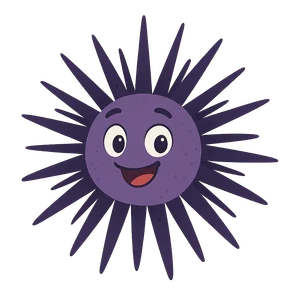
Hello, my name is Sea Urchin, and my home is on the vast floor of the ocean. If you were to see me, you might think I look like a living pincushion, a spiky, globe-shaped creature moving slowly across the rocks. I belong to a family called echinoderms, which means my cousins are the familiar sea stars and the flat, circular sand dollars. While I may seem simple, my family history is incredibly long and impressive. My ancestors are truly ancient; scientists have found fossils of them that date all the way back to the Ordovician period. That was about 450 million years ago, a time so distant it was long before the first dinosaurs ever walked the Earth. We have been a part of the ocean's story for an almost unimaginable amount of time, watching the world change from our home in the deep.
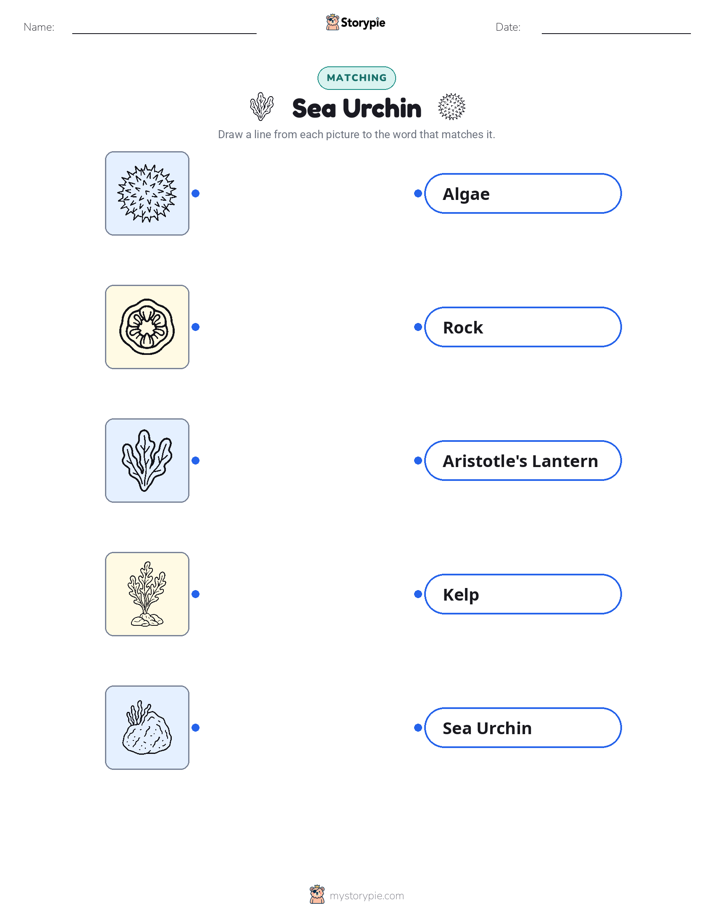
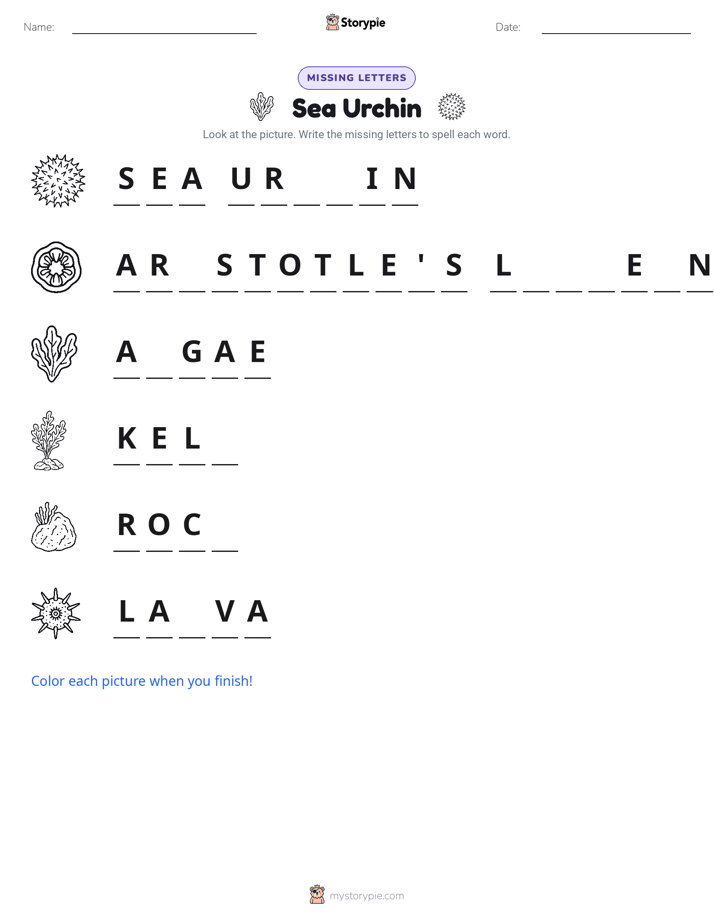
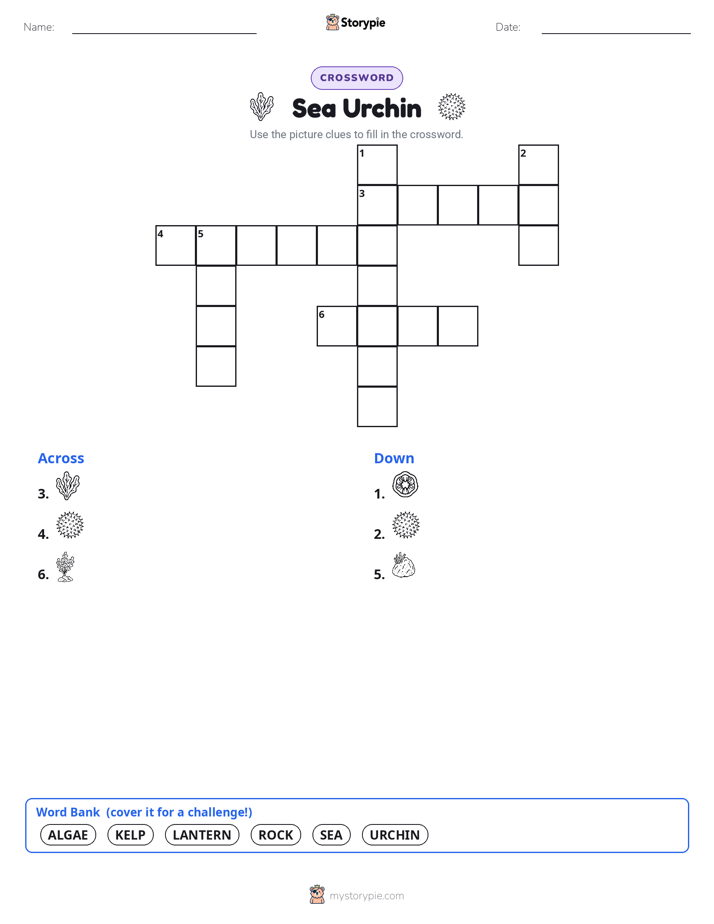
To survive for so many millions of years, my kind has developed some amazing tools. My body is covered in sharp, movable spines, which are not just for show. I use them to protect myself from creatures who might see me as a meal, but I also use them to help me move, pushing myself along the seafloor like a tiny, armored vehicle. For more delicate movements and for gripping surfaces, I have a secret weapon: my tube feet. I have hundreds of these tiny, flexible, suction-cupped legs that I can extend and retract. I control them using a remarkable water-pressure system inside my body, allowing me to crawl over uneven rocks and hold tightly onto my food. But perhaps my most famous feature is my mouth. It is a complex structure of five sharp teeth located on my underside, and it is known as 'Aristotle's lantern.' It was given this name because the Greek philosopher Aristotle was the first to describe it in his writings around 343 BCE, comparing its shape to a horn lantern from his time. This mouth is perfectly designed for my diet, allowing me to scrape algae, my favorite food, off of rocks with incredible precision.
The Spiny Gardener of the Sea
Hello, my name is Sea Urchin, and my home is on the vast floor of the ocean. If you were to see me, you might think I look like a living pincushion, a spiky, globe-shaped creature moving slowly across the rocks. I belong to a family called echinoderms, which means my cousins are the familiar sea stars and the flat, circular sand dollars. While I may seem simple, my family history is incredibly long and impressive. My ancestors are truly ancient; scientists have found fossils of them that date all the way back to the Ordovician period. That was about 450 million years ago, a time so distant it was long before the first dinosaurs ever walked the Earth. We have been a part of the ocean's story for an almost unimaginable amount of time, watching the world change from our home in the deep.
To survive for so many millions of years, my kind has developed some amazing tools. My body is covered in sharp, movable spines, which are not just for show. I use them to protect myself from creatures who might see me as a meal, but I also use them to help me move, pushing myself along the seafloor like a tiny, armored vehicle. For more delicate movements and for gripping surfaces, I have a secret weapon: my tube feet. I have hundreds of these tiny, flexible, suction-cupped legs that I can extend and retract. I control them using a remarkable water-pressure system inside my body, allowing me to crawl over uneven rocks and hold tightly onto my food. But perhaps my most famous feature is my mouth. It is a complex structure of five sharp teeth located on my underside, and it is known as 'Aristotle's lantern.' It was given this name because the Greek philosopher Aristotle was the first to describe it in his writings around 343 BCE, comparing its shape to a horn lantern from his time. This mouth is perfectly designed for my diet, allowing me to scrape algae, my favorite food, off of rocks with incredible precision.
My days are spent in the beautiful and bustling kelp forest. This underwater world is like a tall, dense city of seaweed, with sunlight filtering down from the surface. Life here is a slow and steady journey. I am a grazer, and my main task each day is to search for food. I move methodically across the seafloor, using my Aristotle's lantern to munch on the thin layers of algae that coat the rocks and the kelp holdfasts. In doing so, I help keep the area tidy and clean. However, life isn't always peaceful. I must always be aware of the dangers that lurk in the kelp forest. Predators like hungry sea otters, powerful wolf eels, and the many-armed sunflower sea stars are always a threat. When they approach, I rely on my primary defense: my spiny exterior. I pull my tube feet in and stand my ground, presenting a sharp, uninviting ball that makes it difficult for most predators to take a bite. It is a simple but effective strategy that has helped my kind survive for eons.
My role in the kelp forest is more important than just eating and surviving. Scientists call creatures like me a 'keystone species.' This means that my presence has a huge effect on the health and structure of my entire ecosystem. It is a job that requires a delicate balance. If the population of sea urchins in an area becomes too large, we can eat so much kelp that we destroy the very forest we live in. This creates what is known as an 'urchin barren'—a bare, empty patch of ocean floor where the kelp is gone, and few other animals can find food or shelter. However, my grazing is also essential. By constantly eating algae, I clear space on the rocks, which allows new kelp and other forms of marine life to grow. In this way, I act as the kelp forest's gardener. My job is to tend to the seafloor, helping to maintain the health and balance of my entire ocean neighborhood for all the creatures who call it home.
My life begins not as a spiky ball, but as a tiny, free-floating larva. I drift with the ocean currents, a microscopic speck carried on a great journey, before I eventually settle on the seafloor to begin my transformation and grow my hard, spiny shell. While many of my kind live for around 30 years, some of my relatives are among the longest-living creatures on Earth. The Red Sea Urchin, for example, can live for over 200 years, slowly moving through the centuries on the ocean floor. I am more than just a spiky creature you might see in a tide pool; I am part of an ancient lineage. My story is a reminder that every living thing has a purpose. As an essential caretaker of the sea, my work as a grazer and a gardener helps keep the entire marine ecosystem in balance, ensuring that the kelp forests continue to thrive for generations to come.
Wow facts
About
Sea urchins are spiny, globular echinoderms that live on the seabed. They play a crucial role as grazers in marine ecosystems, helping to control algae growth on coral reefs and in kelp forests.
Take a Quiz
Question 1 of 5
What is the main idea of this story?
Explore next




Want to do even more?
Go beyond exploring. Unlock tools that turn every story into real learning.

Storypie Plus for families
Full stories, quizzes, and printables. Nights and car rides, sorted.
- Unlimited audio stories
- Create Mode: your child stars in the story
- Offline downloads
- Printable worksheets & coloring pages

Why Storypie for Schools
Students engaged. Prep in seconds. Evenings back to you.
- Worksheets & Quizzes
- Classroom Management
- Formative Assessment
- Custom Curriculum & Lesson Plans
- 27 Languages

Why Storypie for Homeschool
Curriculum done. They'll ask for more. Hours back in your day.
- Worksheet Generator
- First-Person Audio Stories
- Built-in Comprehension Quizzes
- Custom Curriculum & Lesson Plans
- Print & Go Activities