English

Vaquita
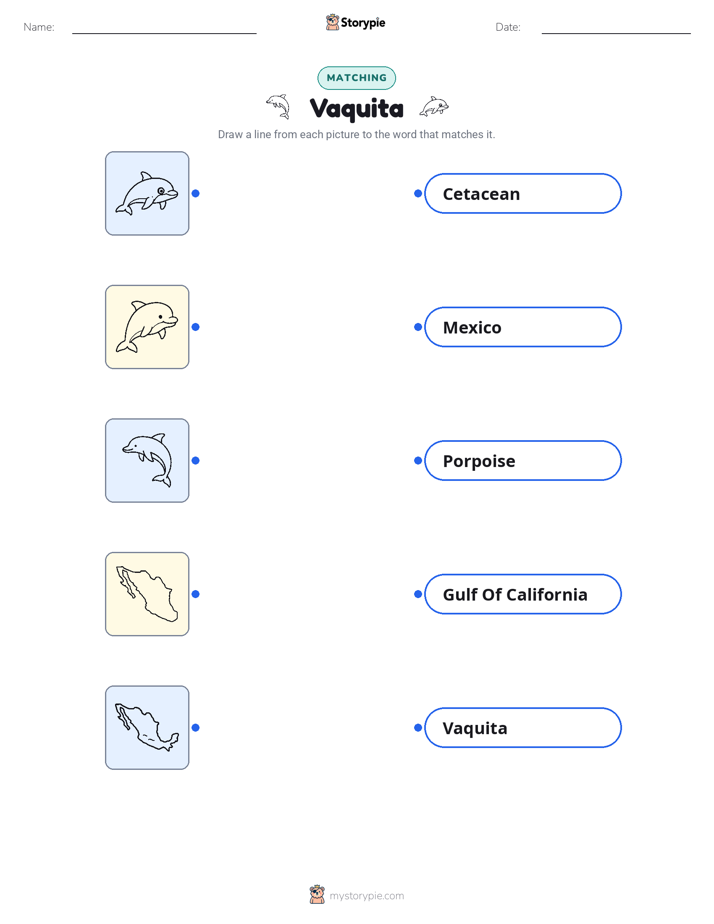
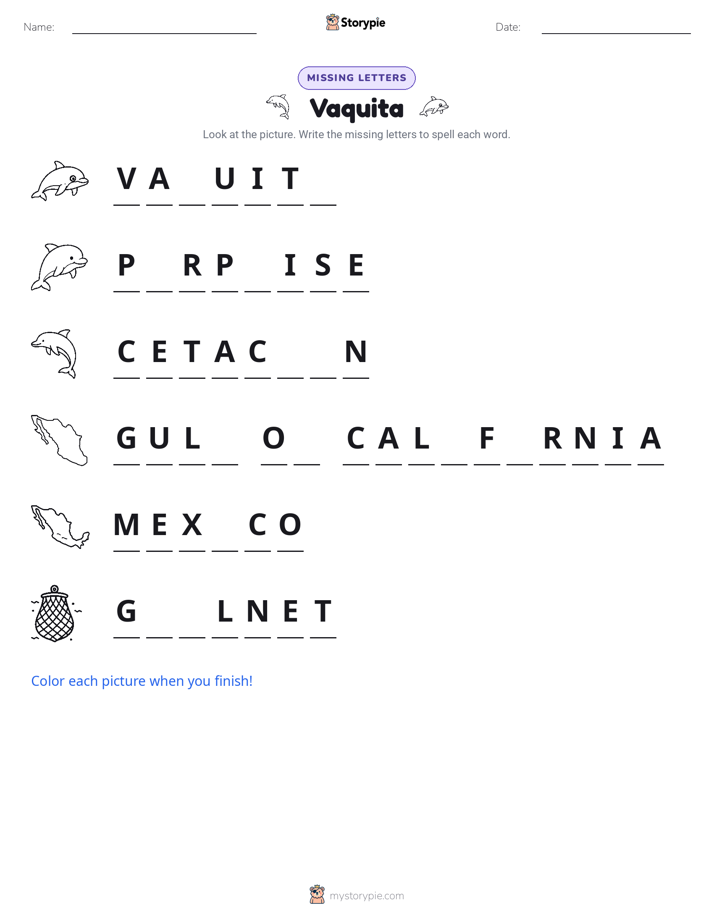
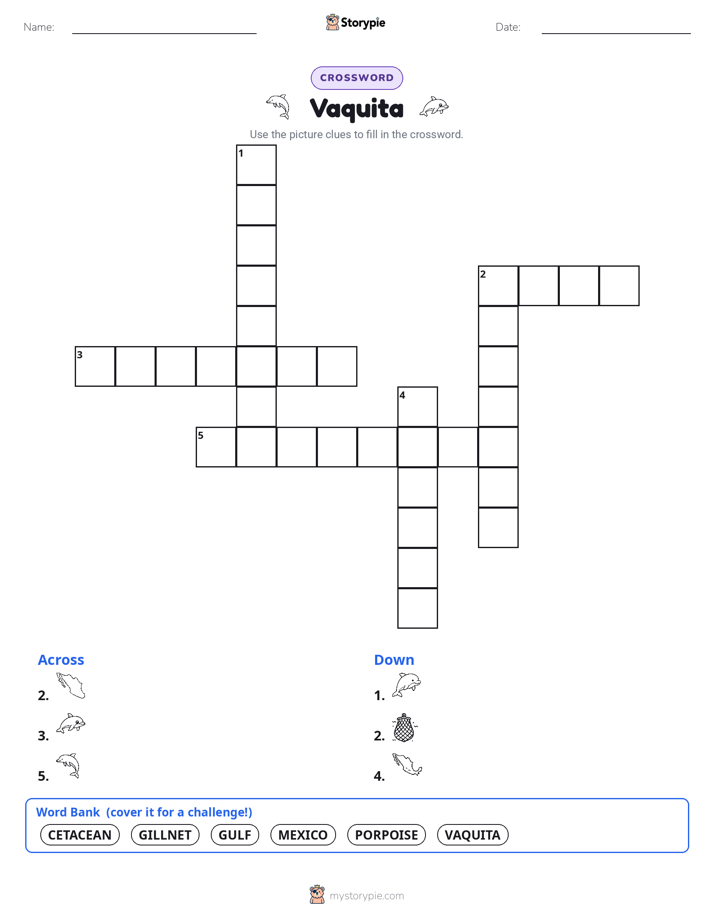
The Vaquita is the world's smallest cetacean…
Reads at Grades 3–5 Listens at Grades 1–5
Print & create
Answer keys·No prep·Free with an account
28 worksheets · answer keys · full story · quiz · Ages 8-10 · CEFR B1
Plus adds 164,000+ more stories in 27 languages, audio for every one, and printables for all of them.
Just want Vaquita?
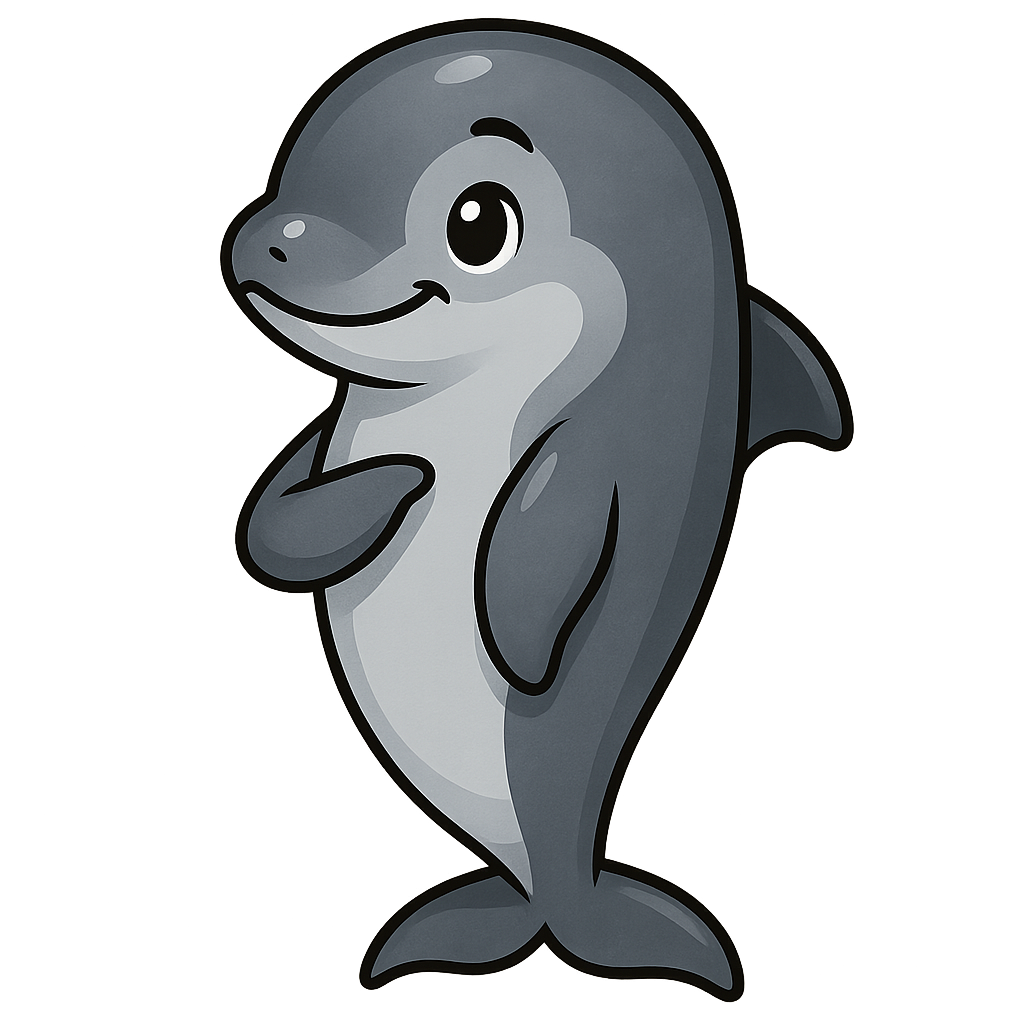
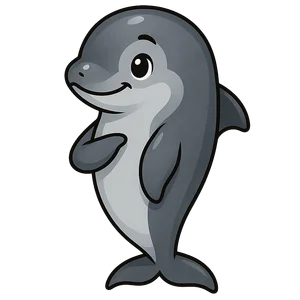
Hello! My name is Vaquita, and I am the smallest porpoise in the entire world. If you were to see me, you would notice the dark rings around my eyes, which look a little like glasses, and a dark line that curves up on my lips, making it look like I’m always smiling. My home, and the only place in the world where my family lives, is a special part of the ocean called the Gulf of California, right off the coast of Mexico. We are very shy creatures, and our home can be quite cloudy, so not many people have ever had the chance to see us swimming in the wild. We prefer to keep to ourselves, darting through the warm, shallow waters where we feel safest. It’s a quiet life, but it’s the only one I’ve ever known.
I live with my family in a group called a pod. We swim together, searching for food and exploring our watery home. To navigate and find our meals, we have a special superpower called echolocation. It works like this: I make a series of high-pitched clicking sounds that travel through the water. When these sounds hit an object, like a rock or a tasty fish, they bounce back to me as an echo. My brain uses these echoes to create a detailed picture of everything around me, even in the murky water where it’s hard to see. It’s how I find my favorite snacks, like small fish and squid, wiggling near the seafloor. This amazing ability allows me to “see” with sound, guiding me through my world day and night.
For a very long time, the world didn't even know my family and I existed. It wasn't until 1950 that scientists first discovered some of our bones and realized there was a new kind of porpoise in the sea. A few years later, in 1958, they officially gave us our name: Vaquita. But soon after we were discovered, a new and terrible danger appeared in our home. Huge fishing nets, called gillnets, began to fill the waters. These nets are like invisible walls underwater, meant to catch a large fish called the Totoaba. The problem is, we can’t always detect them with our echolocation. I often get tangled in them by accident. When that happens, I can't get back to the surface to breathe the air I need to survive.
A Vaquita's Story: The Smallest Porpoise
Hello! My name is Vaquita, and I am the smallest porpoise in the entire world. If you were to see me, you would notice the dark rings around my eyes, which look a little like glasses, and a dark line that curves up on my lips, making it look like I’m always smiling. My home, and the only place in the world where my family lives, is a special part of the ocean called the Gulf of California, right off the coast of Mexico. We are very shy creatures, and our home can be quite cloudy, so not many people have ever had the chance to see us swimming in the wild. We prefer to keep to ourselves, darting through the warm, shallow waters where we feel safest. It’s a quiet life, but it’s the only one I’ve ever known.
I live with my family in a group called a pod. We swim together, searching for food and exploring our watery home. To navigate and find our meals, we have a special superpower called echolocation. It works like this: I make a series of high-pitched clicking sounds that travel through the water. When these sounds hit an object, like a rock or a tasty fish, they bounce back to me as an echo. My brain uses these echoes to create a detailed picture of everything around me, even in the murky water where it’s hard to see. It’s how I find my favorite snacks, like small fish and squid, wiggling near the seafloor. This amazing ability allows me to “see” with sound, guiding me through my world day and night.
For a very long time, the world didn't even know my family and I existed. It wasn't until 1950 that scientists first discovered some of our bones and realized there was a new kind of porpoise in the sea. A few years later, in 1958, they officially gave us our name: Vaquita. But soon after we were discovered, a new and terrible danger appeared in our home. Huge fishing nets, called gillnets, began to fill the waters. These nets are like invisible walls underwater, meant to catch a large fish called the Totoaba. The problem is, we can’t always detect them with our echolocation. I often get tangled in them by accident. When that happens, I can't get back to the surface to breathe the air I need to survive.
Just when things seemed hopeless, some helpers arrived. People learned about the danger we were in and decided to take action to protect us. In 1993, the Mexican government created a special protected area in the Gulf of California just for me and my family to live in, a place where we were supposed to be safe. Then, around the year 2015, they started banning the dangerous gillnets that were hurting us. Even with these new rules, the danger isn’t completely gone, because some illegal fishing still happens in our home. But it gives me hope to know that there are many kind people working hard every single day to remove the nets and make the ocean a safe place for us once again.
My story is important because my family plays a special role in our ocean ecosystem. Even though there are very few of us left, our presence is a sign of the ocean's health. My journey is a reminder to everyone that every single creature, no matter how big or small, matters to the world. We are still here, swimming and clicking in the warm waters of the Gulf. We represent a little bit of hope for the future of the seas. My greatest wish is that one day, the Gulf of California will be full of the happy clicking sounds of my family again, swimming freely and safely.
Wow facts
About
The Vaquita is the world's smallest cetacean, a type of porpoise found only in the northern Gulf of California, Mexico. It is critically endangered primarily due to illegal gillnet fishing.
Take a Quiz
Question 1 of 5
The story says Vaquitas use echolocation to find food in 'murky' water. What does the word 'murky' most likely mean?
Explore next






Want to do even more?
Go beyond exploring. Unlock tools that turn every story into real learning.

Storypie Plus for families
Full stories, quizzes, and printables. Nights and car rides, sorted.
- Unlimited audio stories
- Create Mode: your child stars in the story
- Offline downloads
- Printable worksheets & coloring pages

Why Storypie for Schools
Students engaged. Prep in seconds. Evenings back to you.
- Worksheets & Quizzes
- Classroom Management
- Formative Assessment
- Custom Curriculum & Lesson Plans
- 27 Languages

Why Storypie for Homeschool
Curriculum done. They'll ask for more. Hours back in your day.
- Worksheet Generator
- First-Person Audio Stories
- Built-in Comprehension Quizzes
- Custom Curriculum & Lesson Plans
- Print & Go Activities