English

Abraham Maslow
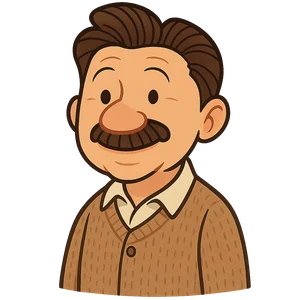
Abraham Maslow was an American psychologist best known for creating Maslow's hierarchy of needs…
Reads at Grades 6–8 Listens at Grades 4–8
Print & create
Answer keys·No prep·Free with an account
28 worksheets · answer keys · full story · quiz · Ages 10-12 · CEFR B2
Plus adds 244,000+ more stories in 27 languages, audio for every one, and printables for all of them.
Just want Abraham Maslow?
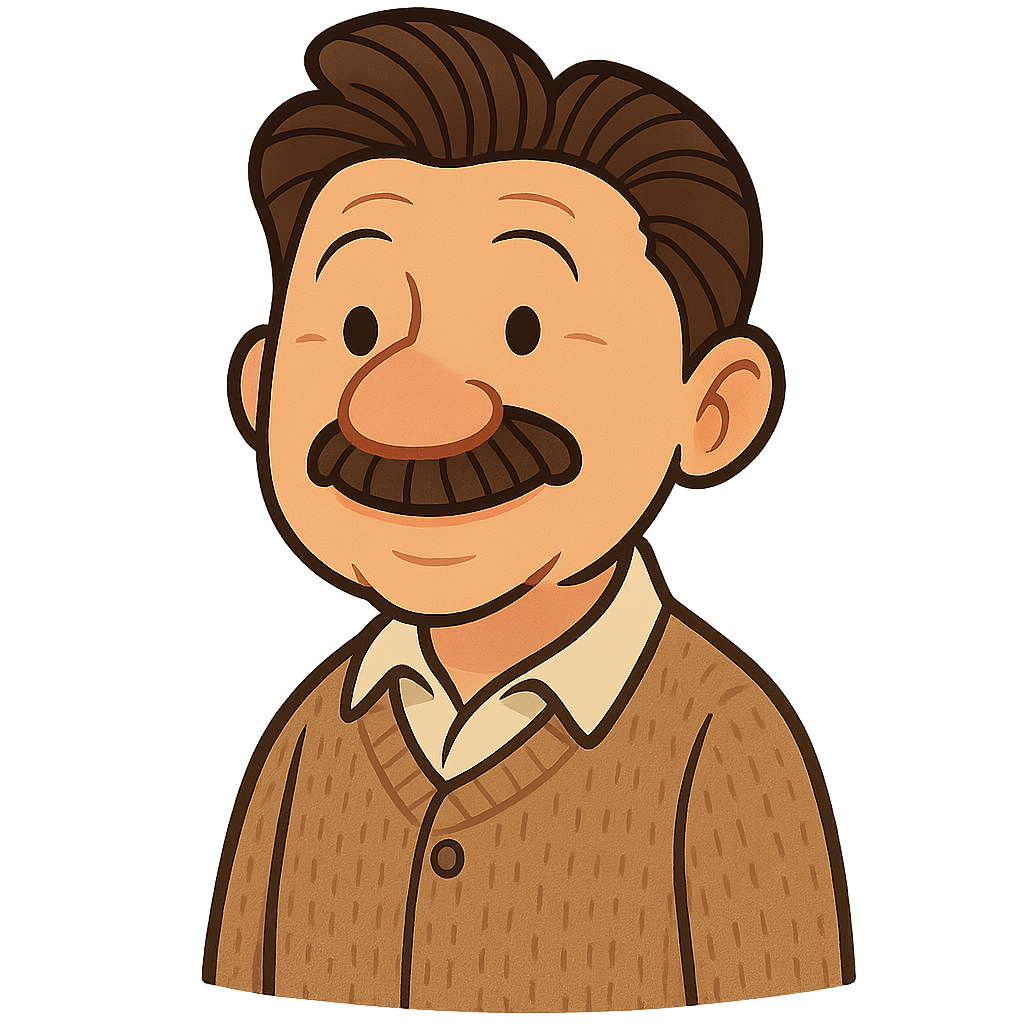
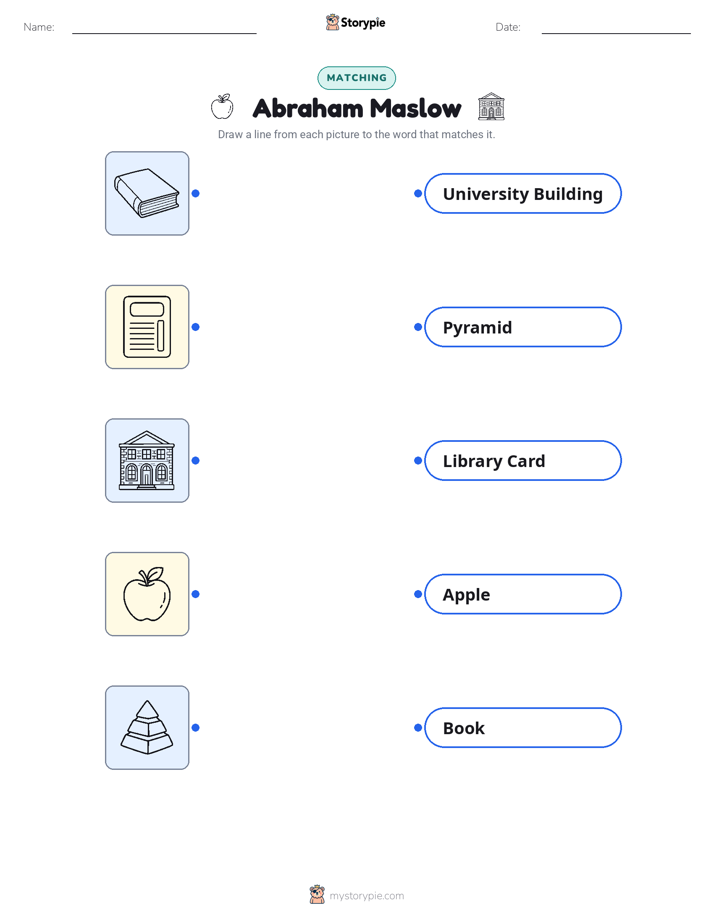
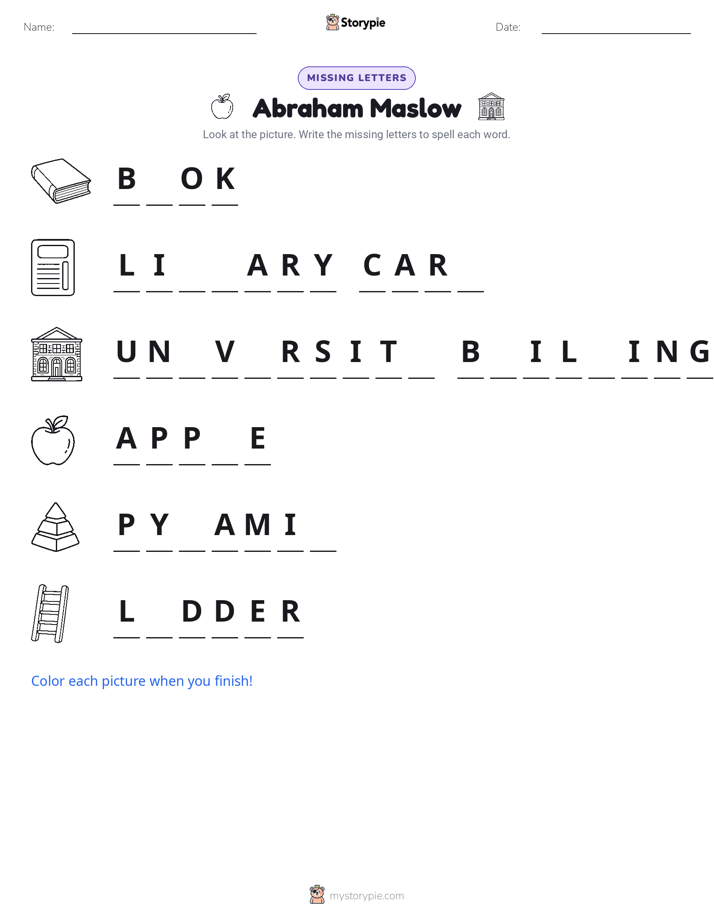
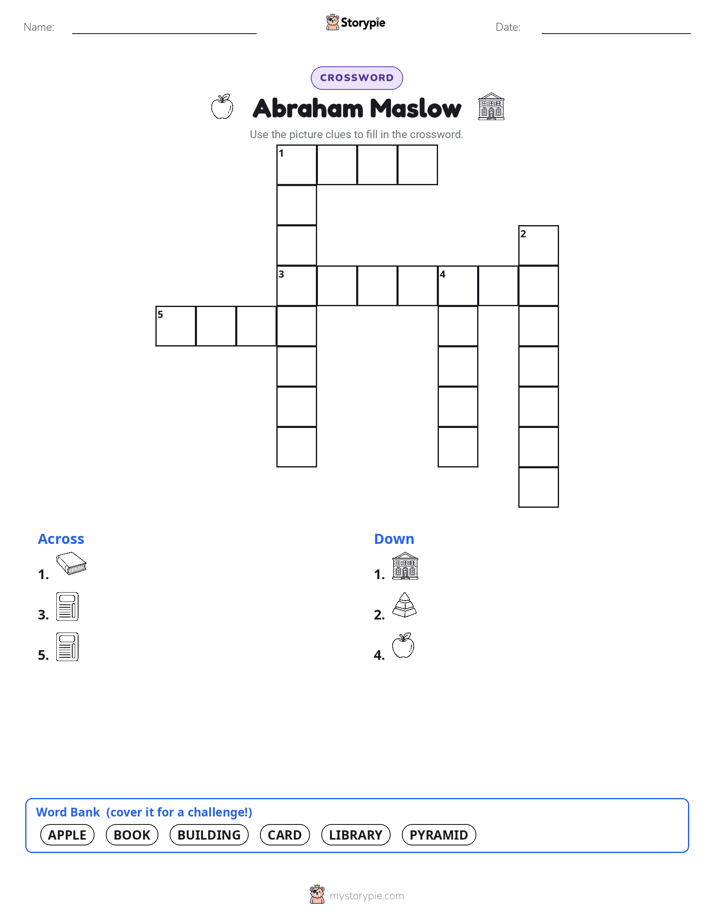
Hello. My name is Abraham Maslow, and I spent my life asking a very important question: what does it take for a person to live their best possible life? My journey to find the answer began on April 1st, 1908, when I was born in Brooklyn, New York. I was the oldest of seven children, and my parents were Jewish immigrants who had come to America from Russia seeking a better life. Life wasn't always easy, and I often felt lonely and out of place in our neighborhood. To escape my feelings of isolation, I spent countless hours in the library, surrounded by books. Books became my best friends, and through them, the world opened up to me. This quiet, solitary childhood filled with reading sparked a deep curiosity inside me. I didn't just want to read stories; I wanted to understand the people in them, and the people all around me. That early feeling of being an outsider made me a keen observer of human nature and set me on a path to understand what truly makes people tick.
When it was time for college, I initially chose to study law. My parents had worked so hard, and I wanted to make them proud by choosing a respected profession. But I quickly realized my heart wasn't in it. The complex rules and arguments didn't capture my imagination. What truly fascinated me was the human mind. So, I made a brave decision to switch my studies to psychology. I moved to the University of Wisconsin-Madison, which was a wonderful new chapter in my life. It was there that I felt I truly belonged. In 1928, I married my dear wife, Bertha Goodman, and her constant support and belief in me was a source of great strength. At the university, I had the opportunity to work with a brilliant mentor named Harry Harlow. Under his guidance, my passion for psychology grew, and in 1934, I earned my Ph.D. This was the official start of my career, but my biggest ideas were still waiting to be discovered.
Abraham Maslow: The Man Who Asked What Makes Us Thrive
Hello. My name is Abraham Maslow, and I spent my life asking a very important question: what does it take for a person to live their best possible life? My journey to find the answer began on April 1st, 1908, when I was born in Brooklyn, New York. I was the oldest of seven children, and my parents were Jewish immigrants who had come to America from Russia seeking a better life. Life wasn't always easy, and I often felt lonely and out of place in our neighborhood. To escape my feelings of isolation, I spent countless hours in the library, surrounded by books. Books became my best friends, and through them, the world opened up to me. This quiet, solitary childhood filled with reading sparked a deep curiosity inside me. I didn't just want to read stories; I wanted to understand the people in them, and the people all around me. That early feeling of being an outsider made me a keen observer of human nature and set me on a path to understand what truly makes people tick.
When it was time for college, I initially chose to study law. My parents had worked so hard, and I wanted to make them proud by choosing a respected profession. But I quickly realized my heart wasn't in it. The complex rules and arguments didn't capture my imagination. What truly fascinated me was the human mind. So, I made a brave decision to switch my studies to psychology. I moved to the University of Wisconsin-Madison, which was a wonderful new chapter in my life. It was there that I felt I truly belonged. In 1928, I married my dear wife, Bertha Goodman, and her constant support and belief in me was a source of great strength. At the university, I had the opportunity to work with a brilliant mentor named Harry Harlow. Under his guidance, my passion for psychology grew, and in 1934, I earned my Ph.D. This was the official start of my career, but my biggest ideas were still waiting to be discovered.
After finishing my studies, I returned to New York City to teach at Brooklyn College. The city was an exciting place to be, as many brilliant European thinkers had moved there to escape the turmoil in their home countries. I had the privilege of meeting some of them, including Max Wertheimer and Ruth Benedict. I was amazed by them. They weren't just incredible scholars; they were also kind, creative, and joyful people. I admired them as whole, wonderful human beings, and they made me think. At that time, most of psychology was focused on what was wrong with people—their fears, their problems, their illnesses. But as I looked at my mentors, I wanted to know what made people so right. What makes a person truly thrive? This question led me to help create a new field called humanistic psychology, which focused on human strengths, creativity, and happiness. My desire to understand our potential for goodness became even stronger in the early 1940s, as World War II began. I believed that if we could understand what helps people become their best selves, we could create a more peaceful world.
My studies and observations led me to my most famous idea, which I first presented in a paper in 1943. I called it the 'Hierarchy of Needs.' To make it easy to understand, you can picture it as a pyramid or a ladder. At the very bottom are our most basic, essential needs for survival, like having enough food and water and feeling safe from harm. Once those needs are met, we can move up to the next level, which is the need for love and belonging. This is about having friends, family, and feeling like part of a community. Above that is the need for esteem, which means feeling good about yourself and earning the respect of others. At the very top of the pyramid, the final and highest level, is what I called 'self-actualization.' This is the drive to become the very best version of yourself—to fulfill your unique potential, whatever that may be. I continued to develop these ideas in my 1954 book, 'Motivation and Personality.' My work gained more attention, and in 1951, I became the head of the psychology department at Brandeis University, where I had many wonderful years of teaching and research.
I lived a full and curious life, always trying to understand the best parts of humanity. In 1967, I was deeply honored to be named Humanist of the Year for my work. I lived to be 62 years old, and my life's journey came to a peaceful end on June 8th, 1970. My ideas, especially the pyramid of needs, are still used today in schools, businesses, and therapy to help people understand what we all require to feel happy, safe, and fulfilled. I hope my work inspires you to think about your own potential and to build a world where everyone has the chance to climb their own pyramid and reach for the stars.
Wow facts
About
Abraham Maslow was an American psychologist best known for creating Maslow's hierarchy of needs, a theory of human motivation based on fulfilling innate human needs.
Take a Quiz
Question 1 of 5
Why did Abraham Maslow decide to study human strengths and happiness instead of just problems?
Explore next






Want to do even more?
Go beyond exploring. Unlock tools that turn every story into real learning.

Storypie Plus for families
Full stories, quizzes, and printables. Nights and car rides, sorted.
- Unlimited audio stories
- Create Mode: your child stars in the story
- Offline downloads
- Printable worksheets & coloring pages

Why Storypie for Schools
Students engaged. Prep in seconds. Evenings back to you.
- Worksheets & Quizzes
- Classroom Management
- Formative Assessment
- Custom Curriculum & Lesson Plans
- 27 Languages

Why Storypie for Homeschool
Curriculum done. They'll ask for more. Hours back in your day.
- Worksheet Generator
- First-Person Audio Stories
- Built-in Comprehension Quizzes
- Custom Curriculum & Lesson Plans
- Print & Go Activities