English

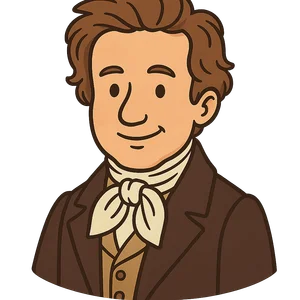
Alexander von Humboldt
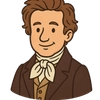
A Prussian polymath, geographer, naturalist…
Reads at Grades 6–8 Listens at Grades 4–8
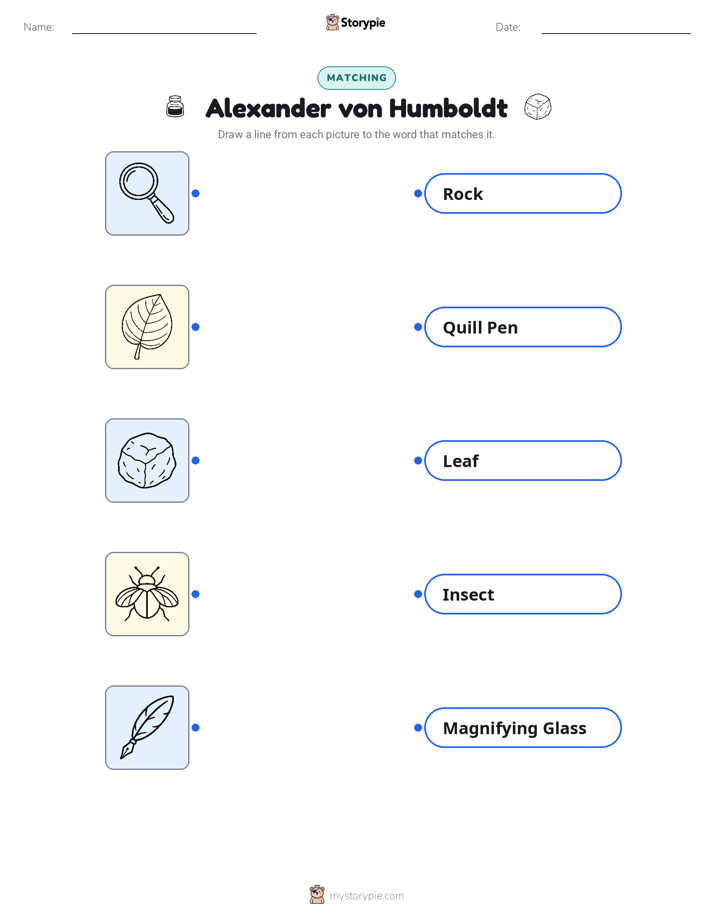
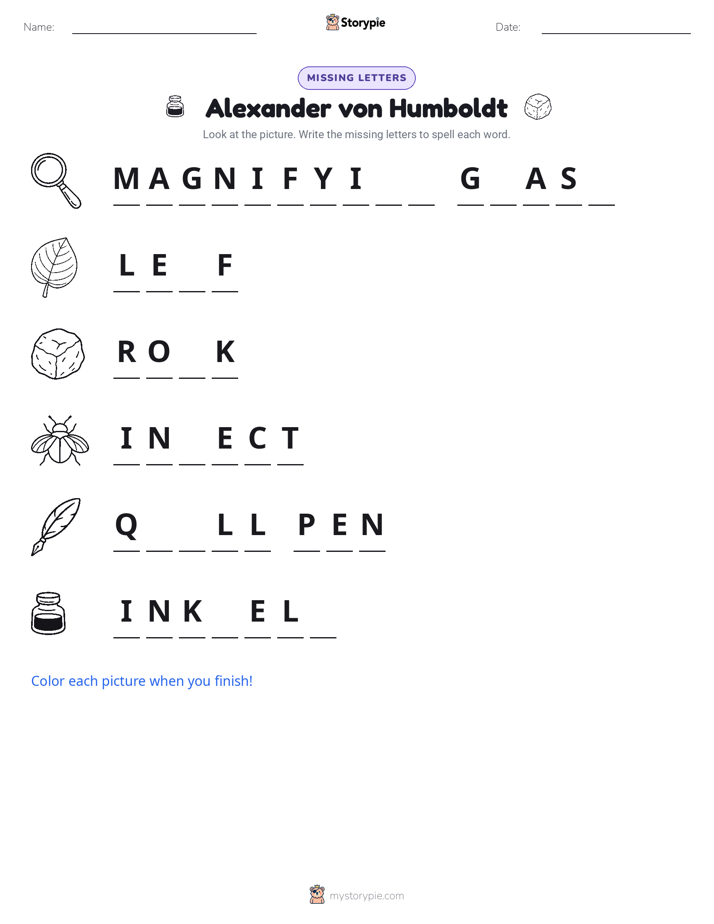
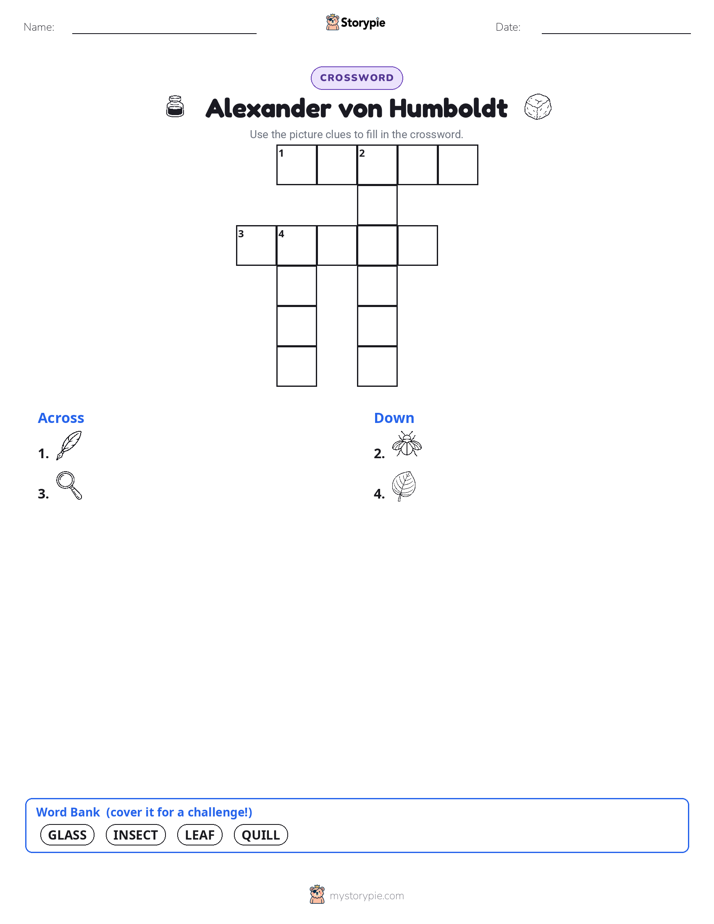
Print & create
Answer keys·No prep·Free with an account
28 worksheets · answer keys · full story · quiz · Ages 10-12 · CEFR B2
Plus adds 164,000+ more stories in 27 languages, audio for every one, and printables for all of them.
Just want Alexander von Humboldt?
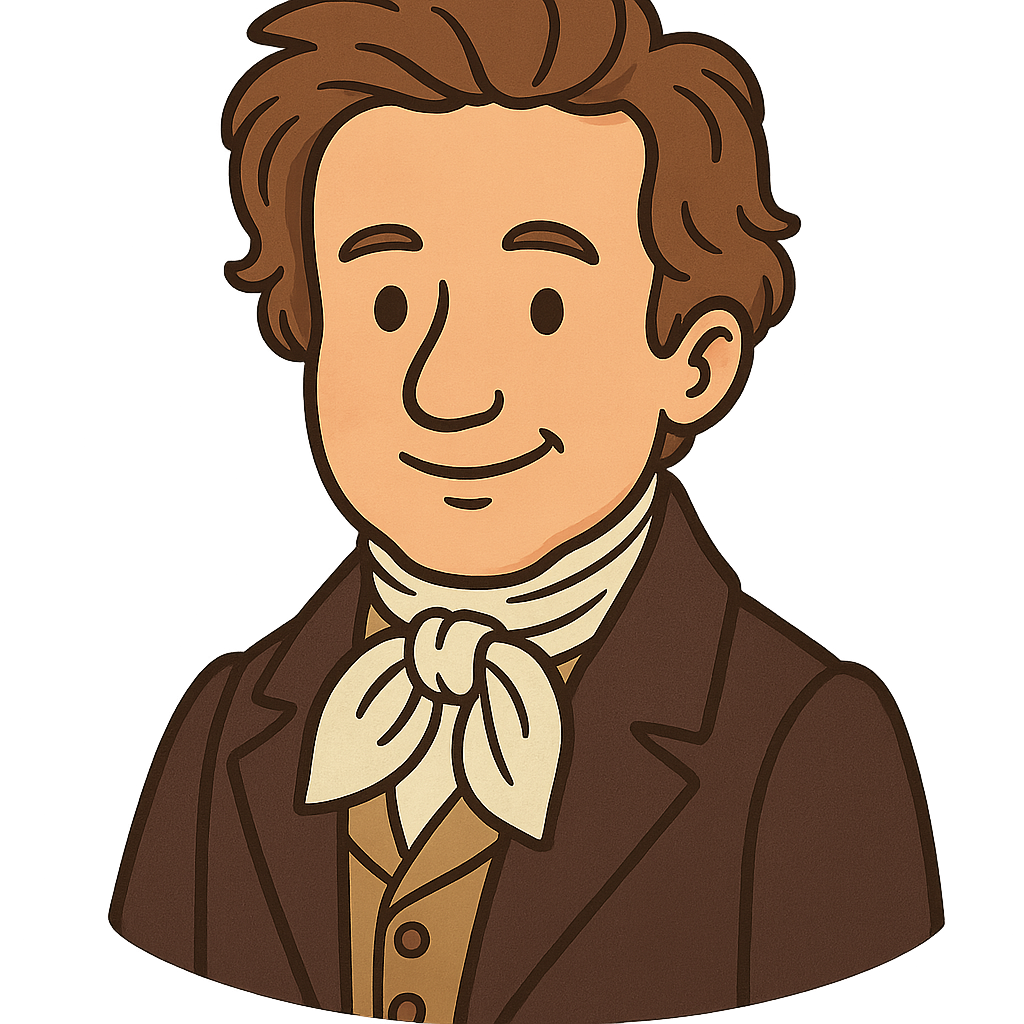
Hello! My name is Alexander von Humboldt, and I was a man who wanted to understand everything about the world. I was born in Berlin, Prussia, on September 14th, 1769. From a young age, my curiosity about the natural world was boundless. My family and friends even called me 'the little apothecary' because I was always collecting and carefully labeling every plant, insect, and stone I could find. While my family hoped I would pursue a stable career in government, my heart was set on adventure. I dreamed of exploring distant lands and uncovering the secrets of our planet. To prepare, I dedicated myself to my studies, learning everything I could about geology, botany, and astronomy, all in anticipation of the day I could finally begin my journey.
My great dream became a reality in 1799 when I set sail for the Americas with my good friend and fellow scientist, the botanist Aimé Bonpland. For the next five years, we journeyed through territories in South America that were largely unknown to Europeans at the time. Our expedition was filled with incredible discoveries. We navigated the winding path of the Orinoco River in what is now Venezuela and were the first to prove its connection to the vast Amazon River system. We encountered fascinating creatures, like electric eels that could leap from the water to deliver a powerful shock. Throughout our travels, we were relentless in our work, documenting thousands of new plant species and meticulously measuring every detail of our environment, from the air temperature to the precise blueness of the sky.
Alexander von Humboldt: A Web of Life
Hello! My name is Alexander von Humboldt, and I was a man who wanted to understand everything about the world. I was born in Berlin, Prussia, on September 14th, 1769. From a young age, my curiosity about the natural world was boundless. My family and friends even called me 'the little apothecary' because I was always collecting and carefully labeling every plant, insect, and stone I could find. While my family hoped I would pursue a stable career in government, my heart was set on adventure. I dreamed of exploring distant lands and uncovering the secrets of our planet. To prepare, I dedicated myself to my studies, learning everything I could about geology, botany, and astronomy, all in anticipation of the day I could finally begin my journey.
My great dream became a reality in 1799 when I set sail for the Americas with my good friend and fellow scientist, the botanist Aimé Bonpland. For the next five years, we journeyed through territories in South America that were largely unknown to Europeans at the time. Our expedition was filled with incredible discoveries. We navigated the winding path of the Orinoco River in what is now Venezuela and were the first to prove its connection to the vast Amazon River system. We encountered fascinating creatures, like electric eels that could leap from the water to deliver a powerful shock. Throughout our travels, we were relentless in our work, documenting thousands of new plant species and meticulously measuring every detail of our environment, from the air temperature to the precise blueness of the sky.
One of the most challenging and rewarding parts of our expedition occurred in 1802. We set out to climb Chimborazo, a colossal volcano in modern-day Ecuador that many people at the time believed was the highest mountain in the world. We had none of the modern climbing equipment that exists today; our journey upward was fueled only by our determination and our scientific instruments. As we ascended the great mountain, I began to notice a remarkable pattern. The types of plants growing on the slopes changed in distinct layers, or zones, as the altitude increased. I realized that this layering was similar to the changes in vegetation I had seen when traveling from the hot climate of the equator to the cooler regions of the north. This was a profound insight: altitude affected life in the same way as latitude. It was a powerful clue that all of nature was a single, interconnected web.
I returned to Europe in 1804, my ship's hold filled with crates of specimens and my journals overflowing with data and observations. I settled in Paris and spent the next two decades organizing my findings and writing books to share my new understanding of the world. My goal was to help people see nature differently. Instead of viewing it as a random collection of individual parts, I wanted to show it as a unified global force, where plants, animals, climate, and geography were all intricately woven together. This idea of a 'web of life' was revolutionary, and it inspired a new generation of scientists to look at the world with fresh eyes and a deeper appreciation for its complexity.
Even as I grew older, my passion for knowledge never diminished. I eventually moved back to my hometown of Berlin and embarked on what would become my most ambitious project. Starting in 1845, I began publishing a multi-volume series of books I called 'Kosmos.' My goal for this work was immense: I wanted to create a portrait of the entire universe. I wrote about everything from the smallest mosses clinging to rocks to the most distant stars in the night sky, explaining how each part was connected to the whole. 'Kosmos' was my final gift to the world, a way to share the deep sense of awe and wonder I felt for the natural world and its beautiful, intricate design.
I lived to be 89 years old, passing away on May 6th, 1859. My life was one long, wonderful journey of discovery, driven by an insatiable curiosity. Today, people remember me as one of the first ecologists, a scientist who understood that our Earth is a single, living system. Many things across the globe are named in my honor, including the Humboldt Current in the Pacific Ocean and even a species of penguin! I hope my story inspires you to look at the world with curiosity, to ask questions, and to see the beautiful and complex connections that exist all around you.
Wow facts
About
A Prussian polymath, geographer, naturalist, and explorer whose work on botanical geography laid the foundation for the field of biogeography. He is renowned for his five-year expedition to the Americas and his influential multi-volume work, Kosmos.
Take a Quiz
Question 1 of 5
What is the central idea that Alexander von Humboldt tried to share with the world through his work?
Explore next

Want to do even more?
Go beyond exploring. Unlock tools that turn every story into real learning.

Storypie Plus for families
Full stories, quizzes, and printables. Nights and car rides, sorted.
- Unlimited audio stories
- Create Mode: your child stars in the story
- Offline downloads
- Printable worksheets & coloring pages

Why Storypie for Schools
Students engaged. Prep in seconds. Evenings back to you.
- Worksheets & Quizzes
- Classroom Management
- Formative Assessment
- Custom Curriculum & Lesson Plans
- 27 Languages

Why Storypie for Homeschool
Curriculum done. They'll ask for more. Hours back in your day.
- Worksheet Generator
- First-Person Audio Stories
- Built-in Comprehension Quizzes
- Custom Curriculum & Lesson Plans
- Print & Go Activities