English

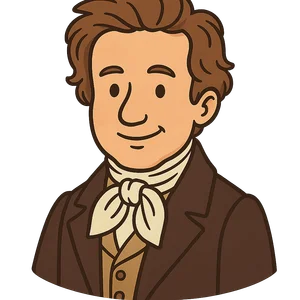
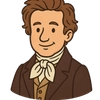
Alexander von Humboldt
A Prussian polymath, geographer, naturalist…
Reads at Grades 3–5 Listens at Grades 1–5
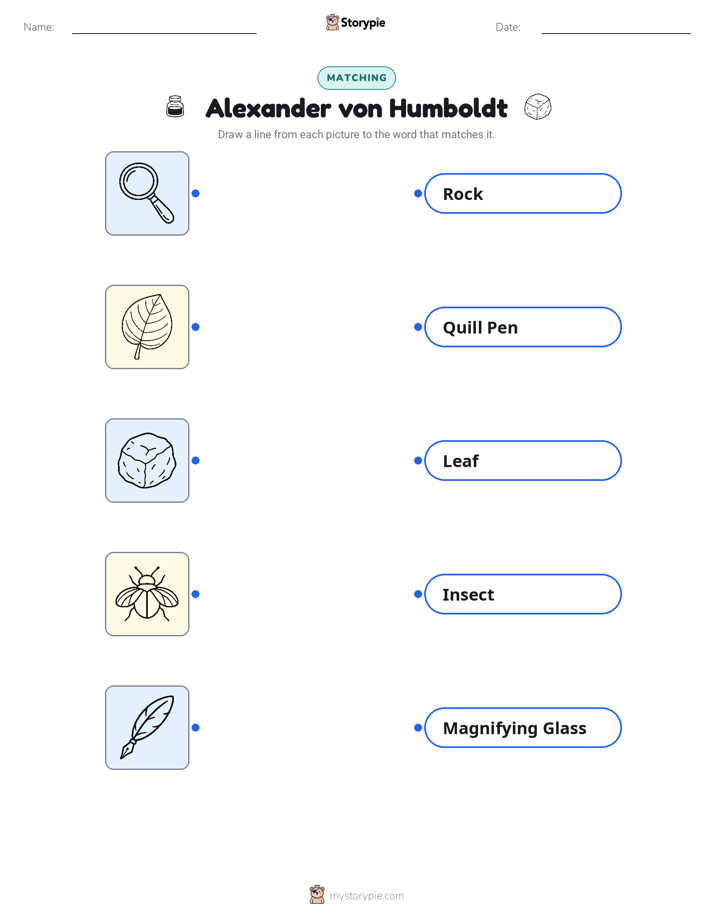
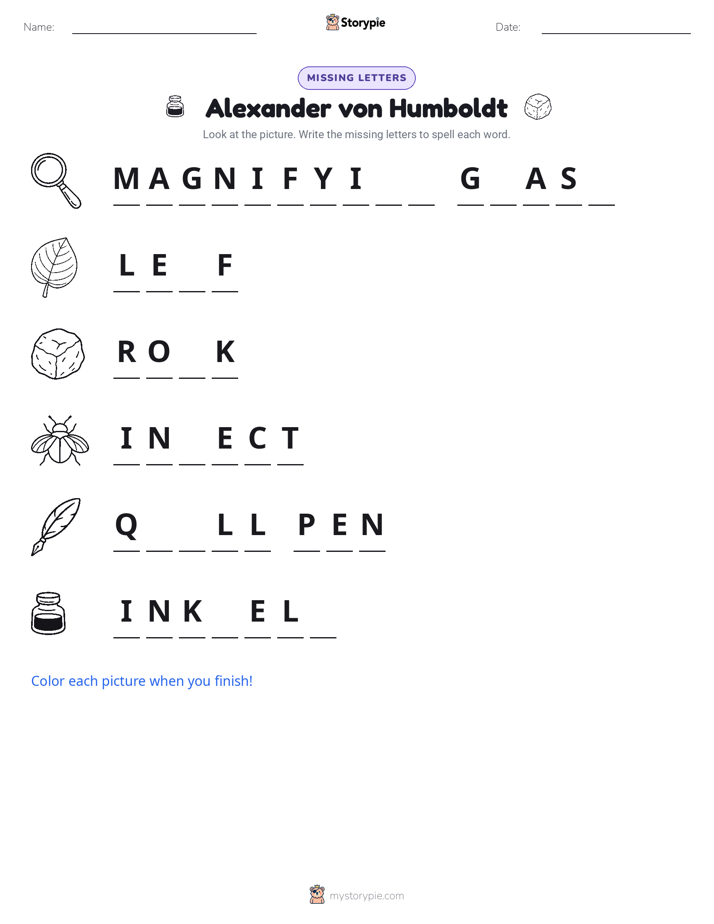
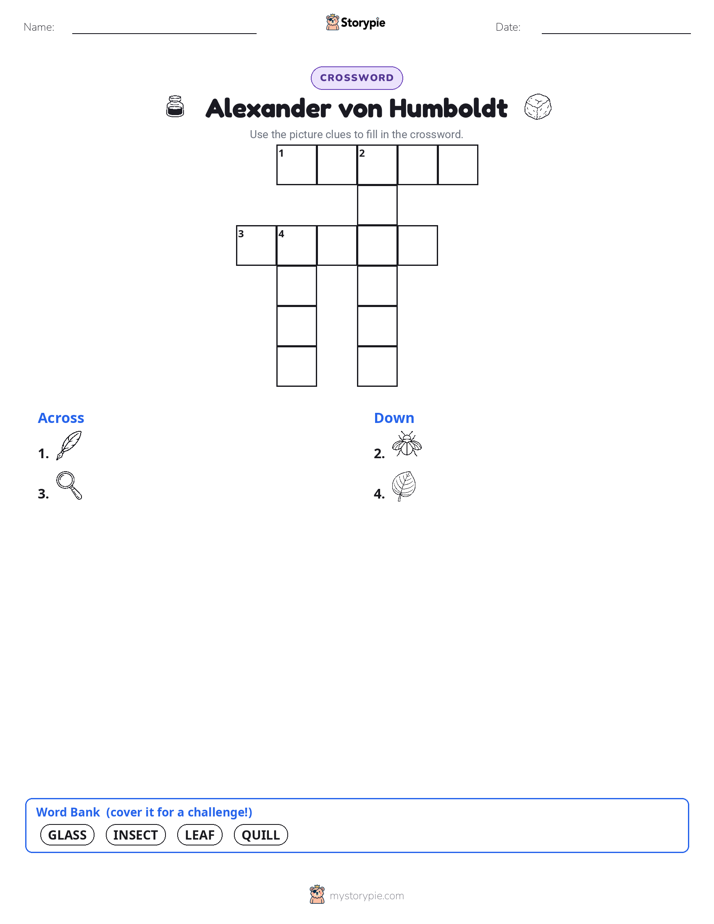
Print & create
Answer keys·No prep·Free with an account
28 worksheets · answer keys · full story · quiz · Ages 8-10 · CEFR B1
Plus adds 164,000+ more stories in 27 languages, audio for every one, and printables for all of them.
Just want Alexander von Humboldt?
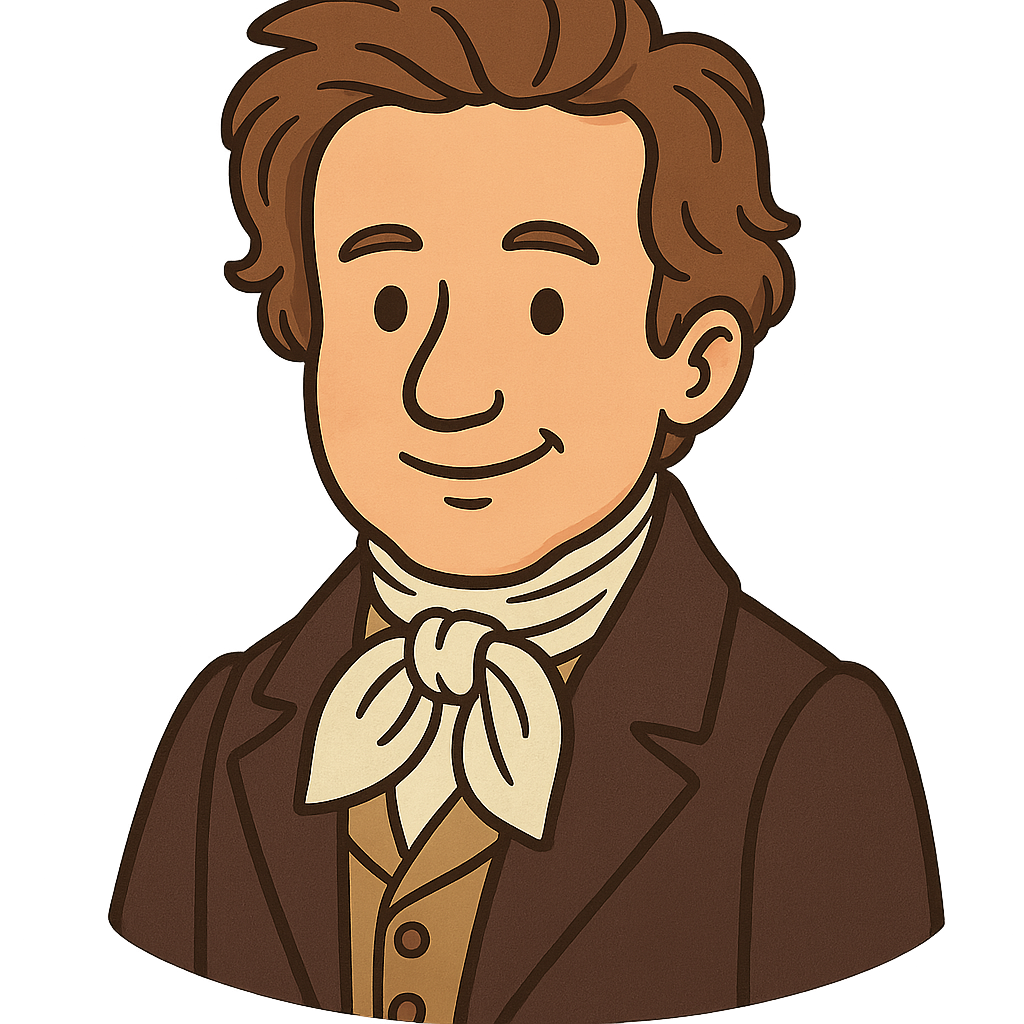
Hello! My name is Alexander von Humboldt. I was born on September 14th, 1769, in a city called Berlin, in a kingdom named Prussia. Even as a little boy, the world outside my window seemed like the most exciting book I could read. While other children played games, I loved to explore the fields and forests, collecting plants, insects, and colorful stones. My pockets were always full of treasures! My family nicknamed me 'the little apothecary' because I was always trying to understand what each plant was for. I knew, even then, that I wanted to travel far beyond my home and see every wonder the world had to offer.
To be a great explorer, I knew I had to learn as much as I could. I studied everything from geology, the science of rocks, to botany, the science of plants. In the 1790s, I worked as a mining inspector, which meant I went deep into the earth to make mines safer for the workers. It taught me so much about how our planet is put together. But my heart longed for adventure in faraway lands. When my mother passed away in 1796, I inherited enough money to finally make my dream come true. I began planning the biggest, most exciting scientific journey anyone had ever taken.
In 1799, my good friend, a brilliant botanist named Aimé Bonpland, and I set sail for the Americas. For five years, we explored jungles, rivers, and mountains that few Europeans had ever seen. We paddled down the mighty Orinoco River in what is now Venezuela, mapping its path and discovering strange animals like the electric eel—ouch! We collected over 60,000 plant specimens, many of them brand new to science. The most thrilling part of our trip was in 1802, when we climbed a giant volcano in Ecuador called Chimborazo. We climbed higher than any person had ever climbed before! As we went up, I noticed something amazing: the plants changed with the altitude. The types of plants at the cold, snowy top were similar to plants found in the Arctic, far to the north. I realized that nature was organized in zones, all connected by climate.
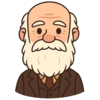
Alexander von Humboldt
Hello! My name is Alexander von Humboldt. I was born on September 14th, 1769, in a city called Berlin, in a kingdom named Prussia. Even as a little boy, the world outside my window seemed like the most exciting book I could read. While other children played games, I loved to explore the fields and forests, collecting plants, insects, and colorful stones. My pockets were always full of treasures! My family nicknamed me 'the little apothecary' because I was always trying to understand what each plant was for. I knew, even then, that I wanted to travel far beyond my home and see every wonder the world had to offer.
To be a great explorer, I knew I had to learn as much as I could. I studied everything from geology, the science of rocks, to botany, the science of plants. In the 1790s, I worked as a mining inspector, which meant I went deep into the earth to make mines safer for the workers. It taught me so much about how our planet is put together. But my heart longed for adventure in faraway lands. When my mother passed away in 1796, I inherited enough money to finally make my dream come true. I began planning the biggest, most exciting scientific journey anyone had ever taken.
In 1799, my good friend, a brilliant botanist named Aimé Bonpland, and I set sail for the Americas. For five years, we explored jungles, rivers, and mountains that few Europeans had ever seen. We paddled down the mighty Orinoco River in what is now Venezuela, mapping its path and discovering strange animals like the electric eel—ouch! We collected over 60,000 plant specimens, many of them brand new to science. The most thrilling part of our trip was in 1802, when we climbed a giant volcano in Ecuador called Chimborazo. We climbed higher than any person had ever climbed before! As we went up, I noticed something amazing: the plants changed with the altitude. The types of plants at the cold, snowy top were similar to plants found in the Arctic, far to the north. I realized that nature was organized in zones, all connected by climate.
I returned to Europe in 1804 with trunks full of notes, drawings, and measurements. I spent the rest of my life writing about my discoveries. I wanted everyone to understand my most important idea: that all of nature is connected. I called this idea the 'web of life.' A tiny insect, a giant tree, the clouds in the sky, and the rocks under our feet are all part of one great whole. I wrote a series of books called Kosmos, which I started publishing in 1845, to explain this beautiful idea. I argued that to understand one part of nature, you had to understand how it connected to everything else.
I lived a very long and exciting life, filled with discovery and adventure. I lived to be 89 years old, passing away on May 6th, 1859. People remember me today as one of the first scientists to see the Earth as one living system, an idea we now call ecology. My work inspired many scientists who came after me, including Charles Darwin. You can still find my name all over the world—on an ocean current, a mountain range, and even a penguin! I hope my story inspires you to look closely at the world around you and see the amazing connections that link us all together.
Wow facts
About
A Prussian polymath, geographer, naturalist, and explorer whose work on botanical geography laid the foundation for the field of biogeography. He is renowned for his five-year expedition to the Americas and his influential multi-volume work, Kosmos.
Take a Quiz
Question 1 of 5
Why do you think Alexander's family nicknamed him 'the little apothecary' when he was a boy?
Explore next

Want to do even more?
Go beyond exploring. Unlock tools that turn every story into real learning.

Storypie Plus for families
Full stories, quizzes, and printables. Nights and car rides, sorted.
- Unlimited audio stories
- Create Mode: your child stars in the story
- Offline downloads
- Printable worksheets & coloring pages

Why Storypie for Schools
Students engaged. Prep in seconds. Evenings back to you.
- Worksheets & Quizzes
- Classroom Management
- Formative Assessment
- Custom Curriculum & Lesson Plans
- 27 Languages

Why Storypie for Homeschool
Curriculum done. They'll ask for more. Hours back in your day.
- Worksheet Generator
- First-Person Audio Stories
- Built-in Comprehension Quizzes
- Custom Curriculum & Lesson Plans
- Print & Go Activities