English

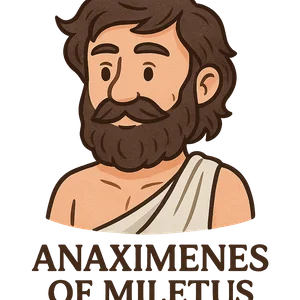
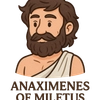
Anaximenes of Miletus
Anaximenes of Miletus was a pre-Socratic Greek philosopher from the 6th century BCE who proposed that *aer*…
Reads at Grades 6–8 Listens at Grades 4–8
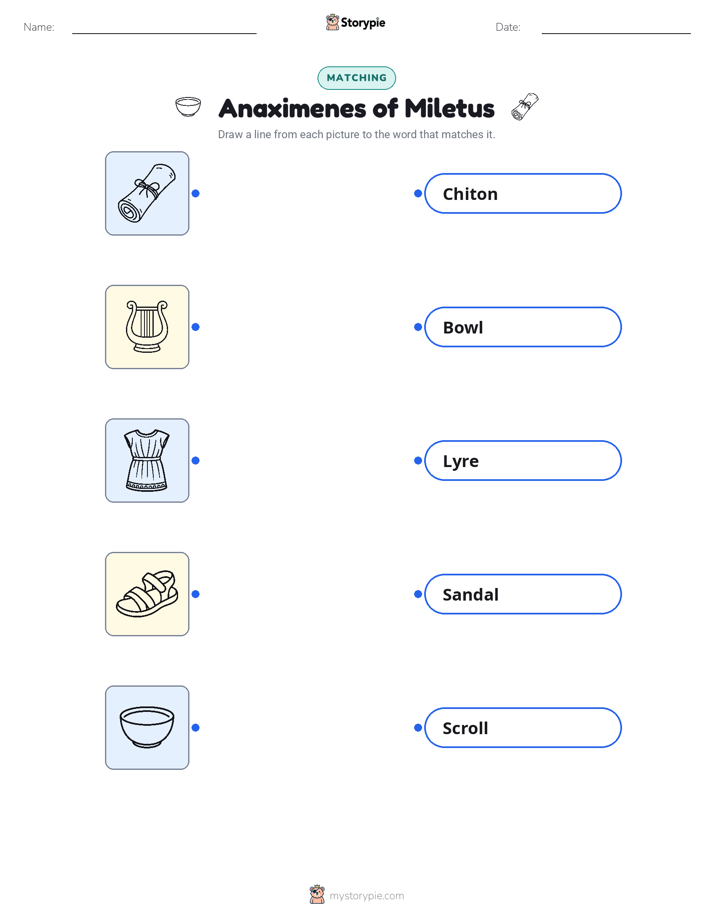
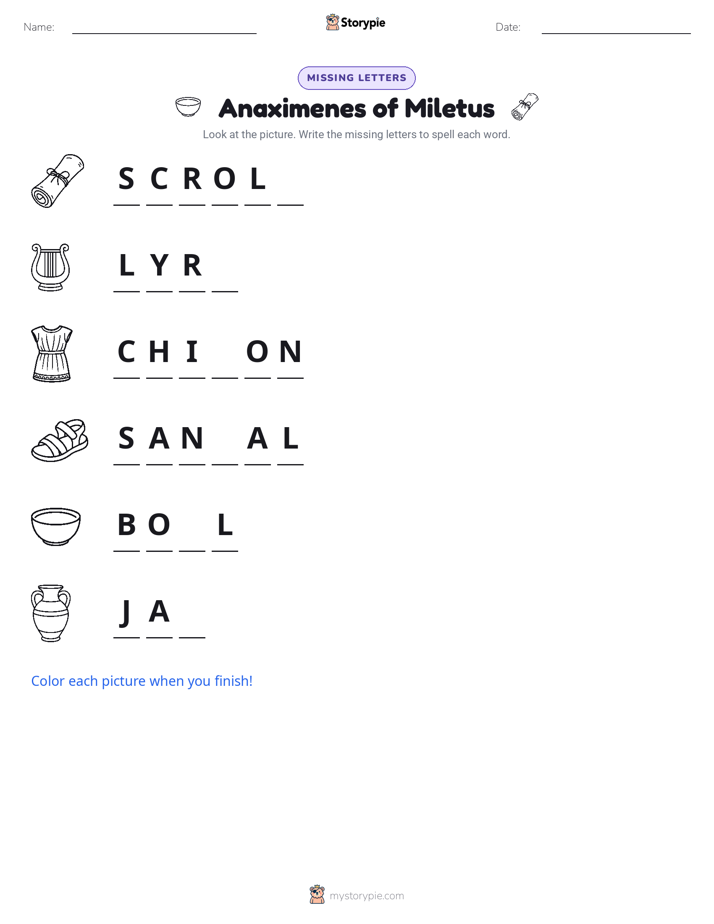
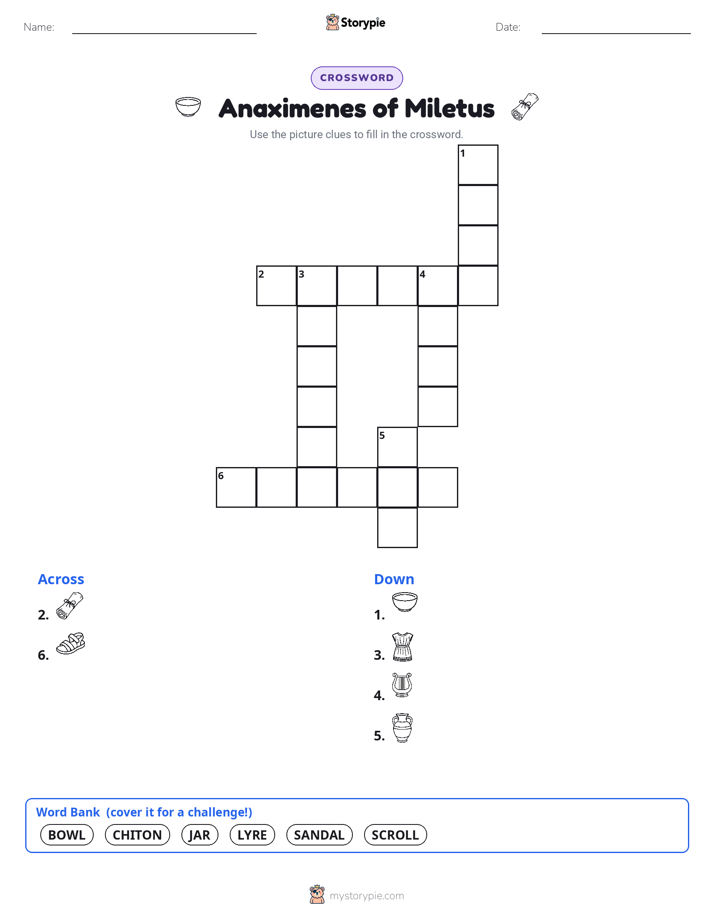
Print & create
Answer keys·No prep·Free with an account
28 worksheets · answer keys · full story · quiz · Ages 10-12 · CEFR B2
Plus adds 244,000+ more stories in 27 languages, audio for every one, and printables for all of them.
Just want Anaximenes of Miletus?
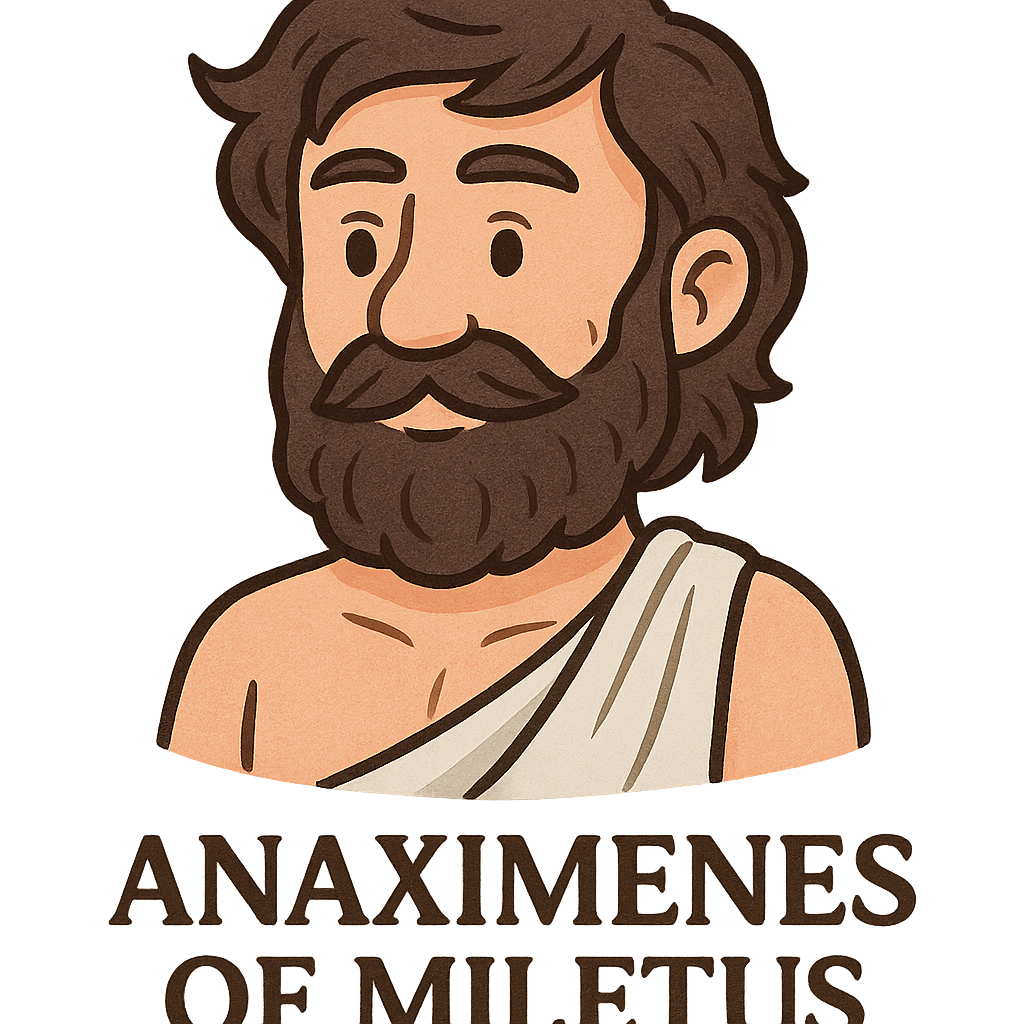
Hello! My name is Anaximenes. I lived a very long time ago, in a city called Miletus. I was born around the year 585 BCE in this amazing place, which was a busy port on the coast of Ionia, in what is now Turkey. Imagine a city filled with sailors telling tales of faraway lands, merchants trading colorful goods, and thinkers debating big ideas in the public square. That was my home. The world was full of stories about gods controlling the weather and the seasons, but a new way of thinking was beginning. My teacher was a wise man named Anaximander, and his teacher was the famous Thales. They taught me to look at the world and ask 'Why?' instead of just accepting old stories. They were searching for natural explanations for how everything worked, and I was excited to join them on this quest for knowledge. We were among the first people to be called philosophers, or 'lovers of wisdom.'
The biggest question on my mind was: 'What is everything made of?' It is the ultimate puzzle of our universe. Thales had suggested it was water, which made sense because water is essential for life. Anaximander proposed a mysterious, boundless substance he called the 'apeiron.' I thought about these ideas and looked for clues in the world around me. I noticed that all living things need to breathe. We breathe in and out, and this breath, this air, seems connected to life itself. The soul, I thought, was made of breath. From this observation, I had a big idea. What if air—or 'aer,' as we called it in Greek—was the fundamental substance, the 'arche,' that made up everything in the entire cosmos? Just as our own breath sustains us, I believed that air was the breath of the universe, the source of all things.
Anaximenes of Miletus: The Thinker Who Breathed Life into Science
Hello! My name is Anaximenes. I lived a very long time ago, in a city called Miletus. I was born around the year 585 BCE in this amazing place, which was a busy port on the coast of Ionia, in what is now Turkey. Imagine a city filled with sailors telling tales of faraway lands, merchants trading colorful goods, and thinkers debating big ideas in the public square. That was my home. The world was full of stories about gods controlling the weather and the seasons, but a new way of thinking was beginning. My teacher was a wise man named Anaximander, and his teacher was the famous Thales. They taught me to look at the world and ask 'Why?' instead of just accepting old stories. They were searching for natural explanations for how everything worked, and I was excited to join them on this quest for knowledge. We were among the first people to be called philosophers, or 'lovers of wisdom.'
The biggest question on my mind was: 'What is everything made of?' It is the ultimate puzzle of our universe. Thales had suggested it was water, which made sense because water is essential for life. Anaximander proposed a mysterious, boundless substance he called the 'apeiron.' I thought about these ideas and looked for clues in the world around me. I noticed that all living things need to breathe. We breathe in and out, and this breath, this air, seems connected to life itself. The soul, I thought, was made of breath. From this observation, I had a big idea. What if air—or 'aer,' as we called it in Greek—was the fundamental substance, the 'arche,' that made up everything in the entire cosmos? Just as our own breath sustains us, I believed that air was the breath of the universe, the source of all things.
Of course, if everything was made of air, I had to explain how you could get things as different as a rock and a flame from the same stuff. An idea without an explanation is just a guess. My answer was in two processes: rarefaction, which is making things thinner, and condensation, which is making things thicker. I observed that when I blew air with my mouth open, it felt warm, but when I pursed my lips and blew, it felt cool. This simple experiment showed me that air could change its properties based on its density. I reasoned that when air thins out, or rarefies, it becomes hot and turns into fire. When it thickens, or condenses, it gets colder and becomes wind. If it condenses even more, it becomes a cloud, then water. Thicker still, it becomes earth, and at its densest, it becomes stone. It was a grand chain of creation, all starting from a single substance and a process I could observe myself.
I used my idea about air to explain the whole universe. Around the year 546 BCE, many people believed the world was held up by giant pillars or floating on a great sea. I tried to find a more logical explanation. I pictured the Earth as a flat, wide disc, like a tabletop, that was floating on a cushion of compressed air. This is why it didn’t fall—the air held it up, much like a leaf can float on the wind. I believed the Sun, Moon, and stars were also flat, fiery bodies that rode on currents of air as they traveled across the sky. In my view, they didn't go under the Earth at night. Instead, they circled around the edge of our flat world, like a cap turning on a head, sometimes hidden from our view by the higher parts of the Earth to the north. It might sound strange today, but it was a way to explain the cosmos using a single, logical idea that I could see evidence for all around me.
I continued my work in Miletus for many years and lived until about the year 528 BCE. My ideas about a flat Earth floating on air were eventually replaced by other theories, but that’s the wonderful thing about knowledge—it keeps growing! My true contribution wasn't just my theory about air, but the way I tried to explain the world using observation and a single, natural principle. Along with Thales and Anaximander, I helped begin a new way of thinking that would later be called science and philosophy. We were some of the first to believe that the universe was not just mysterious, but understandable. And that is an idea that has inspired people for thousands of years.
Wow facts
About
Anaximenes of Miletus was a pre-Socratic Greek philosopher from the 6th century BCE who proposed that *aer* (air) is the single underlying substance, or *arche*, from which all things are created through processes of condensation and rarefaction.
Take a Quiz
Question 1 of 5
In your own words, explain Anaximenes's theory of rarefaction and condensation.
Explore next




Want to do even more?
Go beyond exploring. Unlock tools that turn every story into real learning.

Storypie Plus for families
Full stories, quizzes, and printables. Nights and car rides, sorted.
- Unlimited audio stories
- Create Mode: your child stars in the story
- Offline downloads
- Printable worksheets & coloring pages

Why Storypie for Schools
Students engaged. Prep in seconds. Evenings back to you.
- Worksheets & Quizzes
- Classroom Management
- Formative Assessment
- Custom Curriculum & Lesson Plans
- 27 Languages

Why Storypie for Homeschool
Curriculum done. They'll ask for more. Hours back in your day.
- Worksheet Generator
- First-Person Audio Stories
- Built-in Comprehension Quizzes
- Custom Curriculum & Lesson Plans
- Print & Go Activities