English

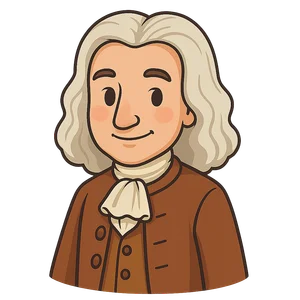
Anders Celsius
Anders Celsius was a Swedish astronomer, physicist…
Reads at Grades 3–5 Listens at Grades 1–5
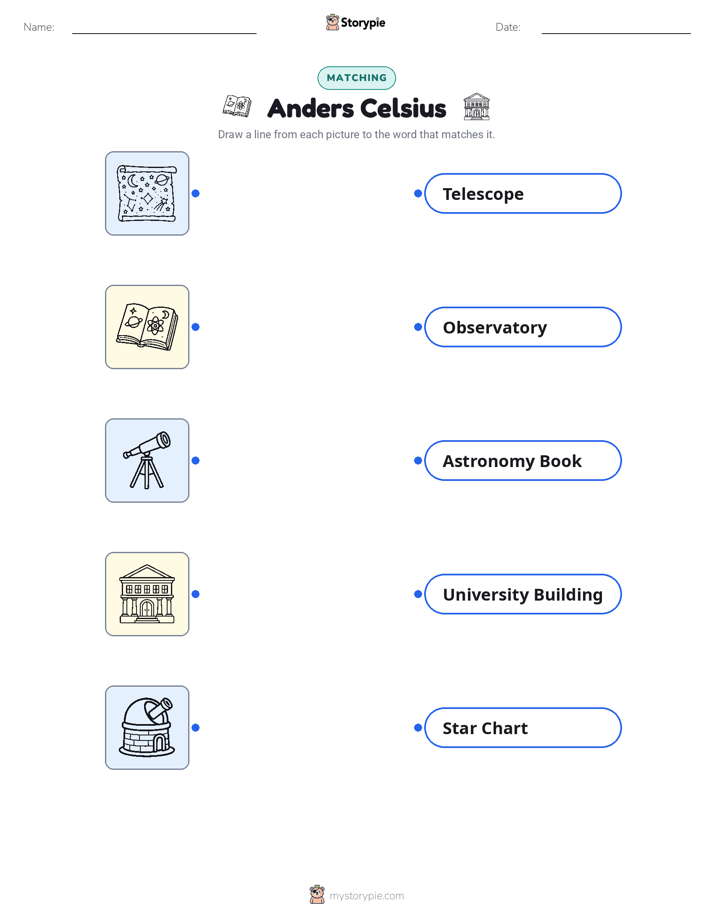
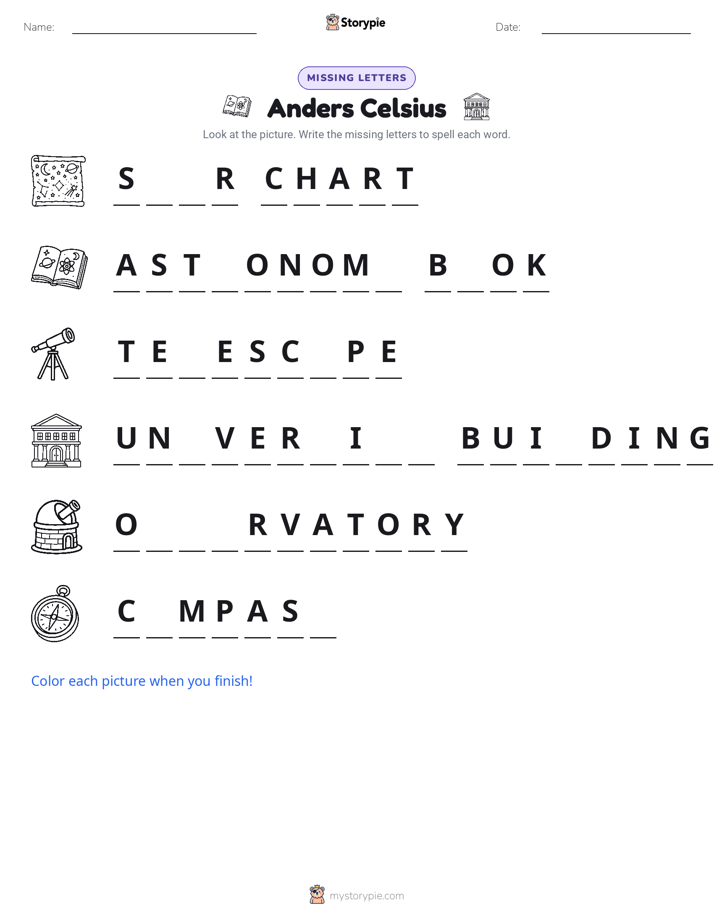
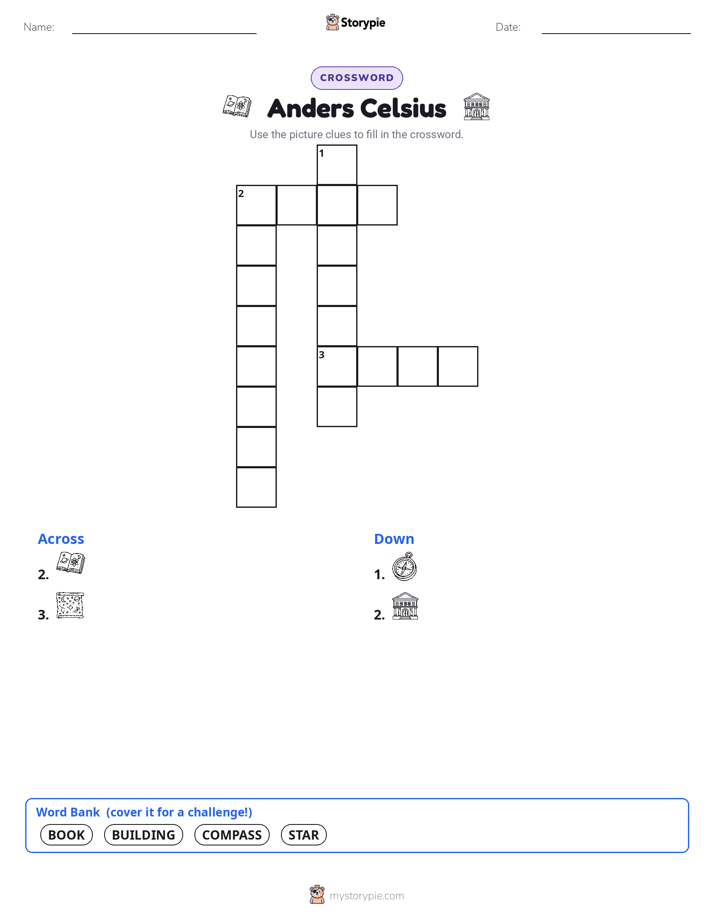
Print & create
Answer keys·No prep·Free with an account
28 worksheets · answer keys · full story · quiz · Ages 8-10 · CEFR B1
Plus adds 244,000+ more stories in 27 languages, audio for every one, and printables for all of them.
Just want Anders Celsius?
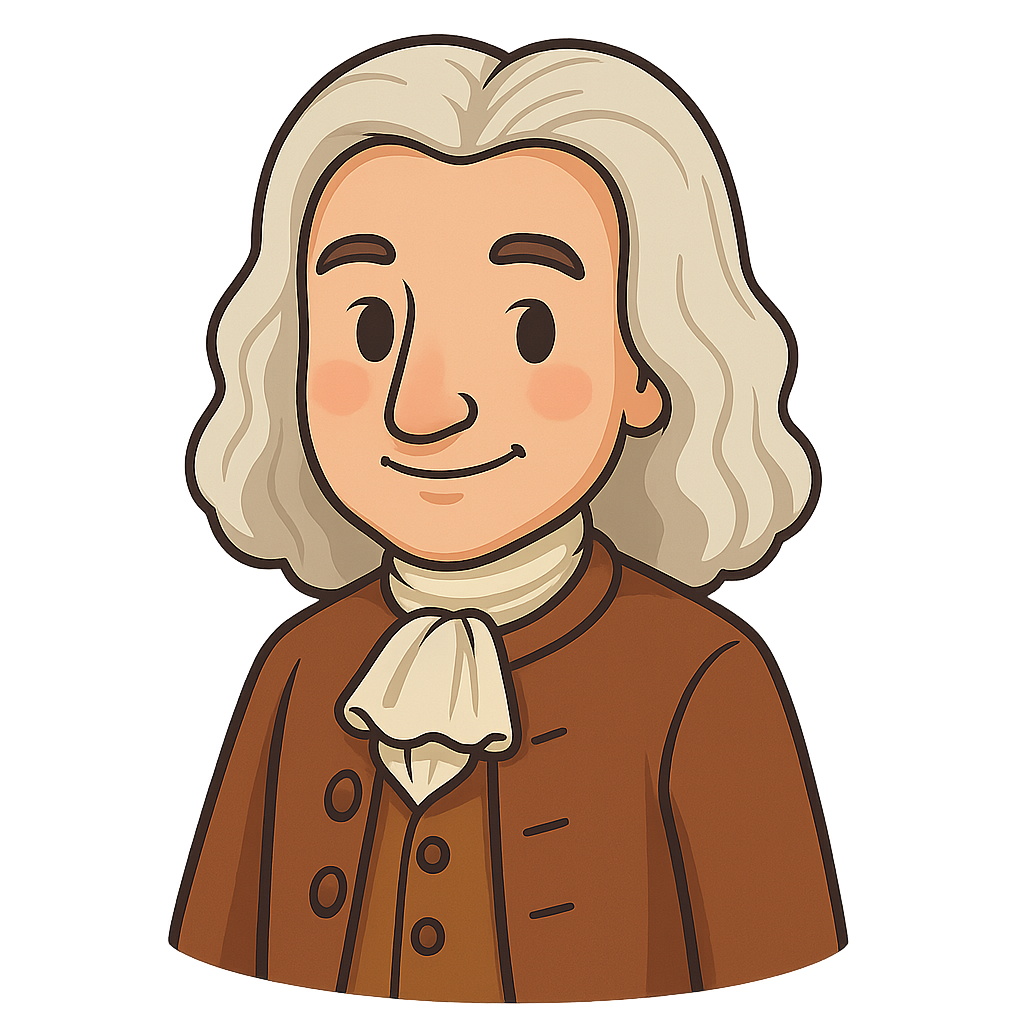
Hello, my name is Anders Celsius. I was born on November 27th, 1701, in a beautiful city in Sweden called Uppsala. Growing up, my home was always filled with exciting ideas and conversations about the world. That’s because I came from a family full of scientists. My father was a professor, and so were both of my grandfathers. Being surrounded by their work made me very curious about how things worked. I loved learning about numbers and mathematics, but my greatest passion was looking up at the night sky. The stars and planets fascinated me, and I spent hours wondering about the vast universe. My family's love for science inspired me to ask questions and search for answers, setting me on a path of discovery from a very young age.
I decided to follow in my family’s footsteps and attended Uppsala University, the same place where they had taught. I enjoyed my studies so much that in 1730, I became a professor of astronomy myself. I wanted to learn everything I could, not just from books, but from the greatest minds of my time. So, from 1732 to 1736, I traveled all across Europe. I visited the most famous observatories and spoke with other scientists, sharing ideas and learning new techniques. One of the most exciting adventures of my life happened in 1736. I joined an expedition to the very far north of Sweden, a cold and remote place. Our important mission was to take measurements that would help prove a theory that the Earth is not a perfect sphere but is actually slightly squashed at the North and South Poles. It was challenging work, but it was for the sake of science.
Anders Celsius
Hello, my name is Anders Celsius. I was born on November 27th, 1701, in a beautiful city in Sweden called Uppsala. Growing up, my home was always filled with exciting ideas and conversations about the world. That’s because I came from a family full of scientists. My father was a professor, and so were both of my grandfathers. Being surrounded by their work made me very curious about how things worked. I loved learning about numbers and mathematics, but my greatest passion was looking up at the night sky. The stars and planets fascinated me, and I spent hours wondering about the vast universe. My family's love for science inspired me to ask questions and search for answers, setting me on a path of discovery from a very young age.
I decided to follow in my family’s footsteps and attended Uppsala University, the same place where they had taught. I enjoyed my studies so much that in 1730, I became a professor of astronomy myself. I wanted to learn everything I could, not just from books, but from the greatest minds of my time. So, from 1732 to 1736, I traveled all across Europe. I visited the most famous observatories and spoke with other scientists, sharing ideas and learning new techniques. One of the most exciting adventures of my life happened in 1736. I joined an expedition to the very far north of Sweden, a cold and remote place. Our important mission was to take measurements that would help prove a theory that the Earth is not a perfect sphere but is actually slightly squashed at the North and South Poles. It was challenging work, but it was for the sake of science.
During my travels, I had seen so many incredible observatories in other countries. These special buildings, with their powerful telescopes, were like windows to the universe. I knew that my home country of Sweden needed one too. When I returned from my expedition, I was filled with determination. I believed that having our own modern observatory would help Swedish scientists make important contributions to astronomy. I worked very hard to convince people of its importance and to find the support to build it. It took a lot of effort, but my dream finally came true. In 1741, I proudly opened the Uppsala Astronomical Observatory. It was my very own place to study the stars, track the planets, and make new discoveries about our amazing universe.
Besides studying the stars, I was also interested in solving practical problems that affected all scientists. At the time, thermometers were very confusing. Every thermometer seemed to have its own scale, which meant that a measurement in one lab couldn't be easily compared to a measurement in another. For science to be accurate, we needed a reliable and universal way to measure temperature. In 1742, I presented my solution to the Royal Swedish Academy of Sciences. My idea was simple but powerful. I chose two points that are always the same no matter where you are on Earth: the temperature at which water freezes and the temperature at which it boils. I then divided the space between these two fixed points into 100 even steps, or 'degrees.' Interestingly, my original scale had 0 degrees for boiling water and 100 for freezing, but it was later flipped to the version everyone knows today.
My work as a professor and a scientist kept me very busy, but unfortunately, I became ill with an illness called tuberculosis. My life ended in 1744. I lived to be 42 years old. Although my time was short, I am very proud of the work I was able to do. My biggest hope was to create tools that would help others make sense of the world. Today, the Celsius scale is used by people all over the globe, from scientists conducting important experiments to you checking the weather before you go outside. It makes me happy to know that my curiosity helped make our world just a little bit easier to understand.
Wow facts
About
Anders Celsius was a Swedish astronomer, physicist, and mathematician who founded the Uppsala Astronomical Observatory and is most famous for proposing a temperature scale in 1742 with 0° for the boiling point of water and 100° for the freezing point.
Take a Quiz
Question 1 of 5
In what year did I present my idea for a new temperature scale?
Explore next




Want to do even more?
Go beyond exploring. Unlock tools that turn every story into real learning.

Storypie Plus for families
Full stories, quizzes, and printables. Nights and car rides, sorted.
- Unlimited audio stories
- Create Mode: your child stars in the story
- Offline downloads
- Printable worksheets & coloring pages

Why Storypie for Schools
Students engaged. Prep in seconds. Evenings back to you.
- Worksheets & Quizzes
- Classroom Management
- Formative Assessment
- Custom Curriculum & Lesson Plans
- 27 Languages

Why Storypie for Homeschool
Curriculum done. They'll ask for more. Hours back in your day.
- Worksheet Generator
- First-Person Audio Stories
- Built-in Comprehension Quizzes
- Custom Curriculum & Lesson Plans
- Print & Go Activities