

 English


Antoine Lavoisier
Antoine Lavoisier was a French chemist who is considered the "Father of Modern Chemistry." He named oxygen…
Reads at Grades 3–5 Listens at Grades 1–5
Antoine Lavoisier: The Father of Modern Chemistry
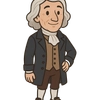
Hello! My name is Antoine Lavoisier, and I’d like to tell you my story. I was born in Paris, France, on August 26th, 1743. My family was wealthy, which meant I was lucky enough to get a wonderful education. My father hoped I would become a lawyer, and I did study law to make him happy. But my true love was science! I was so curious about how the world worked. I spent hours and hours in my own laboratory, which I filled with the best and most precise instruments I could find. I was ready to uncover the secrets of nature.
In 1768, when I was only 25 years old, I was elected to the French Academy of Sciences, which was a great honor for a young scientist like me. A few years later, in 1771, I married the brilliant Marie-Anne Paulze. She was much more than my wife; she was my most important scientific partner. She learned to speak English just so she could translate important scientific papers for me to read. She was also a talented artist who drew beautiful, exact pictures of my experiments. These drawings were put in my books to help others understand my work. We were a perfect team, working together to make new discoveries.
One of the biggest mysteries at the time was fire. Many scientists believed in a strange substance they called 'phlogiston,' which they thought was released when something burned. I wasn't so sure about that. I decided to test this idea with very careful experiments. I would take a substance, like a metal, and weigh it with extreme precision. Then, I would burn it inside a sealed glass jar so nothing could get in or out, and I would weigh it again. I discovered that instead of losing weight, it actually gained weight! This proved that the burning object wasn't releasing something, but combining with something from the air. In 1777, I finally figured out what that something was, and I named it 'oxygen.' I realized that oxygen is the gas that makes things burn and is also the gas we breathe to live!
My experiments with burning led me to another very important rule, which is now called the Law of Conservation of Mass. This law says that you can't create or destroy matter; it just changes from one form to another. Think of a log in a fireplace. After it burns, it turns into ash and smoke, but if you could gather all the tiny pieces of ash and smoke, they would weigh the same as the original log and the oxygen it used! To help other scientists communicate better, I helped create a new, organized system for naming chemicals in 1787. Then, in 1789, I wrote a book called 'Elementary Treatise on Chemistry' to share all of my new ideas. It became the very first modern chemistry textbook.
While I was busy with my scientific discoveries, my country was going through a very difficult time called the French Revolution, which started in 1789. Before the revolution, I had taken a job working for the government as a tax collector. This was a job that many people disliked, but I did it to earn money to help pay for my expensive laboratory and experiments. During the revolution, the new leaders looked with great suspicion on anyone who had been part of the old government. Because of my past work, I was arrested in 1793.
My life ended during the revolution, on May 8th, 1794. I lived to be 50 years old. Though my time was cut short, I am proud that my work changed science forever. People now remember me as the 'Father of Modern Chemistry' because my discoveries about oxygen, my system for naming chemicals, and the law of conservation of mass became the foundation for how we understand the world. The ideas I uncovered through careful experiments are still taught in science classes today.
Wow facts
About
Antoine Lavoisier was a French chemist who is considered the "Father of Modern Chemistry." He named oxygen and hydrogen, helped construct the metric system, and formulated the law of conservation of mass.
Take a Quiz
Question 1 of 5
Why is Antoine Lavoisier often called the 'Father of Modern Chemistry'?
Explore next



Want to do even more?
Go beyond exploring. Unlock tools that turn every story into real learning.

Storypie Plus for families
Full stories, quizzes, and printables. Nights and car rides, sorted.
- Unlimited audio stories
- Create Mode: your child stars in the story
- Offline downloads
- Printable worksheets & coloring pages

Why Storypie for Schools
Students engaged. Prep in seconds. Evenings back to you.
- Worksheets & Quizzes
- Classroom Management
- Formative Assessment
- Custom Curriculum & Lesson Plans
- 27 Languages

Why Storypie for Homeschool
Curriculum done. They'll ask for more. Hours back in your day.
- Worksheet Generator
- First-Person Audio Stories
- Built-in Comprehension Quizzes
- Custom Curriculum & Lesson Plans
- Print & Go Activities

