English

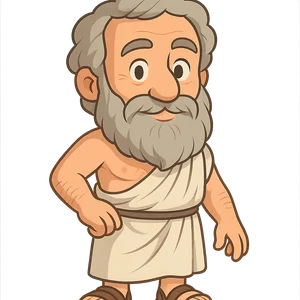
Archimedes
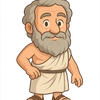
Archimedes was an ancient Greek mathematician, physicist, engineer, inventor, and astronomer…
Reads at Grades 6–8 Listens at Grades 4–8
Print & create
Answer keys·No prep·Free with an account
28 worksheets · answer keys · full story · quiz · Ages 10-12 · CEFR B2
Plus adds 164,000+ more stories in 27 languages, audio for every one, and printables for all of them.
Just want Archimedes?
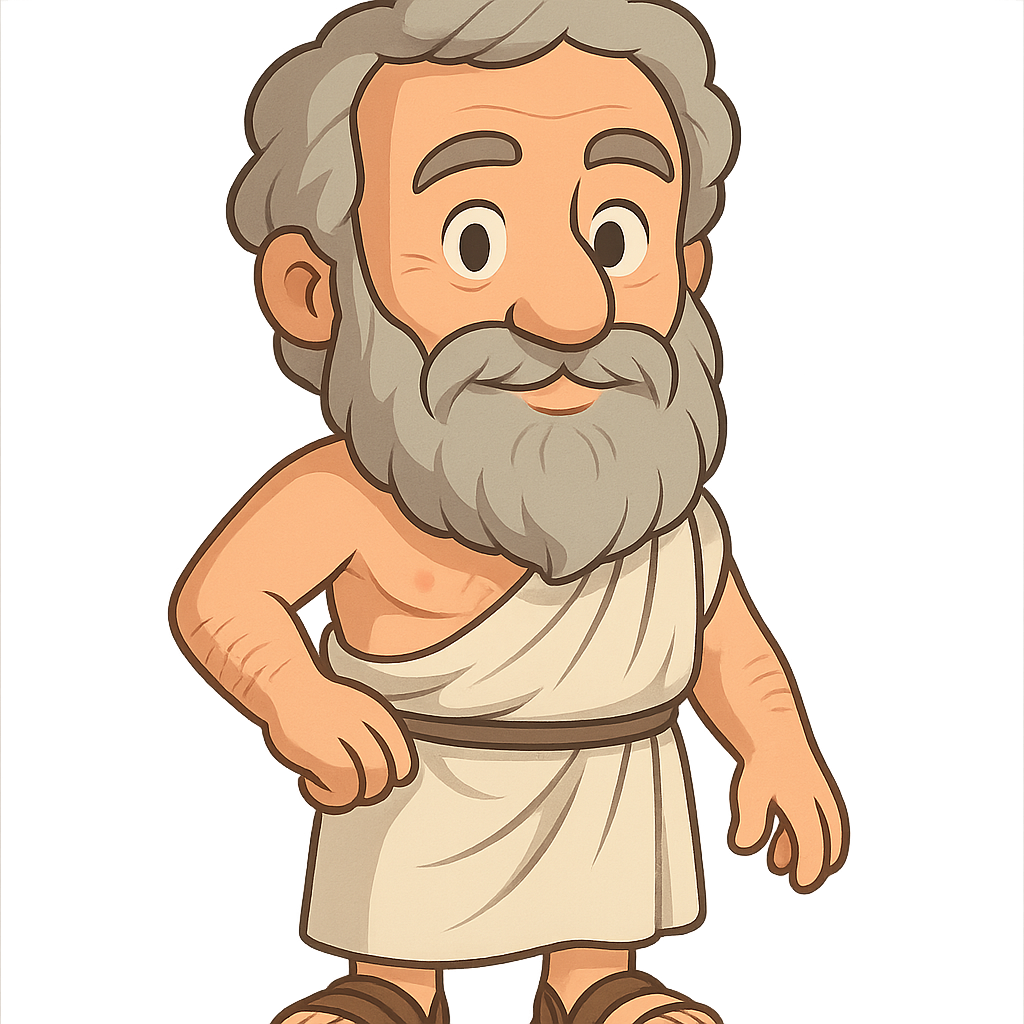
Hello, my name is Archimedes, and I would like to tell you my story. I was born in the bustling Greek seaport of Syracuse, located on the island of Sicily, around the year 287 BCE. My father, Phidias, was a brilliant astronomer who taught me all about the stars and the numbers used to map their incredible movements across the night sky. From a very young age, I was filled with an insatiable curiosity about how the world operated. I was always asking questions, constantly trying to understand the 'why' behind everything I observed, from the way a rock skipped across the water to the way the sun cast shadows on the ground.
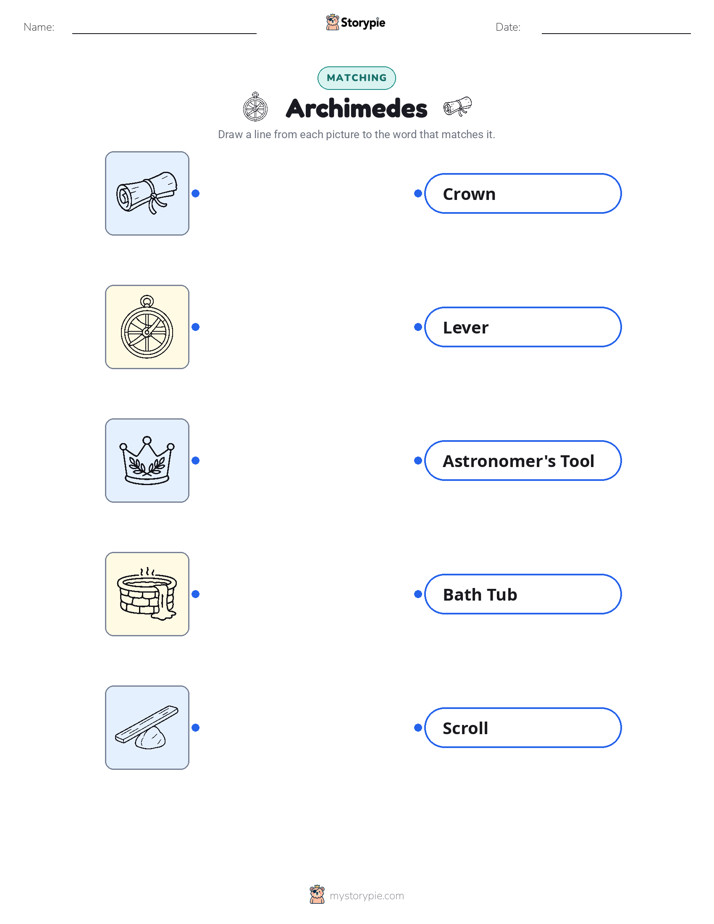
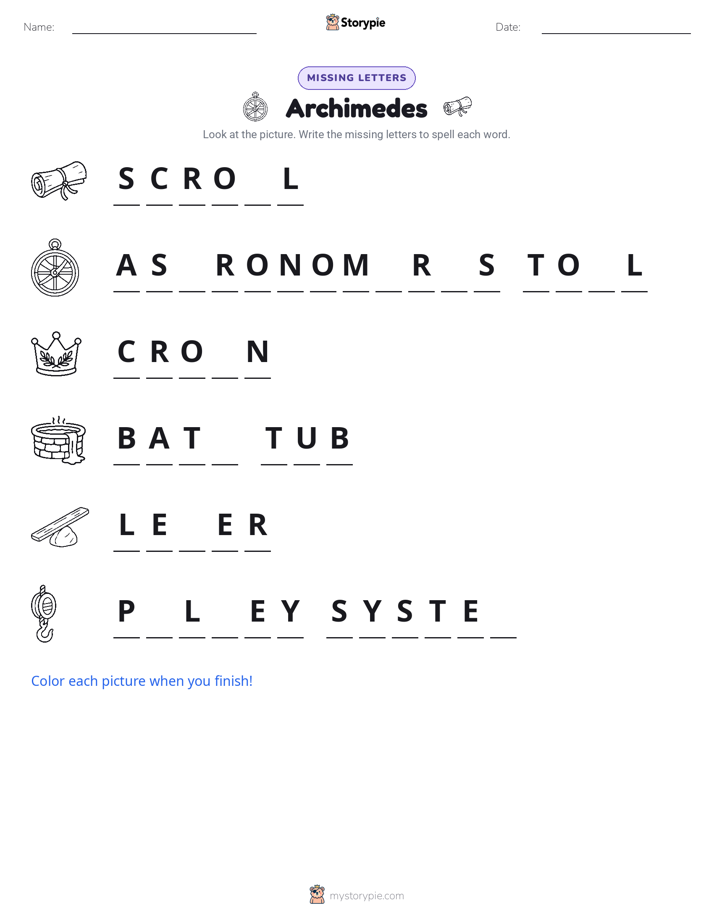
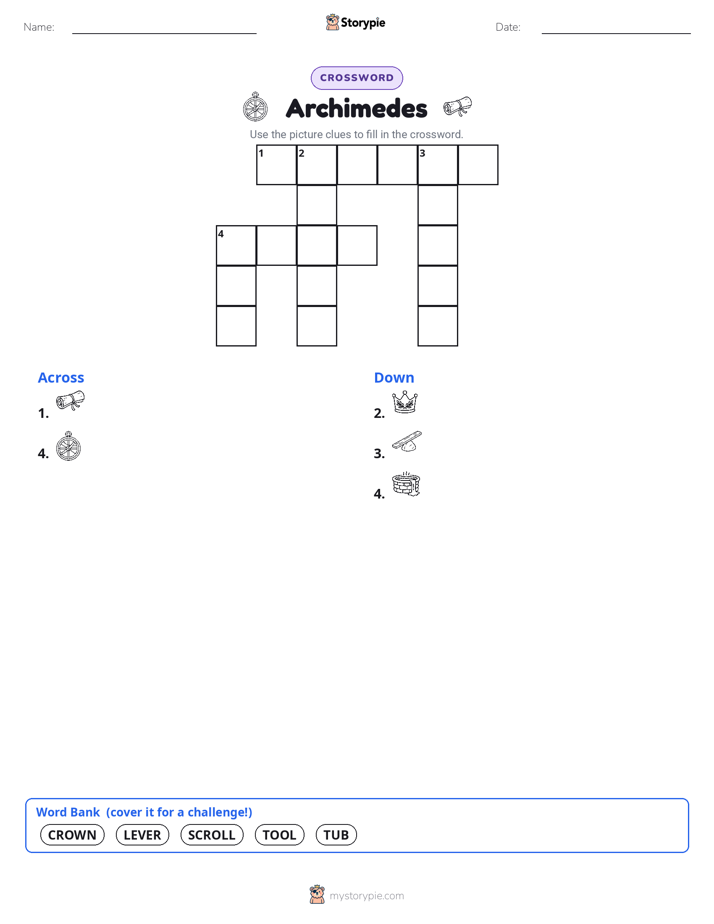
As a young man seeking knowledge, I traveled to the city of Alexandria in Egypt. In those days, Alexandria was the greatest center of learning in the entire known world. I had the privilege of studying at its famous Museum and spending countless hours within the walls of its Great Library. The library was a magnificent place, filled with scrolls that held the collected knowledge of generations of thinkers. It was there that I learned from brilliant minds and communicated with other mathematicians, including Conon of Samos. This period of intense study opened my mind to new possibilities and provided me with the foundational tools I needed to begin my life's work in mathematics and science.
When I returned to my home in Syracuse, my relative, King Hiero II, presented me with a very difficult problem. He had commissioned a new crown made of pure gold, but he had a nagging suspicion that the goldsmith had dishonestly mixed cheaper silver into it. The king asked me to determine if the crown was pure gold without causing any damage to it. The solution came to me in a most unexpected place: the public bath. As I stepped into the tub, I noticed the water level rise and spill over the side. In that instant, I realized that an object's volume could be precisely measured by the amount of water it displaces. I was so overcome with excitement that I supposedly ran through the streets shouting 'Eureka!', which means 'I have found it!'. This discovery about buoyancy is now known as Archimedes' Principle.
Archimedes
Hello, my name is Archimedes, and I would like to tell you my story. I was born in the bustling Greek seaport of Syracuse, located on the island of Sicily, around the year 287 BCE. My father, Phidias, was a brilliant astronomer who taught me all about the stars and the numbers used to map their incredible movements across the night sky. From a very young age, I was filled with an insatiable curiosity about how the world operated. I was always asking questions, constantly trying to understand the 'why' behind everything I observed, from the way a rock skipped across the water to the way the sun cast shadows on the ground.
As a young man seeking knowledge, I traveled to the city of Alexandria in Egypt. In those days, Alexandria was the greatest center of learning in the entire known world. I had the privilege of studying at its famous Museum and spending countless hours within the walls of its Great Library. The library was a magnificent place, filled with scrolls that held the collected knowledge of generations of thinkers. It was there that I learned from brilliant minds and communicated with other mathematicians, including Conon of Samos. This period of intense study opened my mind to new possibilities and provided me with the foundational tools I needed to begin my life's work in mathematics and science.
When I returned to my home in Syracuse, my relative, King Hiero II, presented me with a very difficult problem. He had commissioned a new crown made of pure gold, but he had a nagging suspicion that the goldsmith had dishonestly mixed cheaper silver into it. The king asked me to determine if the crown was pure gold without causing any damage to it. The solution came to me in a most unexpected place: the public bath. As I stepped into the tub, I noticed the water level rise and spill over the side. In that instant, I realized that an object's volume could be precisely measured by the amount of water it displaces. I was so overcome with excitement that I supposedly ran through the streets shouting 'Eureka!', which means 'I have found it!'. This discovery about buoyancy is now known as Archimedes' Principle.
I found great joy in applying my mathematical knowledge to solve real-world problems and invent useful things. I once famously declared, 'Give me a lever long enough and a fulcrum on which to place it, and I shall move the world.' This wasn't just a boast; it was a statement about the incredible power of physics. I carefully studied the principles of levers and used them to invent compound pulley systems. These systems were so effective that they allowed a single person to move enormous weights, even an entire ship, with minimal effort. I also invented the Archimedes Screw, a clever device shaped like a corkscrew inside a tube that could lift water from a low-lying source to a higher level. This invention proved invaluable for irrigating fields and for draining water out of mines, making life easier and more productive for many people.
Later in my life, the peace of my home was shattered by war. During the Second Punic War, which began around 214 BCE, the powerful Roman army laid siege to my city of Syracuse. I felt compelled to use my engineering skills to help defend my home. I designed an array of powerful defensive machines to hold back the invaders. I created massive catapults capable of hurling heavy stones with great force at the Roman ships. I also engineered a giant 'claw,' a crane-like device that could grab onto the front of their ships, lift them partially out of the water, and then suddenly drop them, causing them to capsize. For two long years, my inventions helped the small city of Syracuse withstand the might of the Roman army, demonstrating the incredible power of science and engineering in action.
Despite our best efforts, the Romans eventually captured Syracuse in 212 BCE. The Roman general, who respected my work, had given specific orders that I was not to be harmed. Unfortunately, a Roman soldier found me completely absorbed in drawing a mathematical diagram in the sand and, not knowing who I was, ended my life. I lived to be about 75 years old. For many centuries, much of my work was lost or forgotten, but thankfully, my writings were eventually rediscovered, translated, and shared with the world. My discoveries in mathematics, especially in calculating areas and volumes, helped pave the way for the later development of calculus. The principles of physics and engineering I established are still the foundation of modern science. I hope my story shows you that curiosity is a powerful tool, and with it, you can solve any problem you put your mind to.
Wow facts
About
Archimedes was an ancient Greek mathematician, physicist, engineer, inventor, and astronomer, considered one of the leading scientists in classical antiquity. He is famous for his work on levers, and while he is often said to have had a 'Eureka!' moment when he discovered how things float, the exact details of this discovery are not completely clear. He also created many inventions used to defend his home city of Syracuse.
Take a Quiz
Question 1 of 5
How did Archimedes solve the problem of King Hiero II's suspicious crown?
Explore next




Want to do even more?
Go beyond exploring. Unlock tools that turn every story into real learning.

Storypie Plus for families
Full stories, quizzes, and printables. Nights and car rides, sorted.
- Unlimited audio stories
- Create Mode: your child stars in the story
- Offline downloads
- Printable worksheets & coloring pages

Why Storypie for Schools
Students engaged. Prep in seconds. Evenings back to you.
- Worksheets & Quizzes
- Classroom Management
- Formative Assessment
- Custom Curriculum & Lesson Plans
- 27 Languages

Why Storypie for Homeschool
Curriculum done. They'll ask for more. Hours back in your day.
- Worksheet Generator
- First-Person Audio Stories
- Built-in Comprehension Quizzes
- Custom Curriculum & Lesson Plans
- Print & Go Activities