English

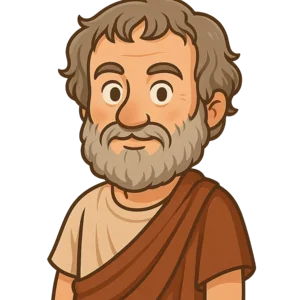
Aristotle
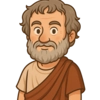
Aristotle was an ancient Greek philosopher and scientist, a student of Plato…
Reads at Grades 3–5 Listens at Grades 1–5
Print & create
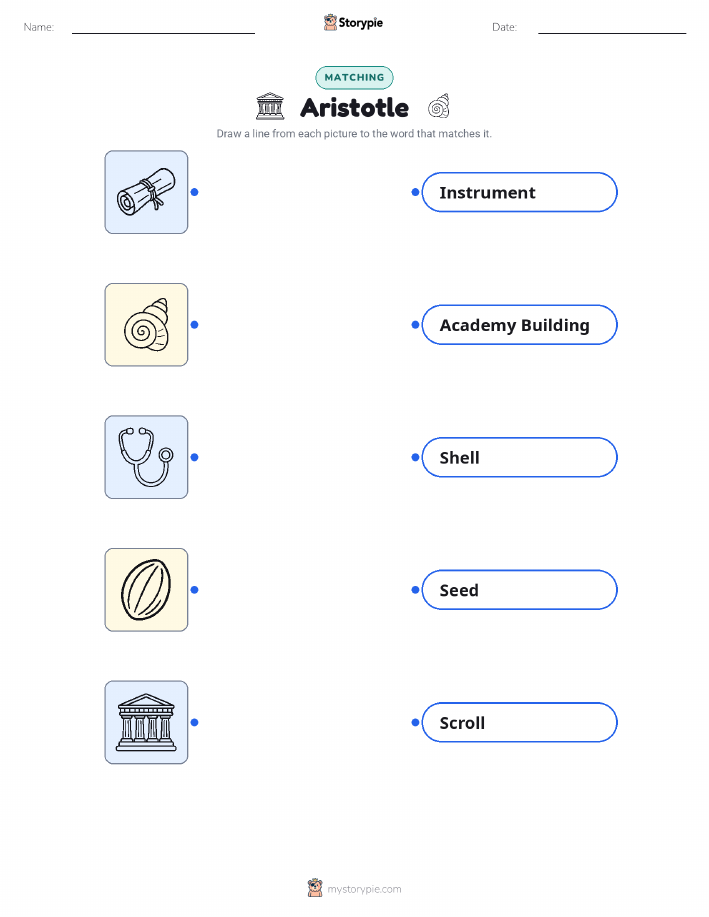
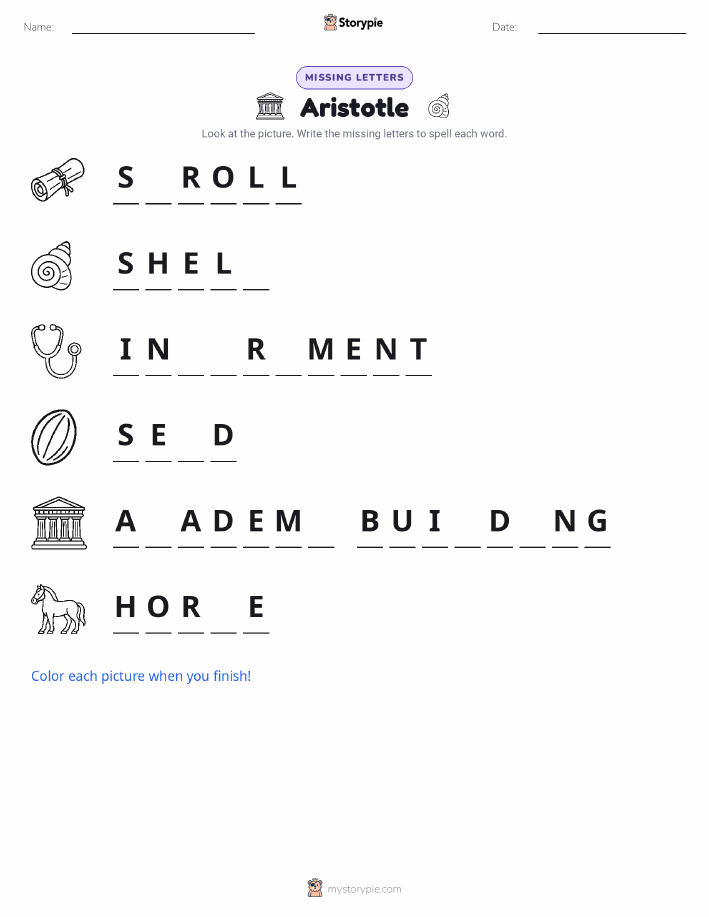
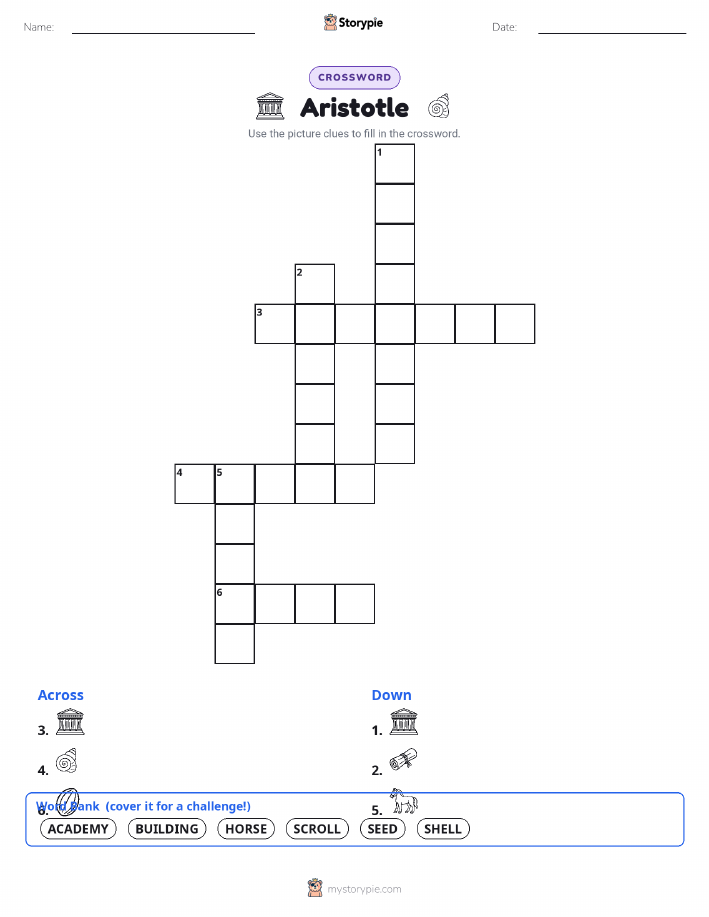
Answer keys·No prep·Free with an account
28 worksheets · answer keys · full story · quiz · Ages 8-10 · CEFR B1
Plus adds 279,000+ more stories in 27 languages, audio for every one, and printables for all of them.
Just want Aristotle?
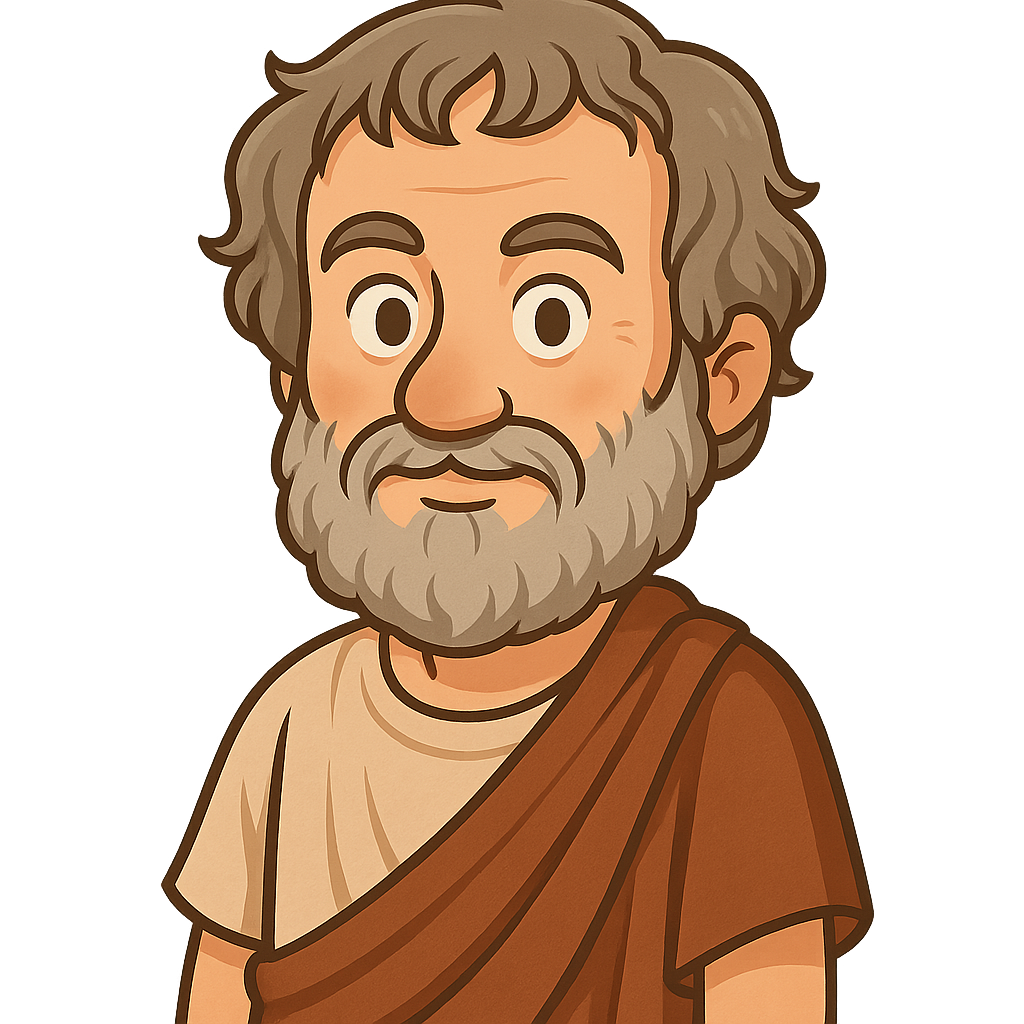
Hello there. My name is Aristotle, and I lived a very, very long time ago. But my story begins with a question, which is how the best stories always begin. I was born in 384 BCE in a small Greek city called Stagira. My father, Nicomachus, was a doctor to the king, and our home was always filled with interesting tools, books about the body, and discussions about what makes people healthy or sick. I would watch him work for hours, amazed by how he seemed to understand the secrets of the human body. This made me wonder about everything. I didn’t just want to know that a caterpillar turned into a butterfly; I wanted to know *how*. I didn’t just want to know that stars twinkled in the night sky; I wanted to know *why*. I would spend my days exploring the outdoors, carefully watching lizards scurry over rocks or studying the way a plant’s leaves turned toward the sun. For me, the whole world was a giant puzzle, and I was determined to find all the pieces. My father’s work taught me to observe things closely, and that became the most important lesson of my entire life. Every question I asked just led to another, bigger question.
When I was seventeen years old, I knew I had to go where the biggest questions were being asked. I packed my things and traveled to the bustling city of Athens. It was the most exciting place I had ever seen, with grand buildings and people debating ideas on every street corner. My destination was the most famous school in the world: the Academy, which was run by a brilliant thinker named Plato. He became my teacher, and for twenty years, I learned everything I could from him. Plato taught that the most important truths could be found by thinking deeply about ideas like justice, beauty, and goodness. I admired him greatly, and we spent countless hours in discussion. But as I grew older, a new thought began to form in my mind. I started to believe that you couldn't understand the world just by sitting and thinking. You had to go out and see it. You had to touch it, measure it, and watch it. I believed that to understand what a horse is, you had to study real horses. To understand politics, you had to study real governments. This was a little different from my teacher's way, but I knew it was the path I had to follow. The world itself was the greatest book, and I wanted to read every page.
Aristotle: The Boy Who Asked Why
Hello there. My name is Aristotle, and I lived a very, very long time ago. But my story begins with a question, which is how the best stories always begin. I was born in 384 BCE in a small Greek city called Stagira. My father, Nicomachus, was a doctor to the king, and our home was always filled with interesting tools, books about the body, and discussions about what makes people healthy or sick. I would watch him work for hours, amazed by how he seemed to understand the secrets of the human body. This made me wonder about everything. I didn’t just want to know that a caterpillar turned into a butterfly; I wanted to know how. I didn’t just want to know that stars twinkled in the night sky; I wanted to know why. I would spend my days exploring the outdoors, carefully watching lizards scurry over rocks or studying the way a plant’s leaves turned toward the sun. For me, the whole world was a giant puzzle, and I was determined to find all the pieces. My father’s work taught me to observe things closely, and that became the most important lesson of my entire life. Every question I asked just led to another, bigger question.
When I was seventeen years old, I knew I had to go where the biggest questions were being asked. I packed my things and traveled to the bustling city of Athens. It was the most exciting place I had ever seen, with grand buildings and people debating ideas on every street corner. My destination was the most famous school in the world: the Academy, which was run by a brilliant thinker named Plato. He became my teacher, and for twenty years, I learned everything I could from him. Plato taught that the most important truths could be found by thinking deeply about ideas like justice, beauty, and goodness. I admired him greatly, and we spent countless hours in discussion. But as I grew older, a new thought began to form in my mind. I started to believe that you couldn't understand the world just by sitting and thinking. You had to go out and see it. You had to touch it, measure it, and watch it. I believed that to understand what a horse is, you had to study real horses. To understand politics, you had to study real governments. This was a little different from my teacher's way, but I knew it was the path I had to follow. The world itself was the greatest book, and I wanted to read every page.
After I left the Academy, I received an invitation that would change my life. King Philip II of Macedon asked me to come and be the teacher for his young son. That boy’s name was Alexander. You might know him today as Alexander the Great, one of the most famous conquerors in history. But when I met him, he was just a curious, energetic thirteen-year-old boy. For several years, I was his private tutor. I didn't just teach him facts from books. My goal was to teach him how to think for himself. We studied everything together. We read epic poems to understand courage, we studied biology by looking at plants and animals, and we learned logic so he could form strong, clear arguments. I wanted him to be curious about the vast world beyond his home. I encouraged him to ask 'Why?' and 'How?', just as I had done as a boy. I hoped that by learning to think critically, he would become not just a powerful ruler, but a wise one. I believe my lessons stayed with him as he grew up and began to explore and lead the world.
Many years later, in 335 BCE, I returned to Athens to start a school of my own. I called it the Lyceum. It was different from Plato's Academy. My students and I didn't just sit in rooms; we often walked together among the trees of the garden as we talked. Because of this, my school was sometimes called the Peripatetic school, which means 'to walk about.' We studied everything you can imagine: biology, physics, poetry, weather, government, and how to live a good and happy life. We collected plants, studied animals, and wrote down everything we observed. My life ended in 322 BCE, but my questions never did. I wrote hundreds of books, and though many were lost, the ideas inside them have traveled through time. Looking back, I see that my entire life was a journey to answer the questions that began when I was a small boy in Stagira. My greatest hope is that you, too, will look at the world around you, from the smallest ant to the biggest star, and never, ever stop asking 'Why?'.
Wow facts
About
Aristotle was an ancient Greek philosopher and scientist, a student of Plato, and the teacher of Alexander the Great. His writings cover many subjects and constitute the first comprehensive system of Western philosophy.
Take a Quiz
Question 1 of 5
Aristotle said he believed the best way to understand the world was by 'looking closely at it and gathering evidence.' Why was this different from what his teacher Plato believed?
Explore next

Want to do even more?
Go beyond exploring. Unlock tools that turn every story into real learning.

Storypie Plus for families
Full stories, quizzes, and printables. Nights and car rides, sorted.
- Unlimited audio stories
- Create Mode: your child stars in the story
- Offline downloads
- Printable worksheets & coloring pages

Why Storypie for Schools
Students engaged. Prep in seconds. Evenings back to you.
- Worksheets & Quizzes
- Classroom Management
- Formative Assessment
- Custom Curriculum & Lesson Plans
- 27 Languages

Why Storypie for Homeschool
Curriculum done. They'll ask for more. Hours back in your day.
- Worksheet Generator
- First-Person Audio Stories
- Built-in Comprehension Quizzes
- Custom Curriculum & Lesson Plans
- Print & Go Activities