English

Augusta Savage
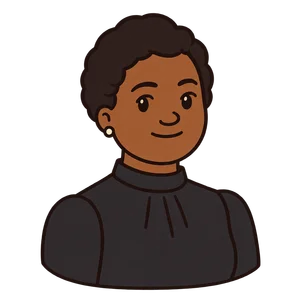
Augusta Savage was an influential African American sculptor, teacher…
Reads at Grades 6–8 Listens at Grades 4–8
Print & create
Answer keys·No prep·Free with an account
28 worksheets · answer keys · full story · quiz · Ages 10-12 · CEFR B2
Plus adds 290,000+ more stories in 27 languages, audio for every one, and printables for all of them.
Just want Augusta Savage?
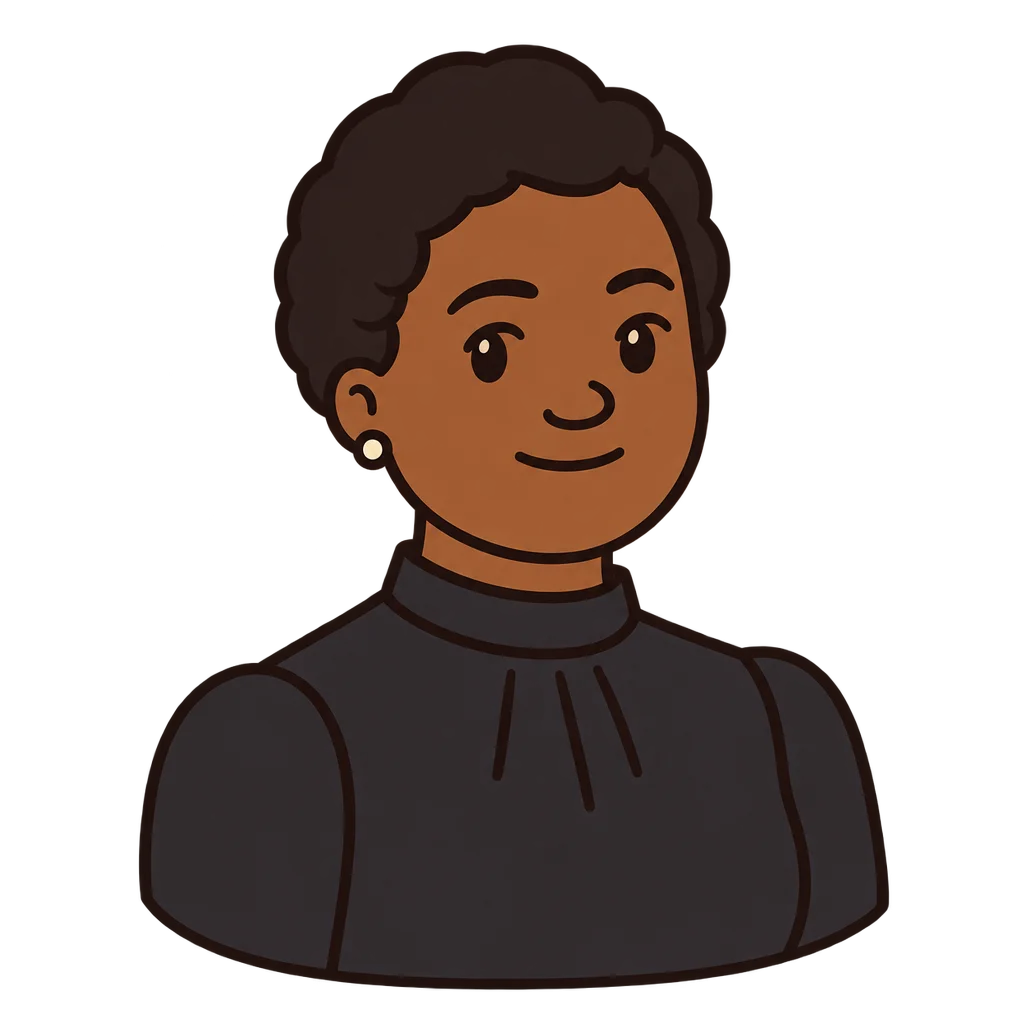
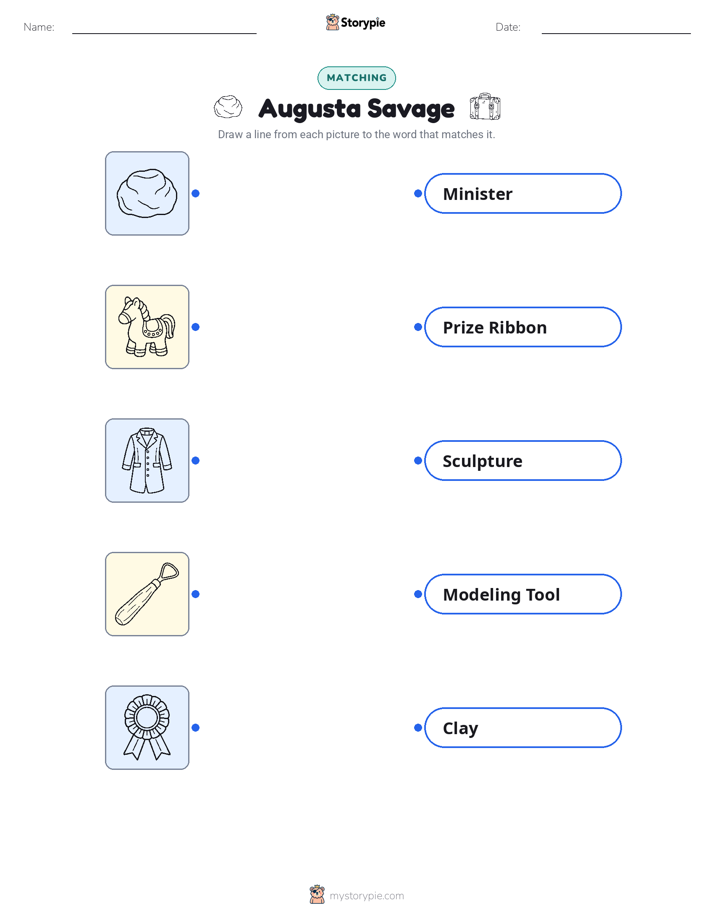
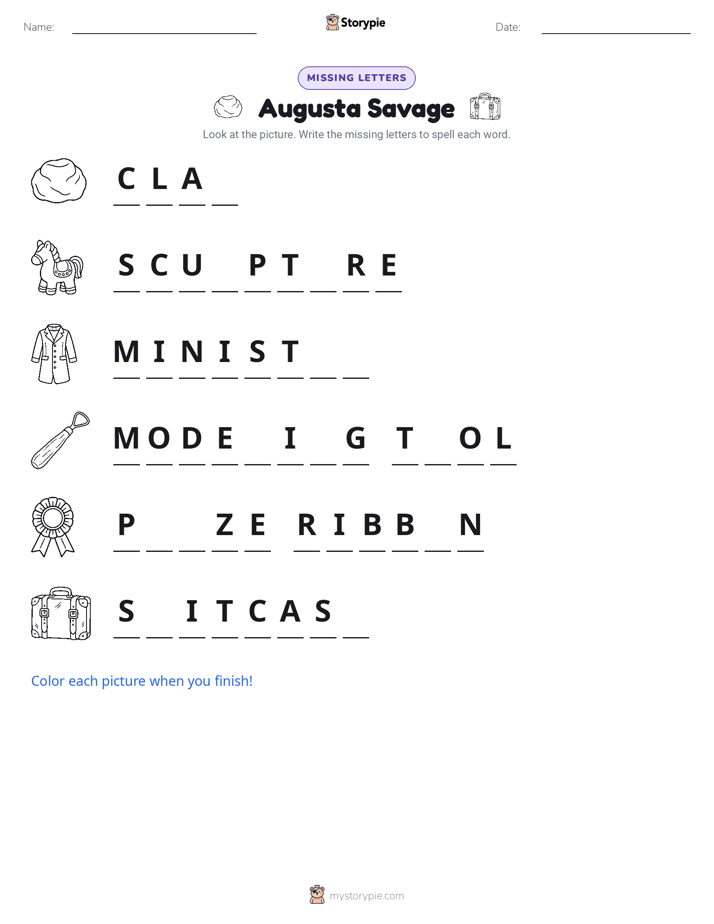
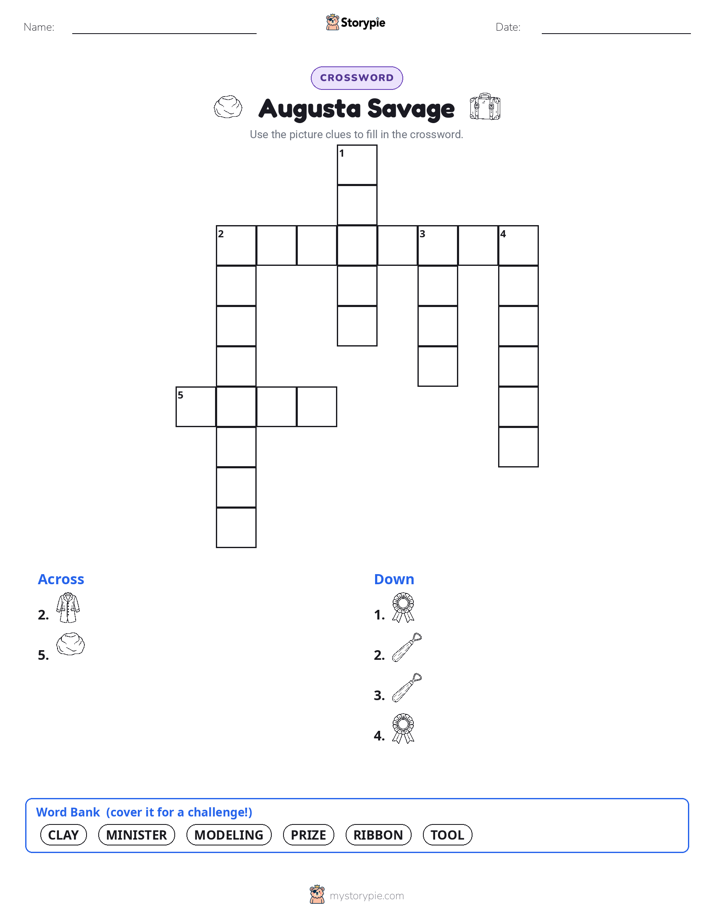
Hello, my name is Augusta Savage, and I was a sculptor, a teacher, and an activist who used my hands to shape not only clay but also the future for Black artists. I was born on February 29th, 1892, in a small town called Green Cove Springs, Florida. As a little girl, I didn't have fancy toys, but I had something much better: the rich, red clay in our backyard. I spent hours molding it into little figures of animals and people. My father, who was a minister, did not approve of my hobby. He called my sculptures 'graven images' and believed making them was wrong. But the urge to create was too strong for me to stop. A turning point came around 1907 when I was in high school. My principal saw my talent and understood my passion. Instead of punishing me, he gave me a wonderful opportunity: he let me teach a clay modeling class to other students. For the first time, an adult in a position of authority encouraged me, and I began to believe that my art was something special.
After winning a prize for my sculptures at a county fair, I knew I had to follow my dream of becoming a professional artist. It was a bold and scary thought, but I was determined. In 1921, I made the biggest move of my life. I packed my few belongings and traveled to New York City with very little money in my pocket. The city was enormous and overwhelming, but it was also the center of the art world. I applied to a prestigious school called the Cooper Union for the Advancement of Science and Art, which was famous for being free to attend. I was overjoyed when I was accepted. I poured all my energy into my studies, learning everything I could about form, anatomy, and technique. I worked so hard and learned so quickly that I completed the entire four-year program in just three years.
Augusta Savage: A Voice in Clay
Hello, my name is Augusta Savage, and I was a sculptor, a teacher, and an activist who used my hands to shape not only clay but also the future for Black artists. I was born on February 29th, 1892, in a small town called Green Cove Springs, Florida. As a little girl, I didn't have fancy toys, but I had something much better: the rich, red clay in our backyard. I spent hours molding it into little figures of animals and people. My father, who was a minister, did not approve of my hobby. He called my sculptures 'graven images' and believed making them was wrong. But the urge to create was too strong for me to stop. A turning point came around 1907 when I was in high school. My principal saw my talent and understood my passion. Instead of punishing me, he gave me a wonderful opportunity: he let me teach a clay modeling class to other students. For the first time, an adult in a position of authority encouraged me, and I began to believe that my art was something special.
After winning a prize for my sculptures at a county fair, I knew I had to follow my dream of becoming a professional artist. It was a bold and scary thought, but I was determined. In 1921, I made the biggest move of my life. I packed my few belongings and traveled to New York City with very little money in my pocket. The city was enormous and overwhelming, but it was also the center of the art world. I applied to a prestigious school called the Cooper Union for the Advancement of Science and Art, which was famous for being free to attend. I was overjoyed when I was accepted. I poured all my energy into my studies, learning everything I could about form, anatomy, and technique. I worked so hard and learned so quickly that I completed the entire four-year program in just three years.
My journey as an artist in a big city was not without its struggles. In 1923, I experienced a deep and painful injustice. I was selected for a special summer art program that would have allowed me to study in France. It was a dream come true. However, when the international selection committee found out that I was a Black woman, they took the offer back. They were worried about how the other students, who were white, would react. I was heartbroken, but I refused to accept this discrimination in silence. I decided to fight back with my words. I wrote letters to newspapers and spoke out publicly about the injustice. My story gained attention, and it became an early and public fight for civil rights within the art world. That experience did not stop me; instead, it fueled my determination to succeed and to create a place for myself and for others like me.
I became a central figure in a wonderful and exciting cultural movement known as the Harlem Renaissance. During this time, I created powerful sculptures of important Black leaders, including W. E. B. Du Bois. One of my most famous pieces from this period was a small bust of my nephew, which I called 'Gamin.' This sculpture captured the spirit of a young boy from Harlem and won critical acclaim. The success of 'Gamin' helped me win a prestigious fellowship in 1929, which finally gave me the funds to travel and study in Paris. When I returned to New York in 1931, I came back with a new sense of purpose. I realized that my greatest passion was not just creating art, but teaching it. In 1932, I opened the Savage Studio of Arts and Crafts in Harlem, offering a place for anyone to learn. Then, in 1937, I became the first director of the Harlem Community Art Center, where I had the privilege of mentoring many talented young artists, including a young man who would become the famous painter Jacob Lawrence.
In 1937, I received the greatest commission of my career. I was asked to create a large-scale sculpture for the 1939 New York World's Fair, an event that millions of people from all over the world would attend. Inspired by the song 'Lift Every Voice and Sing,' often called the Black national anthem, I designed a magnificent 16-foot-tall masterpiece. I titled it 'Lift Every Voice and Sing,' but it became popularly known as 'The Harp.' The sculpture depicted a group of twelve Black singers as the strings of a harp, with the hand of God forming the instrument's sounding board. It was a powerful symbol of Black American music and resilience. Millions of visitors admired it, and it was one of the most photographed pieces at the fair. Sadly, the sculpture was made of painted plaster and I did not have enough money to have it cast in bronze, the material that would have made it permanent. After the fair ended, my beautiful sculpture was destroyed.
In my later years, I moved away from the hustle of New York City to a quiet town in the countryside, where I found peace and continued to do what I loved most: teaching art to children. My life was a long journey of creating, teaching, and fighting for what I believed was right. I lived to be 70 years old. Today, I hope I am remembered not just for the sculptures I made, but as a teacher who nurtured the next generation of artists and as an activist who helped open doors for the many Black artists who came after me. My work was to make sure that other voices could be heard, and that art could be for everyone.
Wow facts
About
Augusta Savage was an influential African American sculptor, teacher, and community art program director associated with the Harlem Renaissance. She fought for equal rights within the arts and mentored a generation of artists.
Take a Quiz
Question 1 of 5
In your own words, retell the main events of Augusta Savage's life, from her childhood to her time in New York City.
Explore next






Want to do even more?
Go beyond exploring. Unlock tools that turn every story into real learning.

Storypie Plus for families
Full stories, quizzes, and printables. Nights and car rides, sorted.
- Unlimited audio stories
- Create Mode: your child stars in the story
- Offline downloads
- Printable worksheets & coloring pages

Why Storypie for Schools
Students engaged. Prep in seconds. Evenings back to you.
- Worksheets & Quizzes
- Classroom Management
- Formative Assessment
- Custom Curriculum & Lesson Plans
- 27 Languages

Why Storypie for Homeschool
Curriculum done. They'll ask for more. Hours back in your day.
- Worksheet Generator
- First-Person Audio Stories
- Built-in Comprehension Quizzes
- Custom Curriculum & Lesson Plans
- Print & Go Activities