English

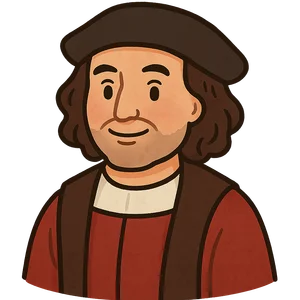
Bartolomeu Dias
Bartolomeu Dias was a Portuguese explorer who became the first European to sail around the southernmost tip…
Reads at Grades 6–8 Listens at Grades 4–8
Print & create
Answer keys·No prep·Free with an account
28 worksheets · answer keys · full story · quiz · Ages 10-12 · CEFR B2
Plus adds 244,000+ more stories in 27 languages, audio for every one, and printables for all of them.
Just want Bartolomeu Dias?
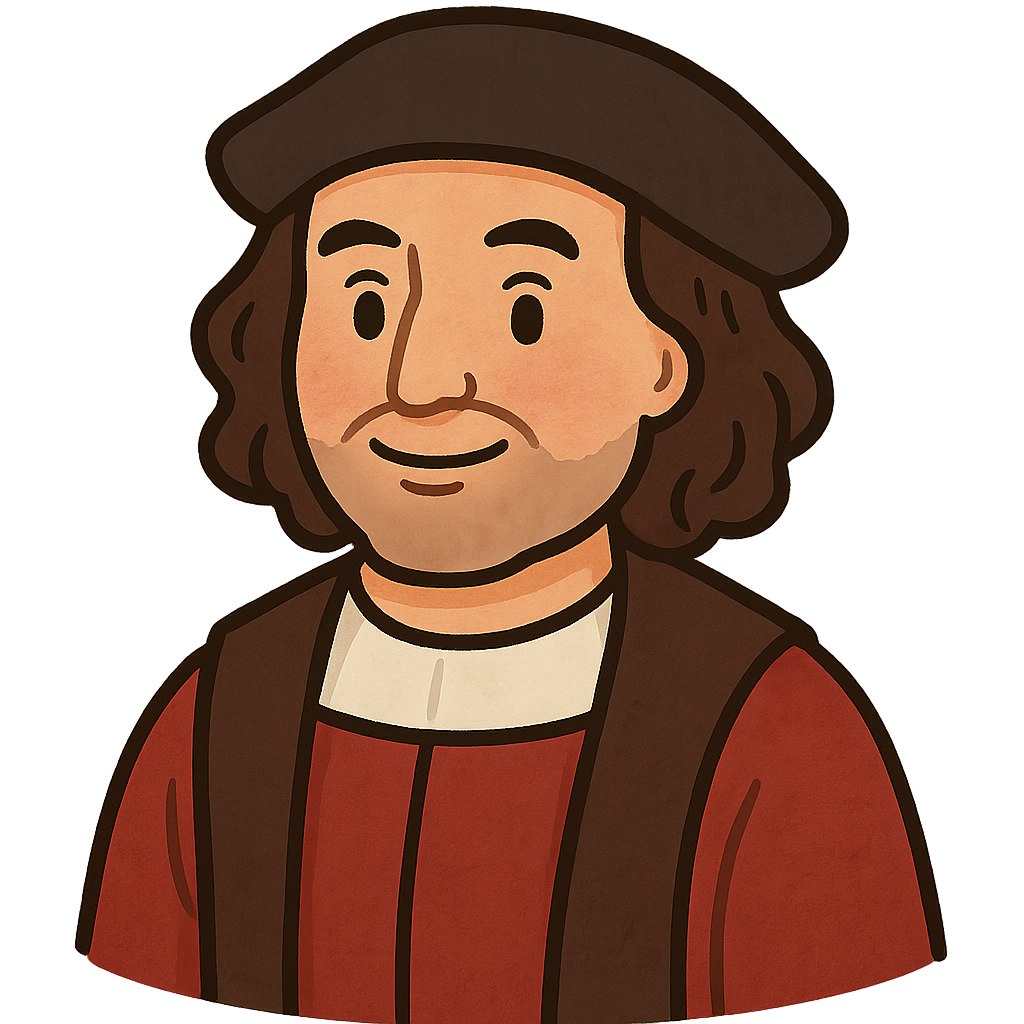
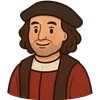
Hello. My name is Bartolomeu Dias, and I was a Portuguese explorer who lived during a fascinating era known as the Age of Discovery. I was born around the year 1450, a time when my home country of Portugal was buzzing with the excitement of exploration. Our sailors were known for their courage, and we all dreamed of charting new sea routes to the distant lands of India and China, which we called 'the Indies'. These places were the source of valuable spices like pepper and cloves, but the overland journey to get them was incredibly long and full of danger. Our king, John II, believed there had to be a better way. He championed a bold idea: what if we could reach the Indies by sailing south, all the way around the continent of Africa? It was a feat no one had ever accomplished. In 1487, the king entrusted me with this monumental and risky mission. I was appointed commander of a small fleet with the express purpose of finding the southern tip of Africa.
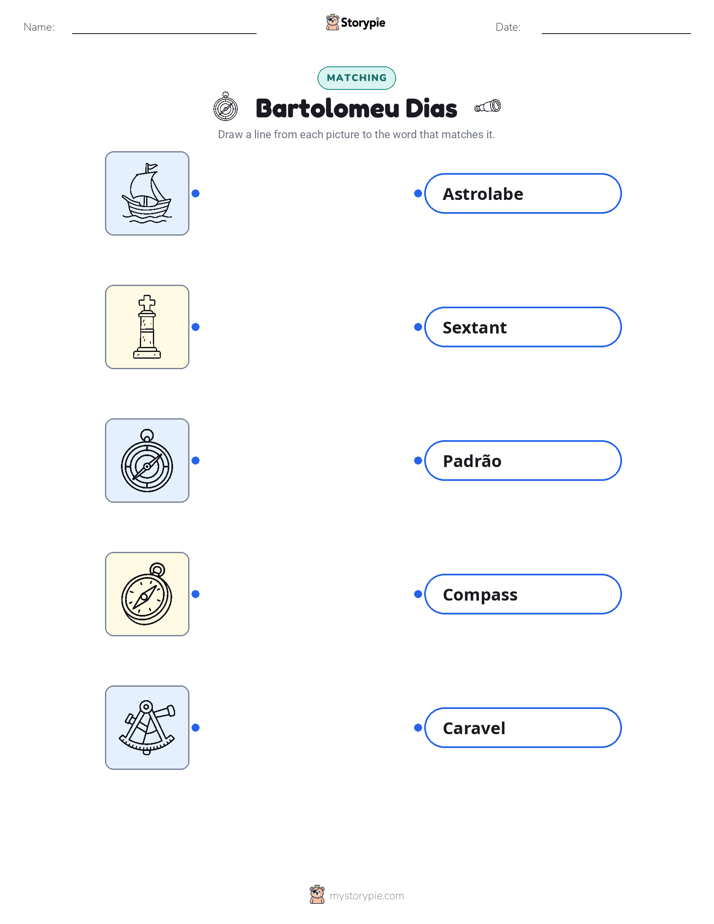
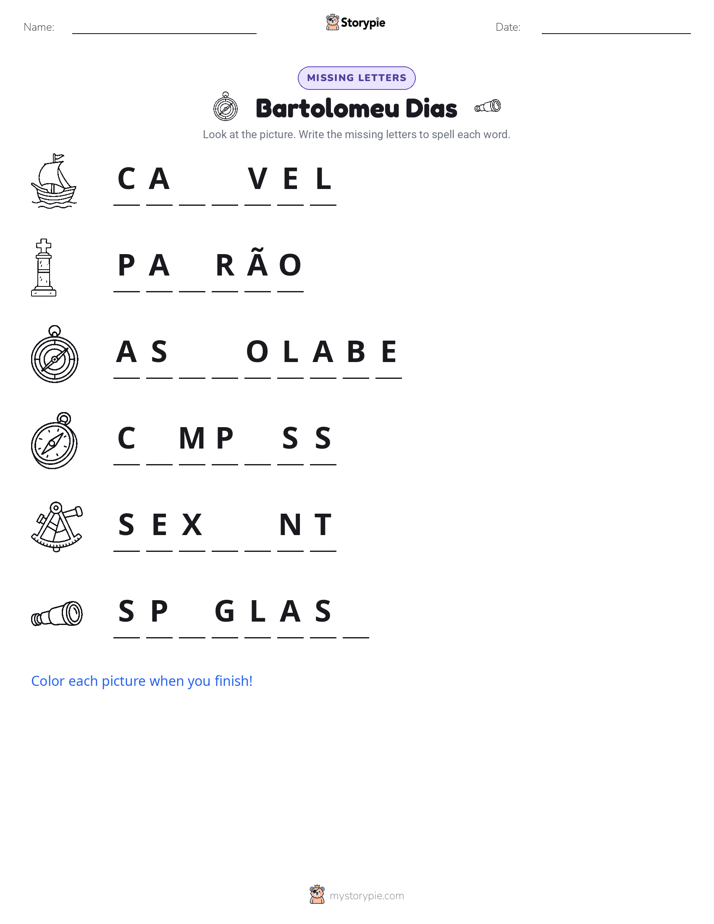
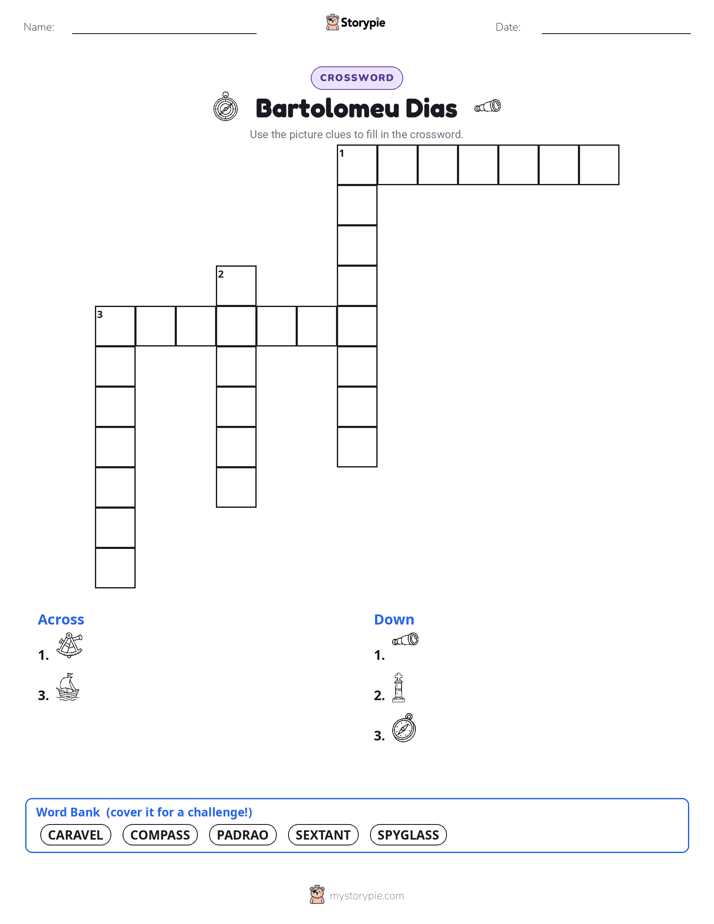
In August of 1487, my expedition departed from the port of Lisbon. My fleet consisted of two small, swift ships known as caravels and a larger vessel to carry our supplies. We sailed south, hugging the western coastline of Africa, which was a territory few Europeans had ever laid eyes on. The voyage was long and demanding. Along the way, we stopped to erect large stone pillars called 'padrões' on the shore. These markers served as a declaration, claiming the newly charted lands for my king and for Portugal. As we journeyed farther and farther south, the very stars in the night sky began to shift into unfamiliar constellations, reminding us just how far from home we were. After many months at sea, while sailing past the coast of what is now Namibia, the weather took a dramatic turn for the worse. A powerful storm descended upon us, seizing my ships and tossing them violently on massive waves. For thirteen terrifying days, the fierce winds pushed us far out into the open Atlantic Ocean, and we lost all sight of the African coast. We were adrift in the great unknown.
Bartolomeu Dias: Journey to the Cape of Good Hope
Hello. My name is Bartolomeu Dias, and I was a Portuguese explorer who lived during a fascinating era known as the Age of Discovery. I was born around the year 1450, a time when my home country of Portugal was buzzing with the excitement of exploration. Our sailors were known for their courage, and we all dreamed of charting new sea routes to the distant lands of India and China, which we called 'the Indies'. These places were the source of valuable spices like pepper and cloves, but the overland journey to get them was incredibly long and full of danger. Our king, John II, believed there had to be a better way. He championed a bold idea: what if we could reach the Indies by sailing south, all the way around the continent of Africa? It was a feat no one had ever accomplished. In 1487, the king entrusted me with this monumental and risky mission. I was appointed commander of a small fleet with the express purpose of finding the southern tip of Africa.
In August of 1487, my expedition departed from the port of Lisbon. My fleet consisted of two small, swift ships known as caravels and a larger vessel to carry our supplies. We sailed south, hugging the western coastline of Africa, which was a territory few Europeans had ever laid eyes on. The voyage was long and demanding. Along the way, we stopped to erect large stone pillars called 'padrões' on the shore. These markers served as a declaration, claiming the newly charted lands for my king and for Portugal. As we journeyed farther and farther south, the very stars in the night sky began to shift into unfamiliar constellations, reminding us just how far from home we were. After many months at sea, while sailing past the coast of what is now Namibia, the weather took a dramatic turn for the worse. A powerful storm descended upon us, seizing my ships and tossing them violently on massive waves. For thirteen terrifying days, the fierce winds pushed us far out into the open Atlantic Ocean, and we lost all sight of the African coast. We were adrift in the great unknown.
When the storm finally subsided, we were surrounded by nothing but an endless expanse of blue water. As the captain, I faced a critical decision. I chose to steer our ships east, hoping we would eventually run into the African coastline. After several days of sailing with no land in sight, I began to suspect the storm had blown us much farther south than I had ever intended. Realizing this, I gave the order to turn our ships to the north. On February 3rd, 1488, a lookout's cry of 'Land ahoy.' echoed across the water. It was a joyous moment. We had managed to do it, though we hadn't even realized it at the time—we had sailed around the southern end of Africa. We pressed on eastward for a time, but my crew was physically and mentally exhausted, and our food and water supplies were running dangerously low. They pleaded with me to turn back for home, and as a responsible commander, I knew I had to listen to their concerns. It was on our return journey, in May of 1488, that we finally saw the magnificent, rocky point that marked the continent's southern tip. I named it the 'Cabo das Tormentas,' which means the Cape of Storms, a name chosen to honor the terrible weather we had endured and overcome.
We finally arrived back in Lisbon in December of 1488, completing a journey that had lasted more than sixteen months. When I reported my findings to King John II and told him about the Cape of Storms, he was overjoyed with our success. However, he felt the name I had chosen was too frightening and might discourage other sailors. He decided to rename it the 'Cabo da Boa Esperança'—the Cape of Good Hope—because my discovery gave Portugal great hope that a direct sea route to India was finally within reach. My voyage had proven it was possible. A few years later, in 1497, another explorer, Vasco da Gama, used the charts I had created to successfully complete the journey all the way to India. I even had a hand in designing the ships for his expedition. In the year 1500, I set sail on another voyage. As our fleet neared the Cape of Good Hope, a violent storm suddenly appeared, and my ship was lost to the sea. I lived to be about 50 years old. My journey around Africa was a key that helped unlock the map of the world, connecting continents and cultures in a way no one had ever imagined before.
Wow facts
About
Bartolomeu Dias was a Portuguese explorer who became the first European to sail around the southernmost tip of Africa in 1488, showing that it was possible to find a sea route from Europe to Asia by rounding the Cape of Good Hope. However, it was Vasco da Gama's journey in 1497–1499 that really opened the sea route to India.
Take a Quiz
Question 1 of 5
In your own words, retell the main events of Bartolomeu Dias's voyage that began in 1487.
Explore next


Want to do even more?
Go beyond exploring. Unlock tools that turn every story into real learning.

Storypie Plus for families
Full stories, quizzes, and printables. Nights and car rides, sorted.
- Unlimited audio stories
- Create Mode: your child stars in the story
- Offline downloads
- Printable worksheets & coloring pages

Why Storypie for Schools
Students engaged. Prep in seconds. Evenings back to you.
- Worksheets & Quizzes
- Classroom Management
- Formative Assessment
- Custom Curriculum & Lesson Plans
- 27 Languages

Why Storypie for Homeschool
Curriculum done. They'll ask for more. Hours back in your day.
- Worksheet Generator
- First-Person Audio Stories
- Built-in Comprehension Quizzes
- Custom Curriculum & Lesson Plans
- Print & Go Activities